BIS ISI Mark Registration for Composite Cement IS 16415
Page Contents (7)
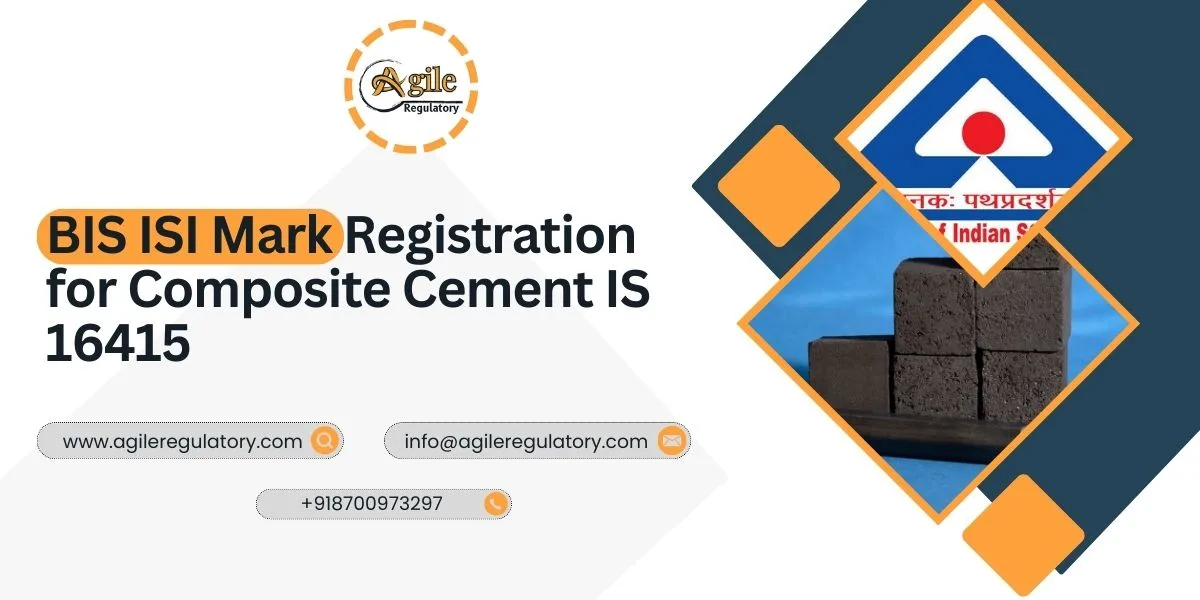
The cement used to build our homes and cities must be trustworthy. It must guarantee strength and long life. The Indian government has made sure of this by requiring the BIS ISI Mark on all construction cement.
This mandatory rule applies to Composite Cement. This product is a modern blend that helps the planet. It delivers excellent durability while using fewer resources.
The specific quality rule for this product is IS 16415:2015. Any company that makes or sells this cement must have this certification. This Mark confirms the cement is safe for all structural use.
Why This Cement Is Different
Composite Cement is a smart mix of materials. It uses Portland cement clinker as its base. But it also includes industrial leftovers.
These leftovers are called supplementary cementitious materials. They include things like fly ash and granulated slag. Using them means less clinker must be produced.
Producing less clinker is good for the environment. It lowers the amount of carbon dioxide created during manufacturing. Composite Cement delivers strength with a smaller environmental cost
Key Features of the IS 16415 Standard:
- Eco-Friendly Blends: Ensures the product is sustainable by allowing necessary additives.
- High Durability: Requires testing for resistance to harmful chemicals like sulfates.
- Guaranteed Strength: Sets strict minimum levels for compressive strength over time.
This specific standard guarantees that the final blended powder will perform reliably for many years.
Get Free Consultation!
The Law Demands Quality
The ISI Mark for Composite Cement is not voluntary. It is enforced by a Quality Control Order (QCO) issued by the government. The rule is simple: no ISI Mark, no sales.
This legal mandate is serious for all manufacturers and importers. The government aims to remove all substandard material from the market. Quality must be assured for national safety.
The BIS Act, 2016, gives the government power to penalize offenders. Breaking this rule leads to harsh consequences.
- Product Seizure: BIS can take away all uncertified cement bags.
- Financial Penalties: Companies face heavy fines, often in the lakhs of rupees.
- Legal Action: Repeat violations can lead to jail time for company heads.
The ISI Mark acts as your essential permit to operate in the building industry.
The Science Behind the Mark
The IS 16415 standard details every test the cement must pass. Manufacturers must conduct these checks every day. This proves the product’s consistency and structural value.
These checks are performed in a specialized, fully equipped in-house laboratory. The results of these tests are the final evidence of quality
Three Essential Performance Checks:
- Compressive Strength: This is the most important test. It measures how much load the hardened cement mortar can handle. It is tested at 3, 7 and 28 days to confirm strength development
- Soundness: This test prevents long-term cracking. It checks that the cement does not change volume too much after it has dried and hardened. Unsound cement ruins structures over time
- Setting Time: This test checks how fast the cement begins to harden. There is a specific window for both initial and final setting times. This is vital for construction workers who need a predictable work schedule
The entire testing process must be documented perfectly. All lab equipment needs regular checks by an approved external agency.
The Certification Steps
The journey to the ISI Mark is strict and detailed. It requires procedural discipline at every stage of manufacturing.
1. Setup and Preparation
The company must first set up a high-quality Quality Management System (QMS). This system monitors every step, from raw materials to final packaging. It ensures quality control is not an accident but a routine.
2. The Online Application
The manufacturer submits the official application to the BIS through their online portal. This step includes providing all legal business registration documents. It also includes the technical plan for quality control.
3. Site Audit by BIS
A BIS officer visits the factory for a mandatory inspection. This audit is thorough. The officer checks the plant machinery and the mixing process. They confirm that the QMS is truly running on the factory floor.
4. The Independent Test
During the audit, the BIS officer chooses final product samples. They seal these samples in front of the manufacturer. These samples go to an approved external BIS laboratory for testing. These outside tests confirm the in-house lab results.
5. License Approval
If the factory passes the audit and the external tests meet the IS 16415 standard, the license is granted. The company receives a unique License Number (CM/L). This grants the legal right to stamp the ISI Mark onto every cement bag produced.
Key Documentation and Quality Checklist
Accurate documentation is necessary for a fast approval time. Any missing or wrong document causes delays.
- BIS Test Report (External Lab)
- Factory Layout & Flowchart
- Equipment Calibration Records
- Factory Registration Certificate
- Quality Control Manual
Conclusion
The BIS ISI Mark for Composite Cement is absolutely essential. This certification process ensures every batch is fit for building. It reduces risks and upholds the standard of construction across the country. The technical requirements of IS 16415 demand precision and rigorous quality management from all manufacturers
Successfully mastering the QMS navigating the required technical documentation, and passing the crucial BIS inspection demands professional expertise
For accurate application submission, technical compliance guidance and seamless achievement of your mandatory ISI license trust the procedural experts at Agile Regulatory. We help cement manufacturers comply completely

About the Author
View ProfileNishi Chawla
Content Writer & Compliance Specialist
Nishi is an expert content writer with expertise in Business Legal Compliances, Certifications, and Registrations — BIS, EPR, Medical Devices, Cosmetics, Drugs, and Import Export. She holds a B.Com from the University of Delhi and has been writing industry content since 2019.