


Get Instant Solution By an Expert Advisor
(4.8)
Fast replies · No spam · Real experts
If you manufacture, import, or sell electronic musical systems in India, compliance is not optional. Any electronic musical system with an input power below 200 W must meet BIS CRS requirements under IS 616:2017 before it can enter the Indian market. This rule applies whether you sell amplifiers, PA systems, or compact sound units under your own brand or through imports. Missing this registration can lead to shipment holds, sales bans, and regulatory penalties. This guide explains exactly what the BIS CRS registration covers, why IS 616:2017 applies to your product, and how you can comply without delays or rejections.
When the standard talks about electronic musical systems, it means audio equipment designed to produce or amplify sound. It include:
But you’ve got one key detail: input power below 200 W. That matters because safety norms change with power ranges.
Under the Compulsory Registration Scheme, certain categories of electronics sold in India must be registered with BIS before you can sell them legally.
Electronic musical systems with input power below 200 W are on that list. That means:
If you skip this:
The standard IS 616:2017 is a safety standard for electronic and electrical equipment intended for consumer use.
This standard does not test your system’s sound quality or bass response. It tests:
Now, pay attention here, because a common mistake is thinking “Only large manufacturers need this.” That’s not true.
You must register if you are:
If you’re simply selling under someone else’s BIS-registered brand, you still must confirm that the exact model you stock is covered under that brand’s valid CRS licence.
BIS CRS Registration of Wireless Microphone IS 616 : 2017
Simply follow the steps in order.
Make sure your product really falls under the electronic musical system category with input ≤ 200 W. Misclassification is a huge waste of time.
You must get product samples tested in a BIS-recognised lab. This isn’t a home-grown test or a certificate from any random lab. It must be on the BIS list.
The testing covers safety parameters defined in IS 616:2017.
You send in units, and the lab runs a battery of tests:
When the product passes, you get a test report and that report is crucial for your application.
For the online BIS application, you will need:
BIS has an online portal where you:
BIS reviews your submission, and they will ask questions if anything is unclear.
Typical questions might be:
If everything lines up, BIS issues your CRS registration. You get a licence number and now you can legally use the BIS Standard Mark on the product and packaging.
The BIS Standard Mark is not a marketing gimmick.
It signals:
In India, especially with electrical goods, the ISI standard mark is often expected even if your customer doesn’t know the exact standard number.
If you are dealing with electronic musical systems with input power below 200 W, you must register them under the BIS CRS scheme standard IS 616:2017 before you sell in India. This is not optional it’s regulatory compliance.
If you want the process handled smoothly without missteps, confusion, or repeated rejections Agile Regulatory can help you. We specialise in preparing the right documentation, coordinating with recognised labs, filing your application, and responding to BIS queries so you don’t have to worry about the hassle.
Reach out to Agile Regulatory and get your BIS CRS registration standardised and compliant.


You might also be interested in these articles.
Nishi Chawla
25 Jun 2026
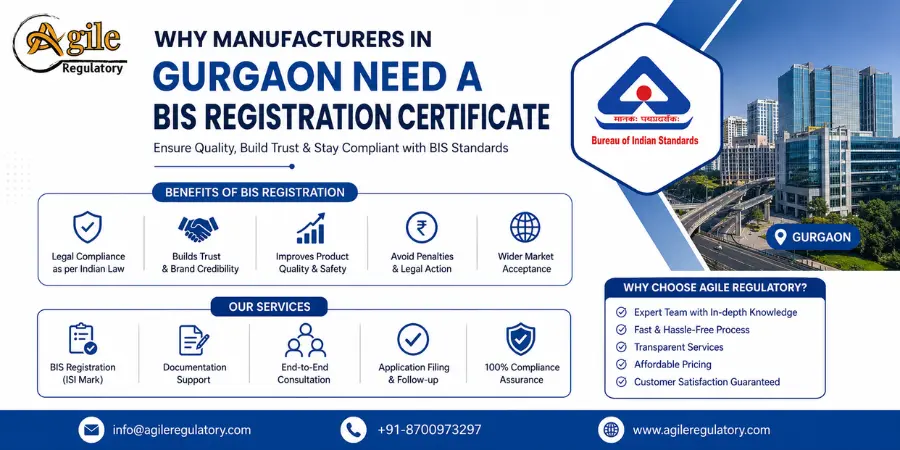
Manufacturers in Gurgaon need a BIS Registration Certificate to ensure product quality, meet Indian safety standards, and legally sell or distribute regulated products while building customer trust and business credibility.
Nishi Chawla
27 Apr 2026
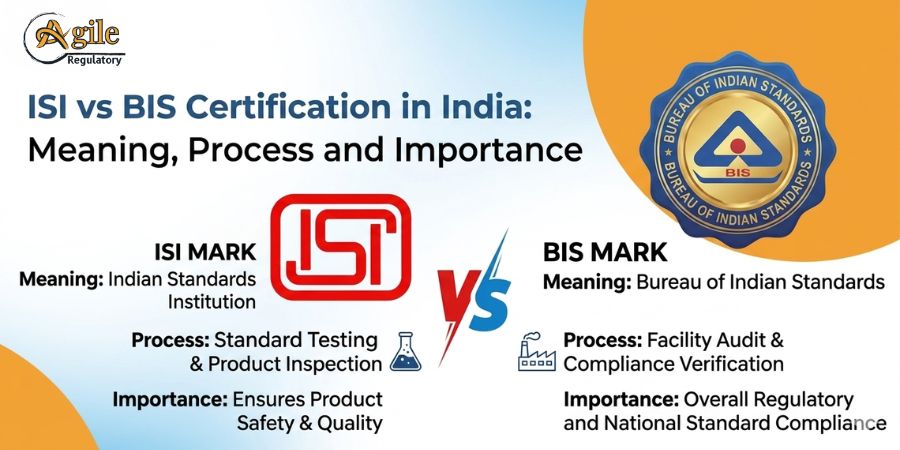
The mark stayed the same. The ISI Indian Standards Institution, was founded in 1947 as India's first national standardization body. It made the ISI mark and ran product certification in India for many years. Parliament passed the Bureau of Indian Standard
Nishi Chawla
16 Apr 2026
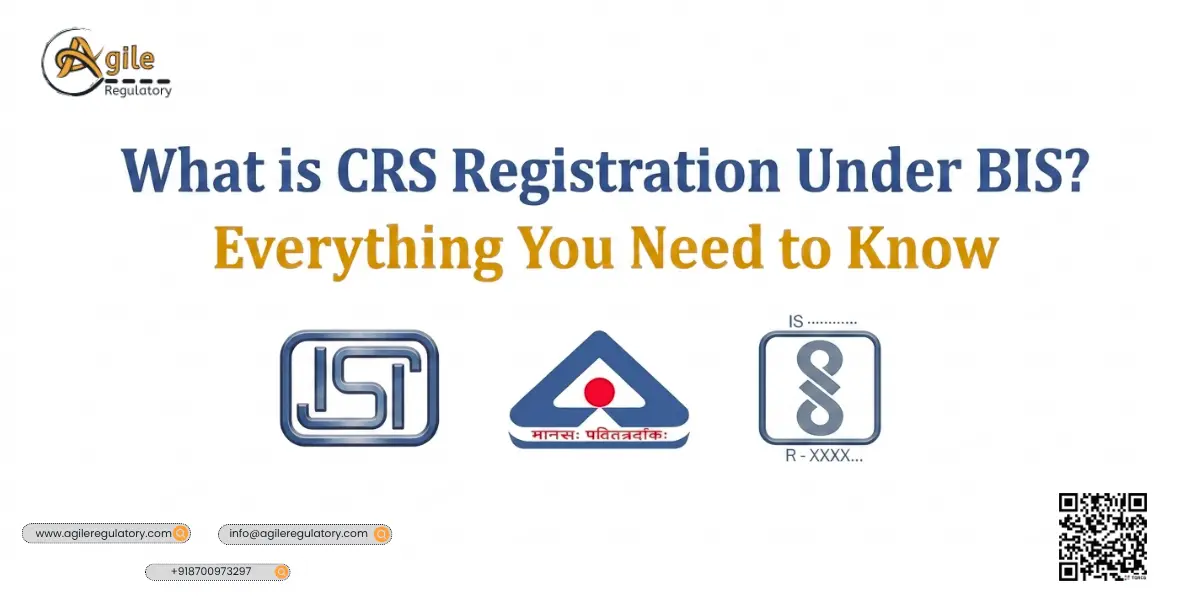
CRS Registration under BIS is a mandatory certification for certain electronic and IT products in India to ensure they meet prescribed safety standards. Introduced by the Bureau of Indian Standards, the Compulsory Registration Scheme (CRS) requires manufa
Nishi Chawla
10 Apr 2026
BIS registration for air filters used in general ventilation under IS 17570 (Part 1): 2021 aligns with ISO 16890-2: 2016 standards. This certification ensures that air filters meet quality, performance, and efficiency requirements for improved indoor air
Nishi Chawla
10 Apr 2026
BIS Registration for toasters, grills, and roasters under IS 302 (Part 2/Sec 9): 2009 is mandatory to ensure these appliances meet Indian safety and quality standards. This certification verifies that the products are tested for electrical safety, perform
Nishi Chawla
07 Apr 2026
Agile Regulatory offers reliable BIS ISI Mark consulting services in Punjab. We help businesses with end-to-end certification support and compliance. Ensure fast approval and smooth processing with our expert team.
Nishi Chawla
01 Apr 2026
BIS registration is mandatory for domestic electric clothes washing machines in India. It ensures product safety and compliance with IS 302 standards. Expert guidance helps achieve quick and hassle-free certification.
Nishi Chawla
01 Apr 2026
BIS registration ensures quality, safety, and compliance for corrugated and semi-corrugated asbestos cement sheets under IS 459:1992 standards' official requirements.
Nishi Chawla
30 Mar 2026
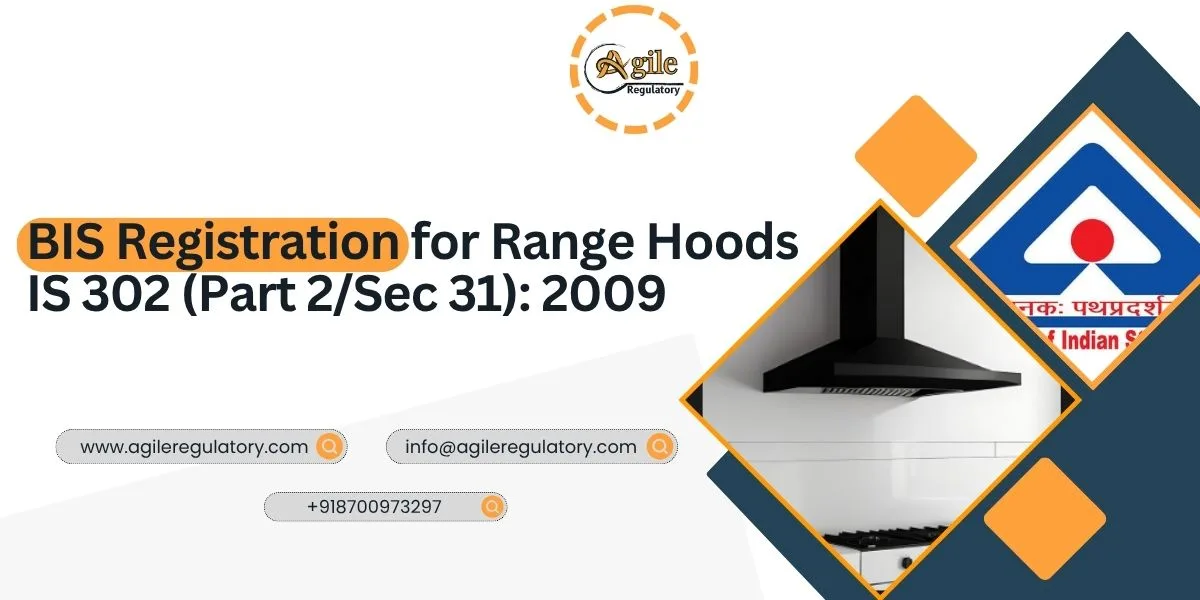
BIS registration for range hoods ensures compliance with Indian safety standards under IS 302 (Part 2/Sec 31): 2009. It is mandatory for manufacturers and importers to sell these products in the Indian market. Expert assistance from Agile Regulatory sim
Nishi Chawla
30 Mar 2026
BIS registration ensures safety and quality compliance for skin and hair care appliances under IS 302 (Part 2/Sec 23):2009 standards.
Nishi Chawla
27 Mar 2026
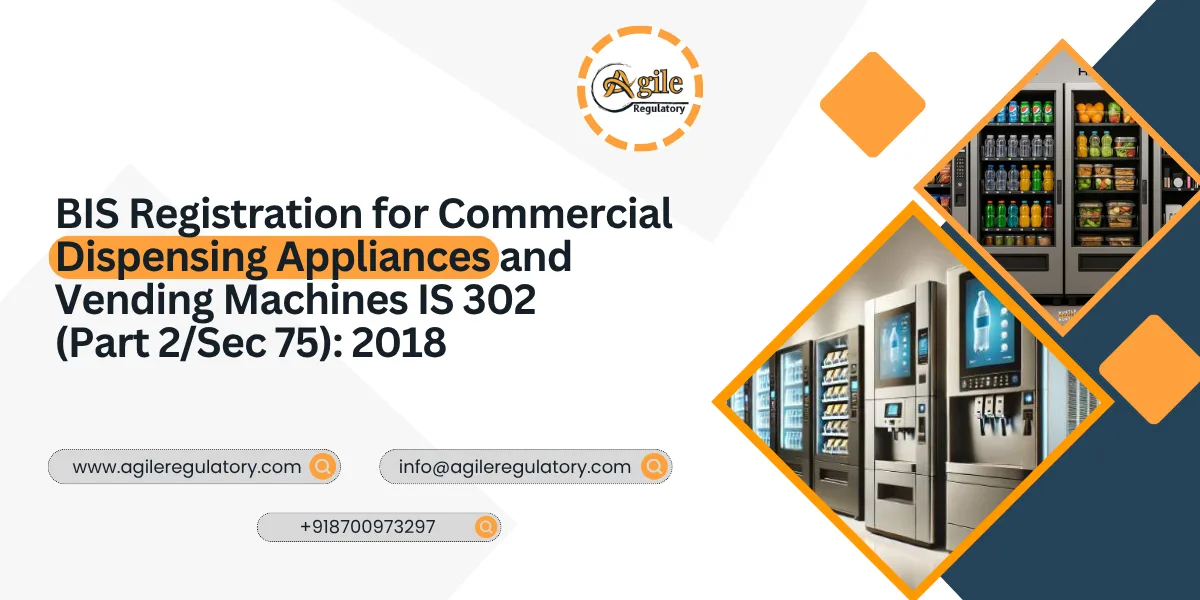
IS 302 (Part 2/Sec 75): 2018 is an Indian Standard that specifies safety requirements for commercial dispensing appliances and vending machines, including those used for food, beverages, and other products.
Nishi Chawla
27 Mar 2026
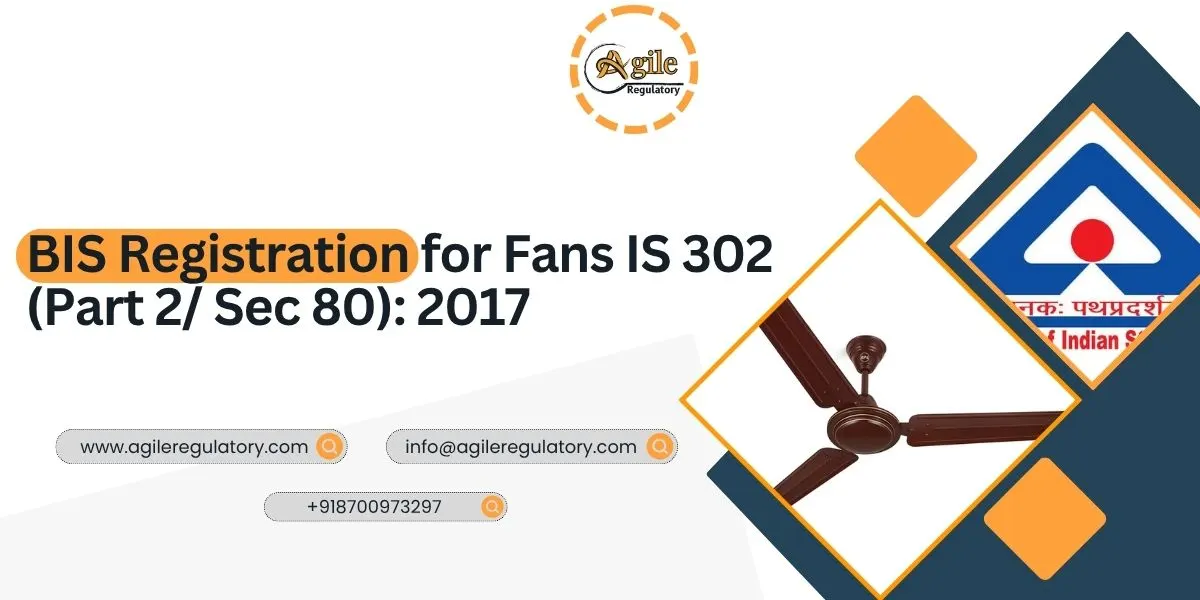
BIS registration under IS 302 (Part 2/Sec 80): 2017 is mandatory for electric fans to ensure safety and compliance with Indian standards. Our service provides end-to-end support including documentation, product testing, and certification, ensuring a smoot
Nishi Chawla
24 Mar 2026
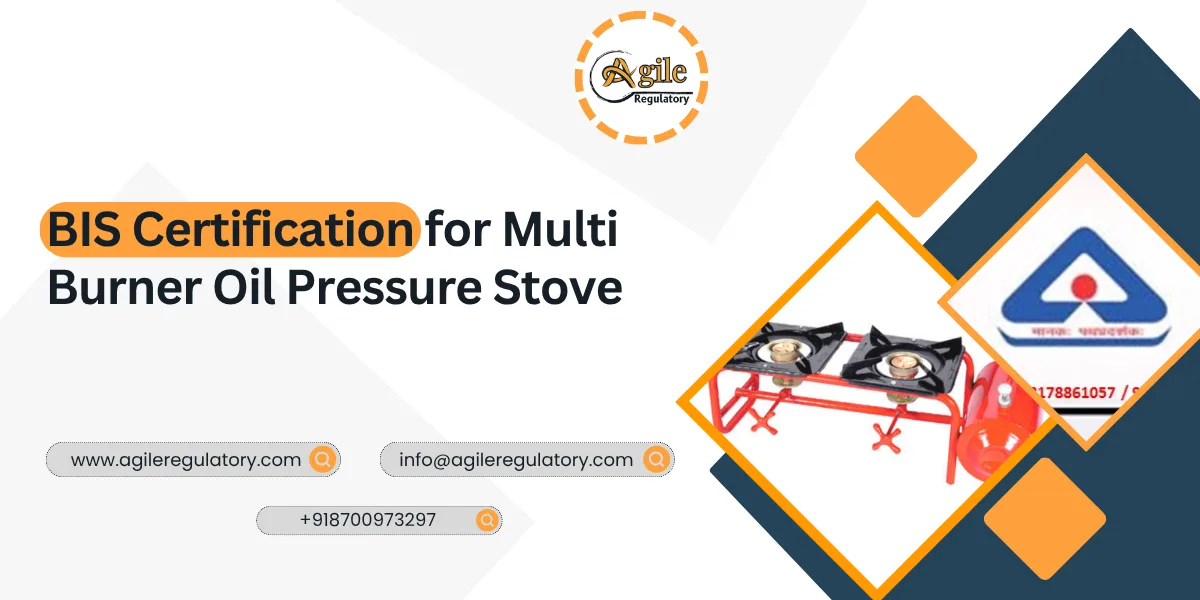
BIS certification ensures multi-burner oil pressure stoves meet safety, quality, and performance standards for reliable, efficient, and safe household use.
Nishi Chawla
16 Mar 2026
A BIS Hallmark Consultant helps jewelers and businesses obtain mandatory hallmark certification for gold and silver in India. They assist with registration, documentation, compliance, and coordination with the Bureau of Indian Standards (BIS). Their exper
Nishi Chawla
10 Mar 2026
Learn about the BIS Registration for Asbestos Cement Flat Sheets as per IS 2096:1992. Understand the certification process, required documents, testing standards, and compliance requirements to legally manufacture or import asbestos cement flat sheets in
Nishi Chawla
10 Mar 2026
BIS Registration for Asbestos Cement Pressure Pipes and Joints ensures compliance with IS 1592:2003 standards in India. Manufacturers must obtain BIS certification to use the ISI mark and sell products in the Indian market. Our experts assist with docum
Nishi Chawla
03 Mar 2026
BIS ISI Mark registration for asbestos cement pipes and fittings under IS 6908:1991 ensures quality compliance for sewerage and drainage systems.
Nishi Chawla
03 Mar 2026
BIS ISI certification is mandatory for Asbestos Cement Building Boards under IS 2098:1997. Manufacturers must comply with quality standards and pass BIS-approved lab testing. We provide end-to-end support for smooth and quick ISI mark registration.
Nishi Chawla
27 Feb 2026
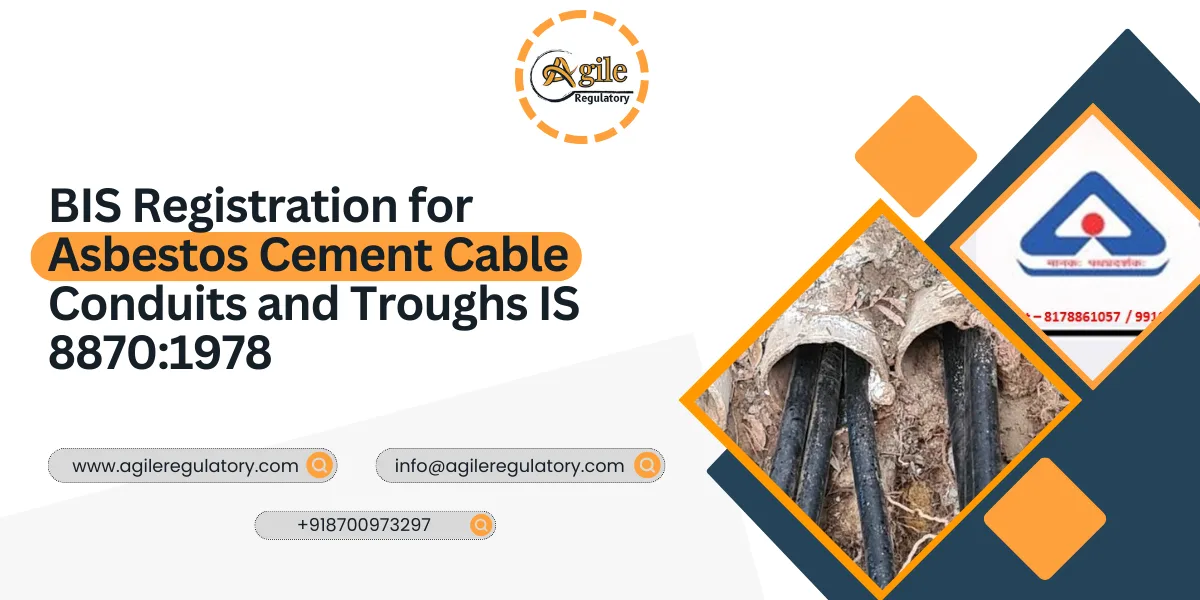
BIS registration under the Bureau of Indian Standards (BIS) is mandatory for manufacturers of asbestos cement cable conduits and troughs in India.
Nishi Chawla
27 Feb 2026
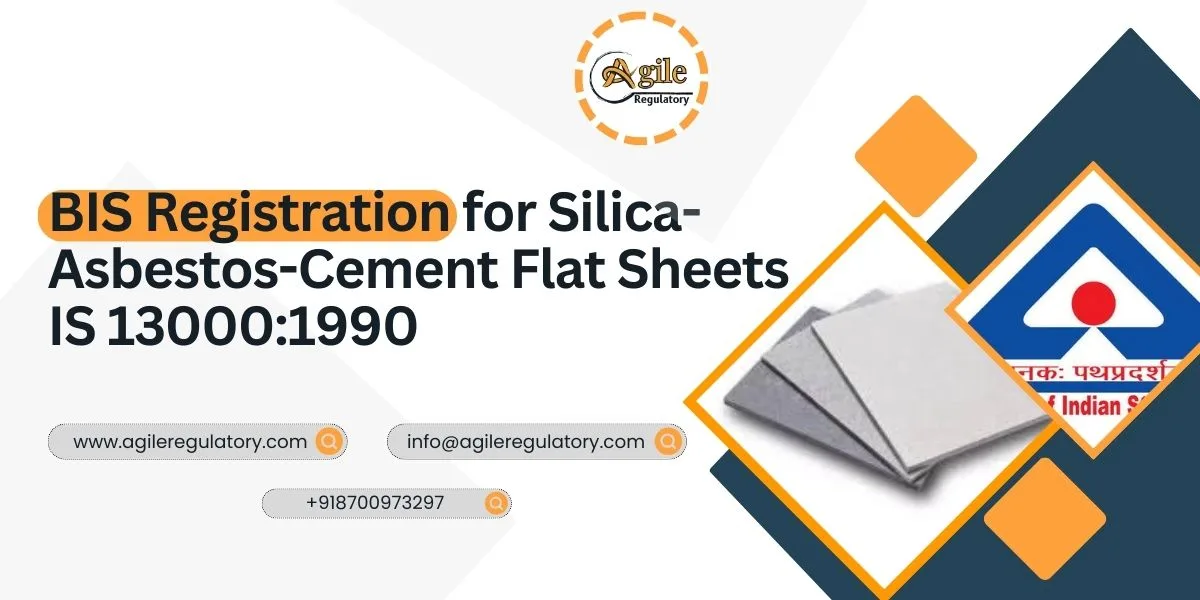
BIS Registration for Silica-Asbestos-Cement Flat Sheets under IS 13000:1990 is mandatory to ensure product quality and safety compliance in India. Manufacturers must meet the standards set by the Bureau of Indian Standards before selling in the Indian mar
Nishi Chawla
24 Feb 2026
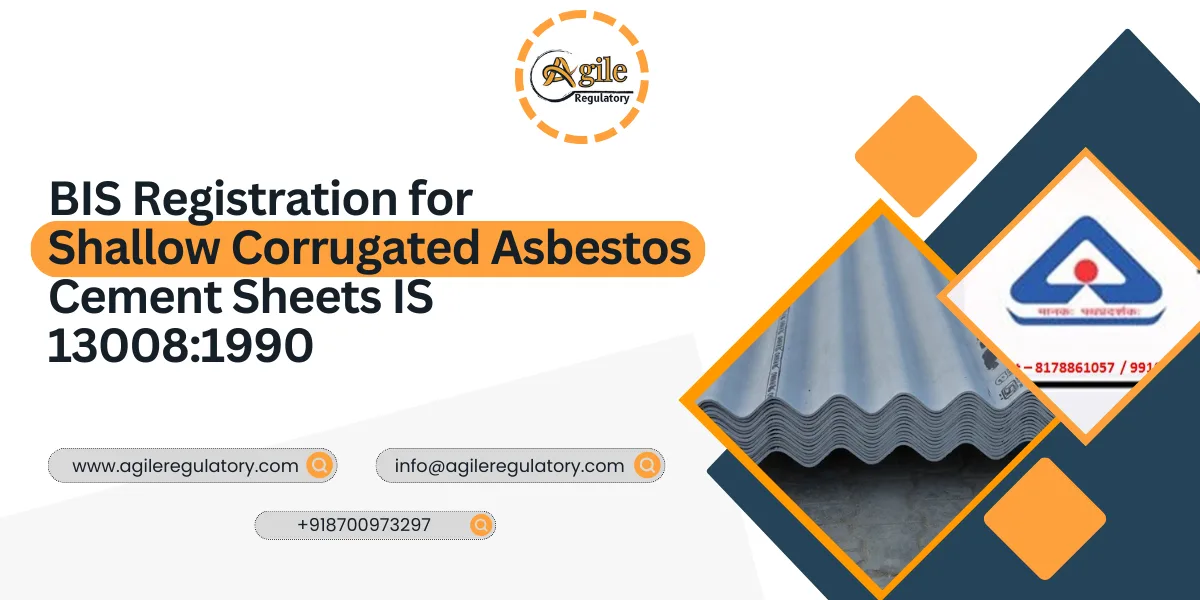
BIS registration for Shallow Corrugated Asbestos Cement Sheets under IS 13008:1990 is mandatory in India to ensure product quality, safety, and compliance with national standards.
Nishi Chawla
24 Feb 2026
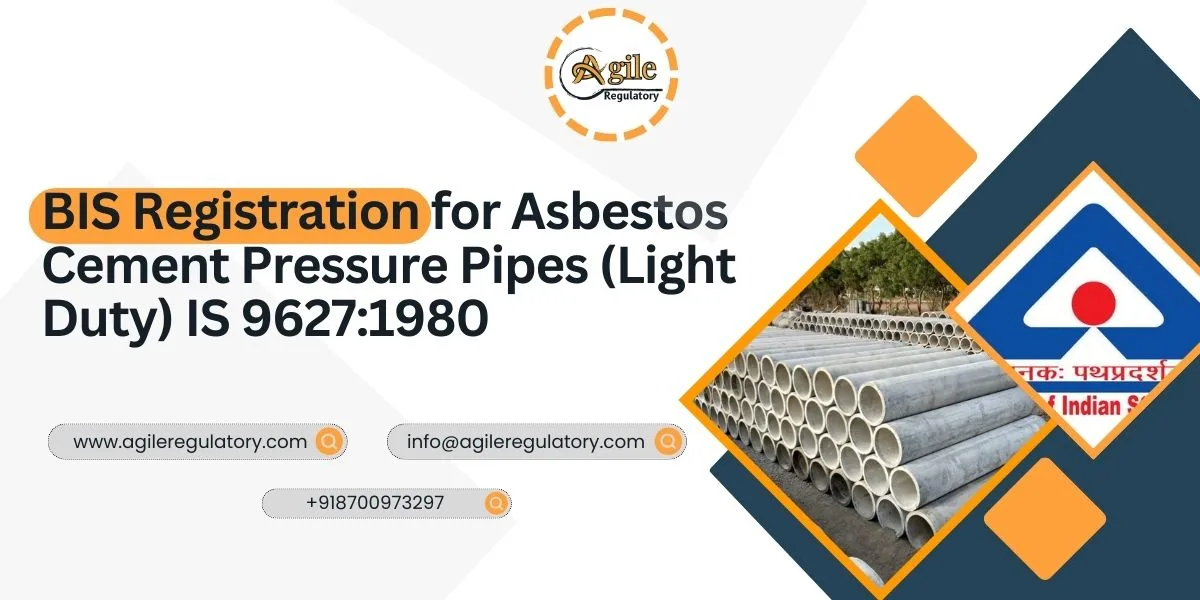
BIS Registration for Asbestos Cement Pressure Pipes (Light Duty) under IS 9627:1980 is mandatory for compliance in India. Manufacturers must obtain ISI Certification to ensure product quality and safety standards. We provide end-to-end support for docum
Nishi Chawla
23 Feb 2026
This guide explains the process of obtaining BIS (Bureau of Indian Standards) registration for fibre cement flat sheets as per the IS 14862:2000 standard, ensuring compliance with Indian quality and safety regulations.
Nishi Chawla
23 Feb 2026
BIS registration for fiber-reinforced cement products under IS 14871:2000 ensures quality, safety, and compliance with Indian standards.
Nishi Chawla
20 Feb 2026
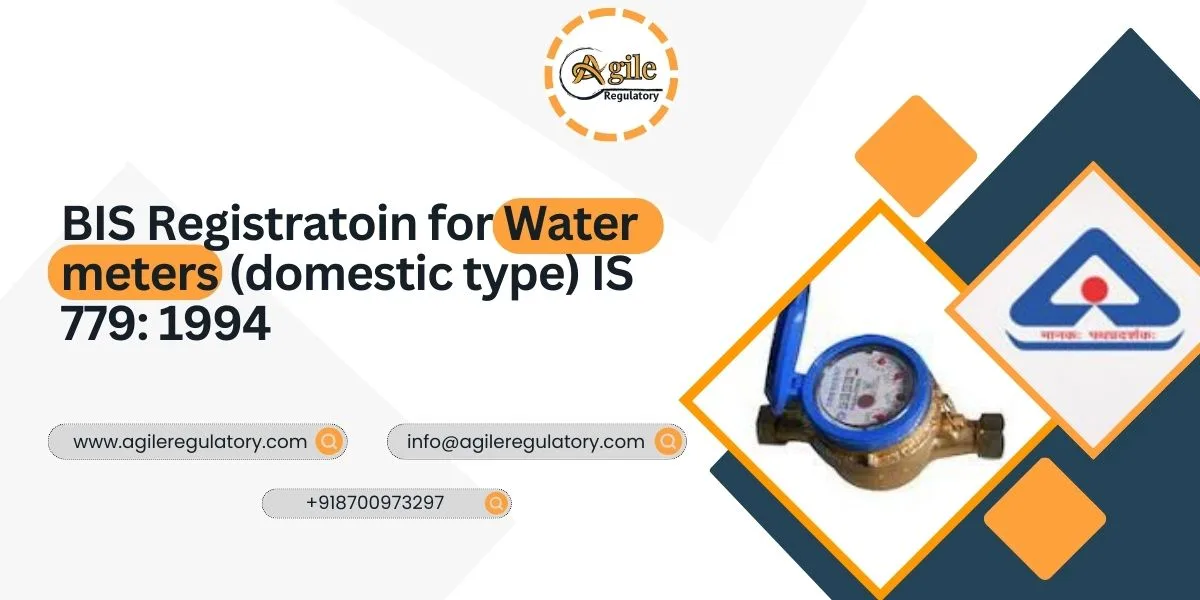
BIS Registration for Water Meters (Domestic Type) under IS 779: 1994 is mandatory to ensure quality, accuracy, and compliance with Indian standards. The certification verifies that domestic water meters meet performance, safety, and durability requirement
Nishi Chawla
20 Feb 2026
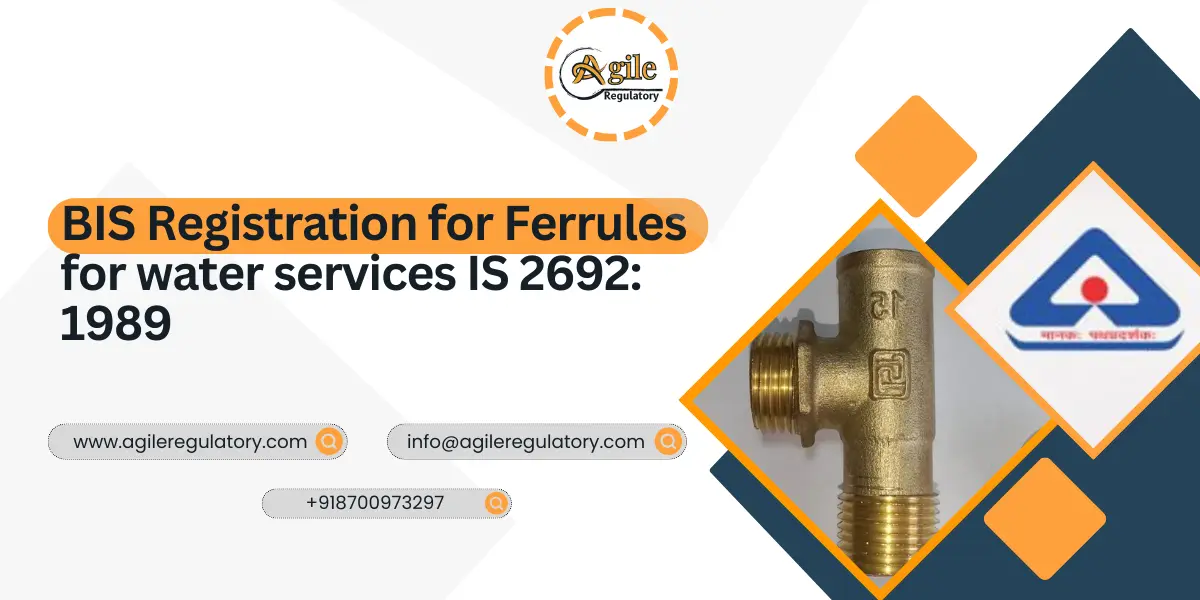
BIS registration ensures ferrules for water services comply with IS 2692:1989 prescribed national standards set by Bureau of Indian Standards.
We simplify compliance through a proven 4-step process: Consultation, Documentation, Submission, and certification. From understanding requirements to getting final approvals, we deliver a smooth, timely, and fully compliant journey for your business.


What our customer says about us

Lavkush Sharma
KTPL Instruments
Agile Regulatory handled my BIS Certification registration smoothly. Their expert team ensured quick approvals, transparent pricing, and a completely stress-free compliance experience.

Nitin Mukesh
Justrack IOT
We are grateful to Agile Regulatory for their excellent support. Their team showed patience, expertise, and professionalism throughout, providing clear guidance and making the entire process smooth and hassle-free.
Pradeep Varma
Coaire Compressor
Being an excellent BIS Certification Consultant provider, they help customers with all requirements such as BIS Certification, CDSCO services, Agile Regulatory support, legal issues, and lab testing with quick results.

Bharat Bachwani
Easy Polymer
With the help of Agile Regulatory, we have made significant progress in our business. Their service is fast, genuine, and reliable. We look forward to continued success together in the future.

Atul Jain
Tarus International
Many thanks to Agile Regulatory for all the support, guidance, and expert advice. Their professional approach and consistent assistance have made a significant difference.

Paramjeet Singh
Anchor Weighing
Top-tier consulting! offered strategic solutions that revolutionized our approach. Their deep expertise and personalized guidance made a significant impact on our success. Highly recommend their services.

Anshul Rathi
AM Capacitor
Agile Regulatory exceeded expectations! Their tailored solutions, expertise, and proactive approach led to remarkable results. Highly recommend for businesses seeking impactful and strategic guidance.
Shekhar Maurya
Imaxx Pro Aquistic
Outstanding service! delivered targeted solutions with professionalism and expertise. Their insights elevated our business strategies, resulting in noticeable growth. Highly recommended for exceptional consultation.
Trusted by over 1,00,000 + Global Brands in the past 15+ years




.webp)





Leave a Reply
Your email address will not be published. Required fields are marked *