

Get Instant Solution By an Expert Advisor
(4.8)


Businesses that produce and import ductile iron fittings for water supply pipelines need to follow IS 9523 because it defines the industry standards in India. India’s Bureau of Indian Standards demands BIS certificates for any company that sells or distributes these products.
The certification verifies that your fittings match the essential safety requirements and work at the expected level of strength. Without BIS, you become non-eligible for government contracts and you break rules that stop your business operations
Today we’ll show you all the necessary steps to receive your BIS certification with minimal issues.
IS 9523:2000 refers to the Indian Standard specification for ductile iron fittings for pressure pipes for water, gas, and sewage. These fittings are primarily used in underground pipeline systems and are manufactured to withstand mechanical stress and environmental exposure.
The BIS certification for this product falls under the ISI mark scheme, which requires thorough product and factory evaluation.
The BIS process for IS 9523 iron fittings is not the same as for general consumer products. Here’s what makes it different:
This makes planning ahead essential — you can't fast-track this process in a week.
Here’s how you go from scratch to getting your BIS certificate under IS 9523.
Start by confirming that your ductile iron fittings match the technical specifications of IS 9523. This includes checking:
BIS expects manufacturers to test their products before and during production. That means setting up a small lab with equipment for:
| Required Test | Equipment Needed |
|---|---|
| Hydrostatic pressure test | Pressure testing machine |
| Dimensional check | Vernier calipers, gauges |
| Tensile and elongation test | UTM (Universal Testing Machine) |
| Chemical composition analysis | Spectrometer or wet chemistry tools |
| Coating thickness test | Coating gauge |
Ensure these are calibrated and documented — BIS inspectors will check them during audit.
Navigate to the BIS Manak online Portal and create a user account. Once registered, select the Standard Mark Scheme (ISI Mark) application form.
Upload the following:
Next, you’ll need to send product samples to a BIS-approved third-party lab for testing. They will verify parameters like:
This testing usually takes 2–3 weeks, depending on lab capacity and your product complexity.
After lab testing, BIS schedules a physical inspection of your factory. The auditor will:
Expect the visit to take 1–2 full working days.
If all stages are cleared — and your documentation is complete — BIS issues the ISI license. This allows you to use the standard ISI mark with your unique CM/L number on all products.
The license is valid for 1 year, renewable based on continued compliance and regular surveillance.
The cost of BIS certification depends on several factors. Here's a breakdown of the average expenses:
| Cost Element | Estimated Range (₹) |
|---|---|
| BIS Application Fee | ₹1,000 – ₹2,000 |
| Lab Testing Charges | ₹20,000 – ₹50,000 |
| BIS Audit Fee | ₹7,000 – ₹15,000 |
| Consultant/Agent (if hired) | ₹15,000 – ₹40,000 |
| Annual License Fee | ₹1,000 – ₹10,000 (based on output) |
Foreign manufacturers applying via the FMCS scheme will incur additional costs like travel, translation, and overseas testing.
| Issue | Why It Happens |
|---|---|
| Product fails lab testing | Non-compliant raw material or design |
| Factory lacks proper documentation | Missing quality manuals, SOPs |
| Audit reveals gaps in testing | Equipment not calibrated or untrained staff |
| Delayed responses to BIS queries | Slow documentation or communication lapses |
Being proactive about documentation and training goes a long way.
In the high-stakes world of water and sewage infrastructure, quality can’t be a gamble. Whether you're a domestic manufacturer or an overseas exporter, having the BIS certificate for iron fittings (IS 9523) gives your product legal clearance and market credibility.
Yes, the process is detailed. And yes, it takes time. But once completed, it becomes a long-term asset — opening doors to government tenders, urban projects, and assured compliance. Treat it not as an obstacle, but as an essential investment in the future of your business.
Ductile iron fittings are produced and inspected to conform to different international and domestic standards for quality and compatibility. Major standards are ISO 2531/EN 545 for water supply applications and AWWA C110/C153 in North America, including dimensions, materials, and testing.
Ductile iron is available in several grades, which are characterized by their mechanical properties such as tensile strength, yield strength, and elongation. Typical grading systems are ASTM A536 (e.g., 60-40-18, 80-55-06) and ISO 1083 (e.g., 400-18, 500-7), where the figures represent these properties.
Post Views: 997


Nishi Chawla
25 Apr, 2026
Nishi Chawla
25 Apr, 2026
.webp)
Nishi Chawla
25 Apr, 2026
Nishi Chawla
24 Apr, 2026
Nishi Chawla
23 Apr, 2026
Get Instant Solution By an Expert Advisor
(4.8)
You might also be interested in these articles.
Nishi Chawla
16 Apr 2026
CRS Registration under BIS is a mandatory certification for certain electronic and IT products in India to ensure they meet prescribed safety standards. Introduced by the Bureau of Indian Standards, the Compulsory Registration Scheme (CRS) requires manufa
Nishi Chawla
10 Apr 2026
BIS registration for air filters used in general ventilation under IS 17570 (Part 1): 2021 aligns with ISO 16890-2: 2016 standards. This certification ensures that air filters meet quality, performance, and efficiency requirements for improved indoor air
Nishi Chawla
10 Apr 2026
BIS Registration for toasters, grills, and roasters under IS 302 (Part 2/Sec 9): 2009 is mandatory to ensure these appliances meet Indian safety and quality standards. This certification verifies that the products are tested for electrical safety, perform
Nishi Chawla
07 Apr 2026
Agile Regulatory offers reliable BIS ISI Mark consulting services in Punjab. We help businesses with end-to-end certification support and compliance. Ensure fast approval and smooth processing with our expert team.
Nishi Chawla
01 Apr 2026
BIS registration is mandatory for domestic electric clothes washing machines in India. It ensures product safety and compliance with IS 302 standards. Expert guidance helps achieve quick and hassle-free certification.
Nishi Chawla
01 Apr 2026
BIS registration ensures quality, safety, and compliance for corrugated and semi-corrugated asbestos cement sheets under IS 459:1992 standards' official requirements.
Nishi Chawla
30 Mar 2026
BIS registration for range hoods ensures compliance with Indian safety standards under IS 302 (Part 2/Sec 31): 2009. It is mandatory for manufacturers and importers to sell these products in the Indian market. Expert assistance from Agile Regulatory sim
Nishi Chawla
30 Mar 2026
BIS registration ensures safety and quality compliance for skin and hair care appliances under IS 302 (Part 2/Sec 23):2009 standards.
Nishi Chawla
27 Mar 2026
IS 302 (Part 2/Sec 75): 2018 is an Indian Standard that specifies safety requirements for commercial dispensing appliances and vending machines, including those used for food, beverages, and other products.
Nishi Chawla
27 Mar 2026
BIS registration under IS 302 (Part 2/Sec 80): 2017 is mandatory for electric fans to ensure safety and compliance with Indian standards. Our service provides end-to-end support including documentation, product testing, and certification, ensuring a smoot
Nishi Chawla
24 Mar 2026
BIS certification ensures multi-burner oil pressure stoves meet safety, quality, and performance standards for reliable, efficient, and safe household use.
Nishi Chawla
16 Mar 2026
A BIS Hallmark Consultant helps jewelers and businesses obtain mandatory hallmark certification for gold and silver in India. They assist with registration, documentation, compliance, and coordination with the Bureau of Indian Standards (BIS). Their exper
Nishi Chawla
10 Mar 2026
Learn about the BIS Registration for Asbestos Cement Flat Sheets as per IS 2096:1992. Understand the certification process, required documents, testing standards, and compliance requirements to legally manufacture or import asbestos cement flat sheets in
Nishi Chawla
10 Mar 2026
BIS Registration for Asbestos Cement Pressure Pipes and Joints ensures compliance with IS 1592:2003 standards in India. Manufacturers must obtain BIS certification to use the ISI mark and sell products in the Indian market. Our experts assist with docum
Nishi Chawla
03 Mar 2026
BIS ISI Mark registration for asbestos cement pipes and fittings under IS 6908:1991 ensures quality compliance for sewerage and drainage systems.
Nishi Chawla
03 Mar 2026
BIS ISI certification is mandatory for Asbestos Cement Building Boards under IS 2098:1997. Manufacturers must comply with quality standards and pass BIS-approved lab testing. We provide end-to-end support for smooth and quick ISI mark registration.
Nishi Chawla
27 Feb 2026
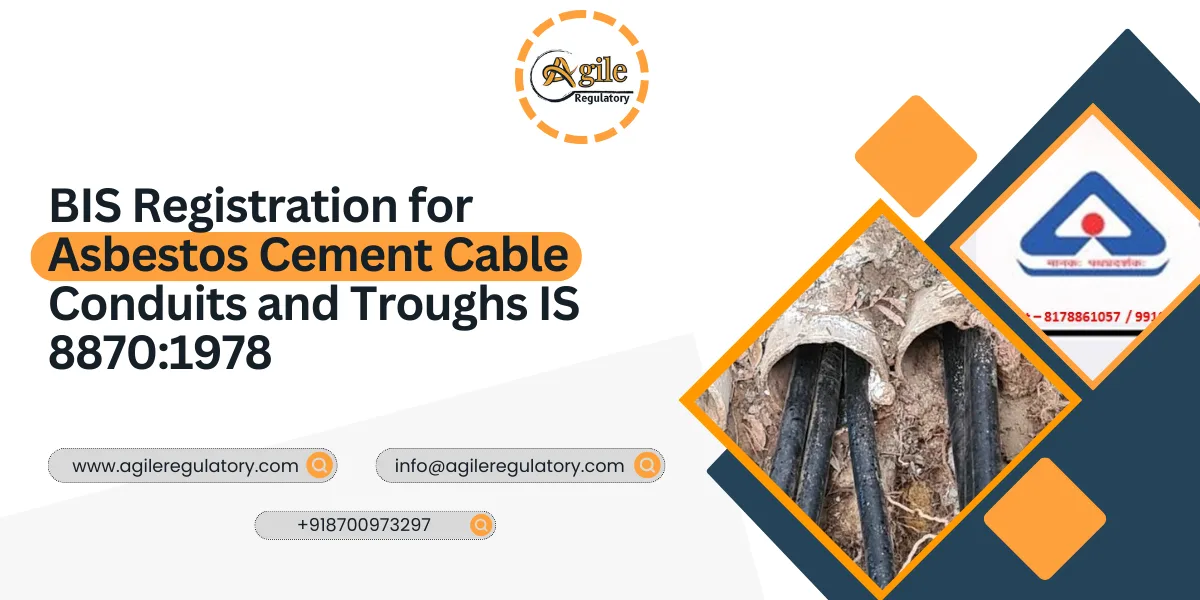
BIS registration under the Bureau of Indian Standards (BIS) is mandatory for manufacturers of asbestos cement cable conduits and troughs in India.
Nishi Chawla
27 Feb 2026
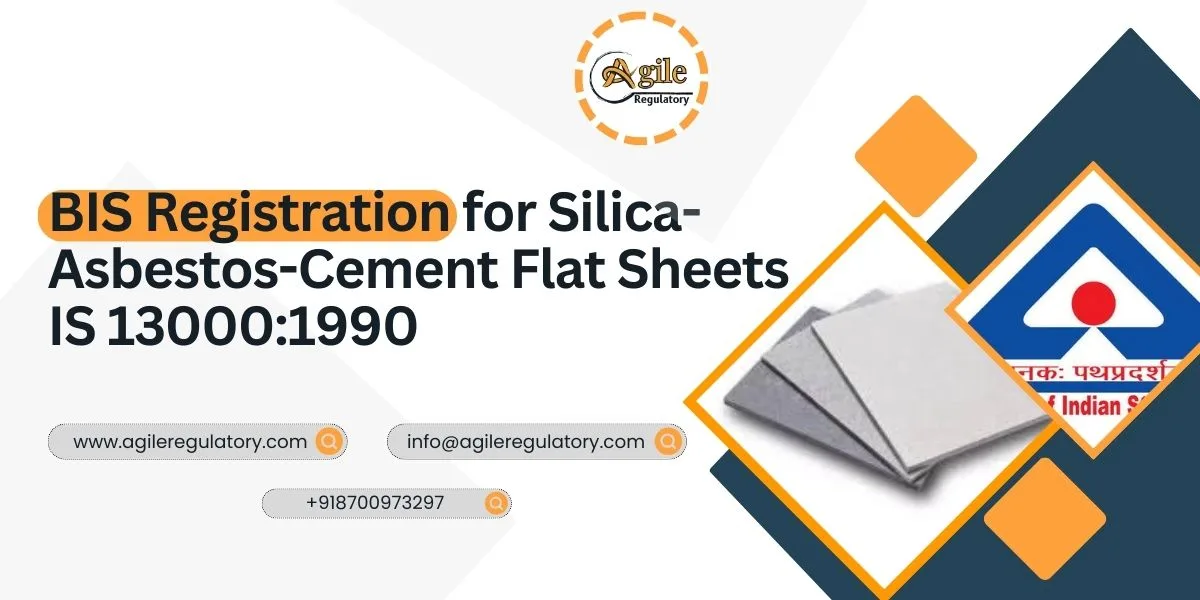
BIS Registration for Silica-Asbestos-Cement Flat Sheets under IS 13000:1990 is mandatory to ensure product quality and safety compliance in India. Manufacturers must meet the standards set by the Bureau of Indian Standards before selling in the Indian mar
Nishi Chawla
24 Feb 2026
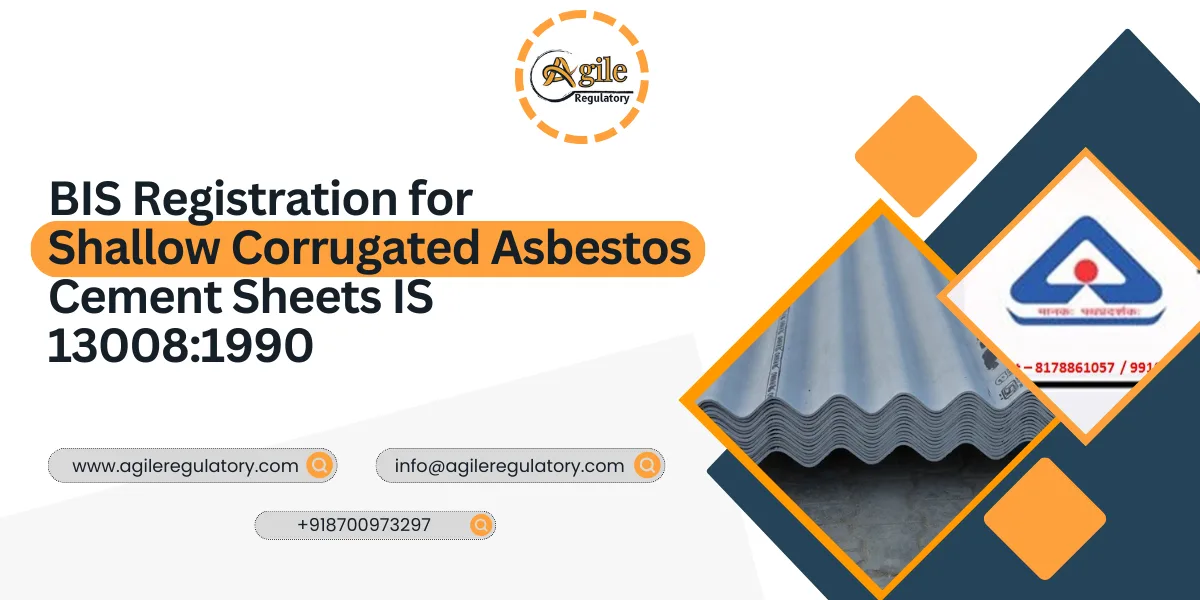
BIS registration for Shallow Corrugated Asbestos Cement Sheets under IS 13008:1990 is mandatory in India to ensure product quality, safety, and compliance with national standards.
Nishi Chawla
24 Feb 2026
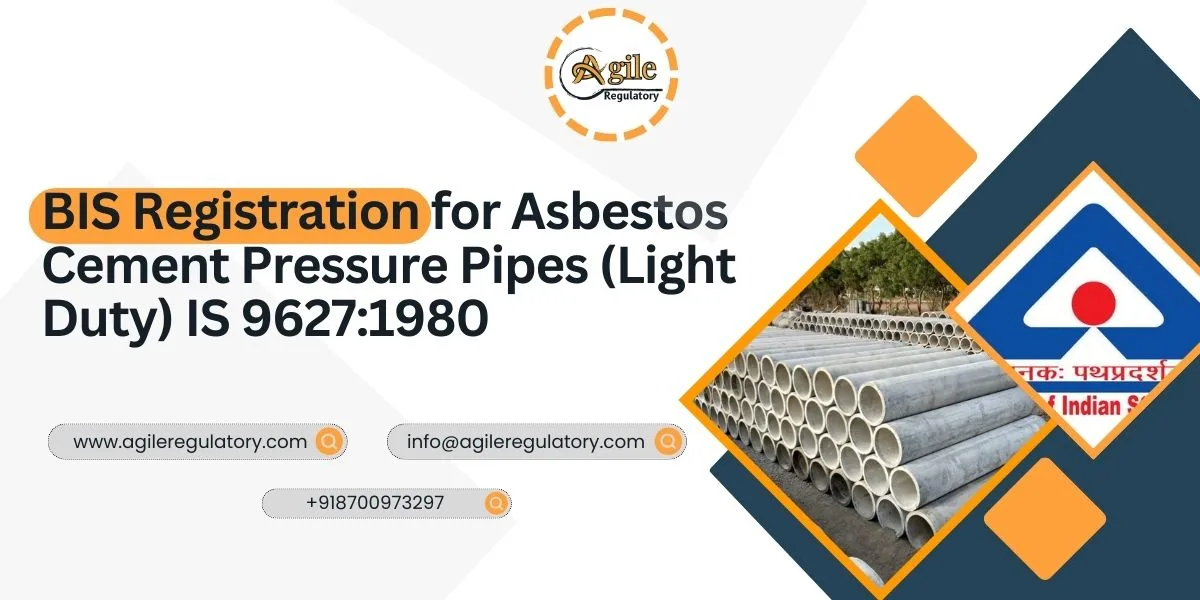
BIS Registration for Asbestos Cement Pressure Pipes (Light Duty) under IS 9627:1980 is mandatory for compliance in India. Manufacturers must obtain ISI Certification to ensure product quality and safety standards. We provide end-to-end support for docum
Nishi Chawla
23 Feb 2026
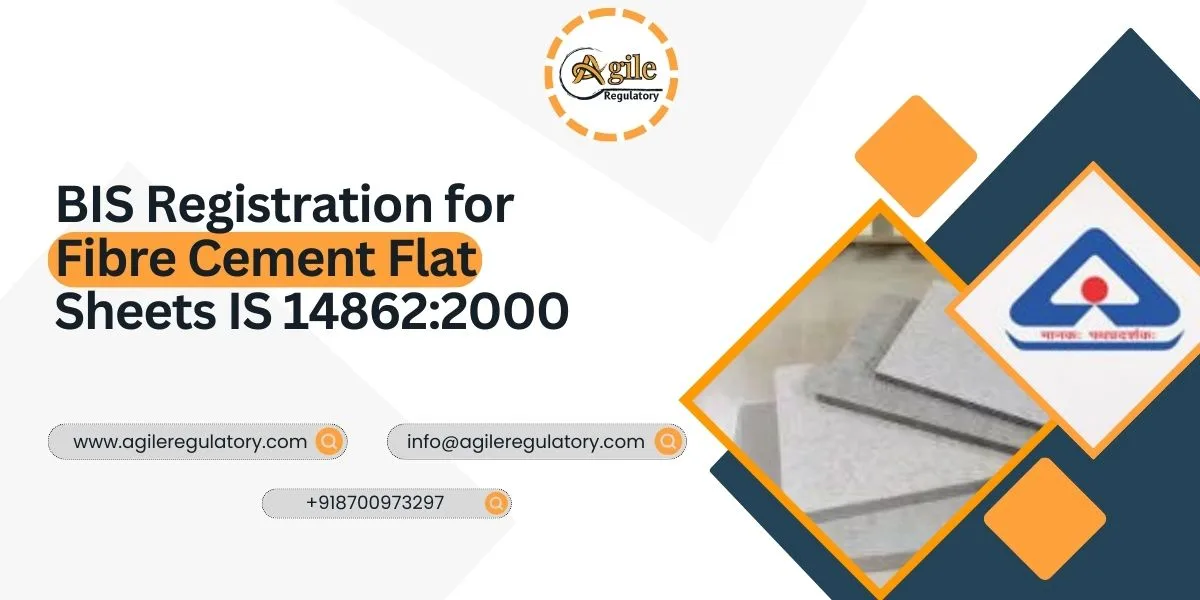
This guide explains the process of obtaining BIS (Bureau of Indian Standards) registration for fibre cement flat sheets as per the IS 14862:2000 standard, ensuring compliance with Indian quality and safety regulations.
Nishi Chawla
23 Feb 2026
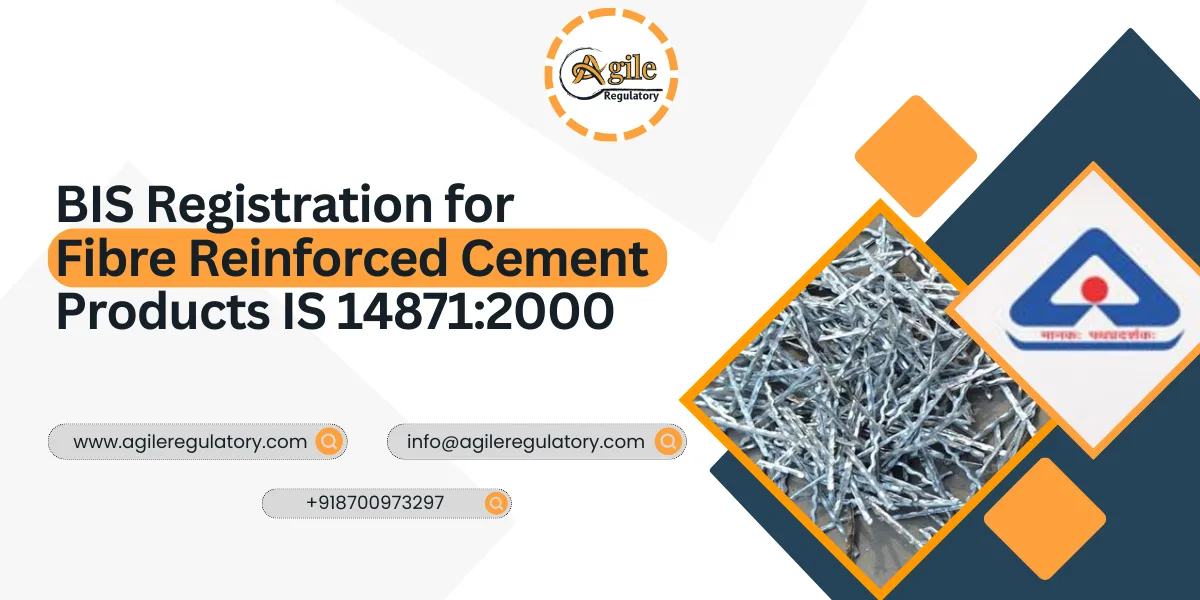
BIS registration for fiber-reinforced cement products under IS 14871:2000 ensures quality, safety, and compliance with Indian standards.
Nishi Chawla
20 Feb 2026
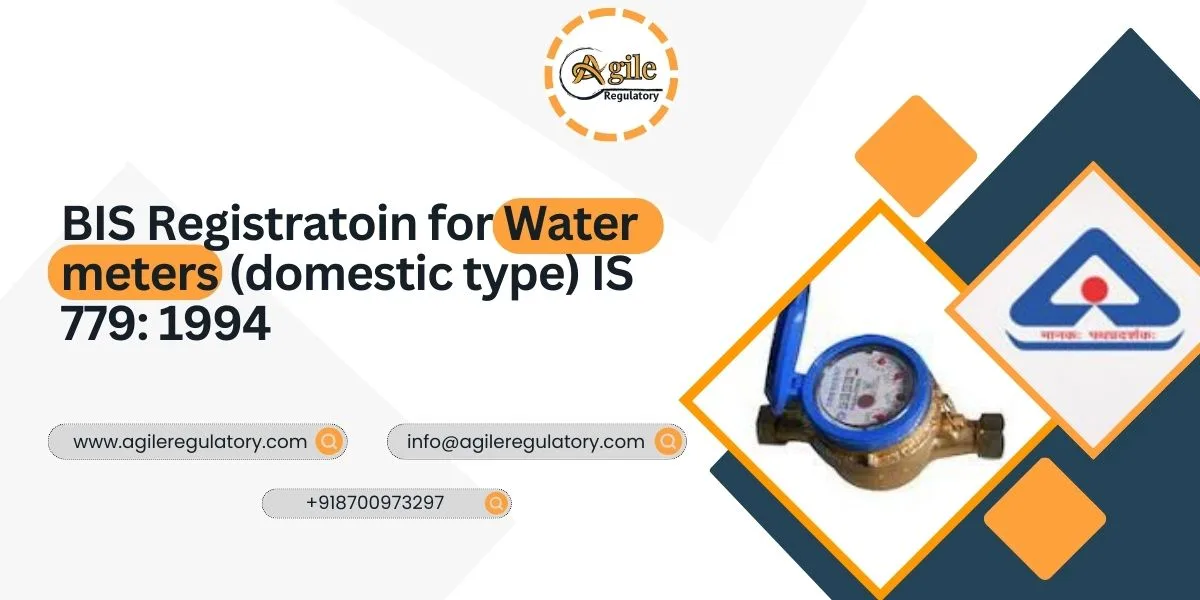
BIS Registration for Water Meters (Domestic Type) under IS 779: 1994 is mandatory to ensure quality, accuracy, and compliance with Indian standards. The certification verifies that domestic water meters meet performance, safety, and durability requirement
Nishi Chawla
20 Feb 2026
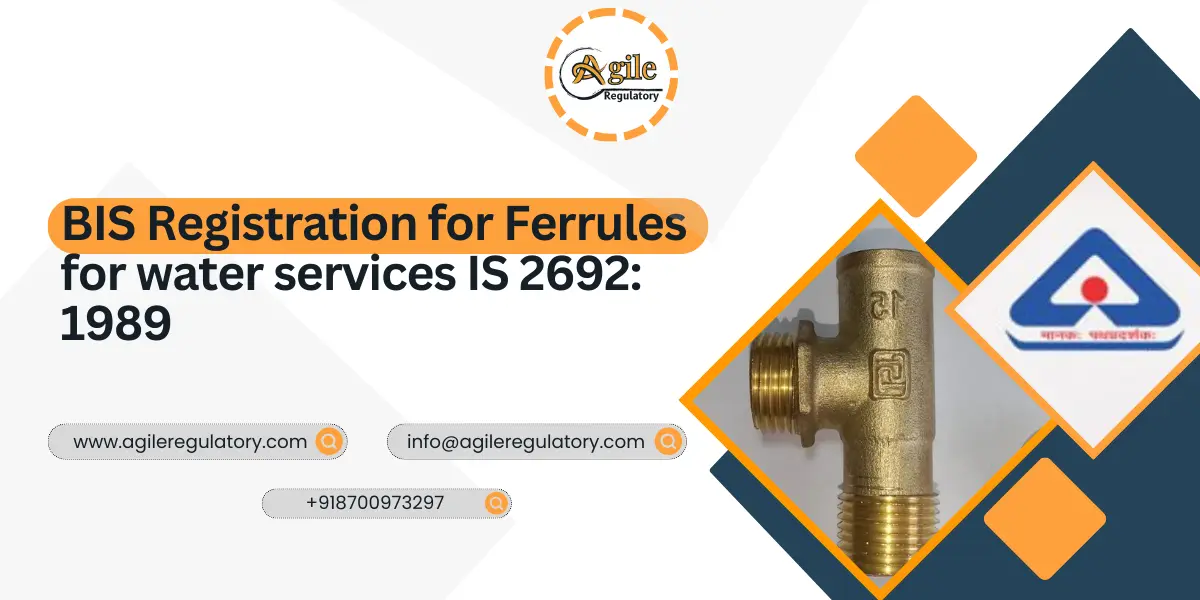
BIS registration ensures ferrules for water services comply with IS 2692:1989 prescribed national standards set by Bureau of Indian Standards.
Nishi Chawla
18 Feb 2026
Get Bureau of Indian Standards (BIS) ISI Mark Registration for Glass Fibre Reinforced Gypsum (GFRG) Panels as per IS 17400:2021. This certification ensures that GFRG panels meet the required quality, strength, safety, and performance standards for use in
Nishi Chawla
18 Feb 2026
BIS ISI Mark Registration for Gypsum Plaster Boards – Coated/Laminated is mandatory as per IS 2095 (Part 2): 2022 to ensure product quality and safety compliance in India. Manufacturers must obtain certification from the Bureau of Indian Standards before
Nishi Chawla
17 Feb 2026
BIS ISI Mark Registration under IS 302 (Part 2/Sec 21): 2018 is mandatory for manufacturers of stationary storage-type electric water heaters in India.
Nishi Chawla
17 Feb 2026
BIS ISI Mark certification is mandatory for Reinforced Gypsum Plaster Boards and Ceiling Tiles under IS 2095 (Part 3):2022. The certification ensures product quality, safety, and compliance with Bureau of Indian Standards norms. Our experts provide comp
Nishi Chawla
16 Feb 2026
BIS ISI Mark Registration under IS 368:2014 certifies electric immersion water heaters for safety, quality, and compliance standards in India.
Nishi Chawla
16 Feb 2026
BIS ISI Mark Registration for Electric Instantaneous Water Heaters is mandatory under IS 302 standards in India. Manufacturers must obtain certification from the Bureau of Indian Standards (BIS) to ensure product safety, quality, and compliance with India
Nishi Chawla
29 Jan 2026
We provide expert BIS consultancy in Delhi and Haryana, helping businesses obtain Bureau of Indian Standards certification quickly and efficiently. Our experienced consultants guide you through compliance, documentation, and registration, ensuring a smoot
Nishi Chawla
29 Jan 2026
BIS certification costs vary by product, scheme, and manufacturer. Typical fees include application (₹1,000–₹5,000), testing (₹15,000–₹75,000+), inspection/audit charges, annual license, and marking fees.
Nishi Chawla
27 Jan 2026
This standard (IS 2082:2018) specifies the requirements for stationary storage-type electric water heaters. It covers aspects like design, construction, performance, safety, and testing to ensure reliable and safe operation of these appliances. Manufactur
Nishi Chawla
27 Jan 2026
BIS ISI mark registration certifies that mini domestic water heaters for use with piped natural gas (PNG) meet the quality and safety standards outlined in IS 17150:2019. This certification ensures compliance, consumer trust, and market acceptance of your
Nishi Chawla
22 Jan 2026
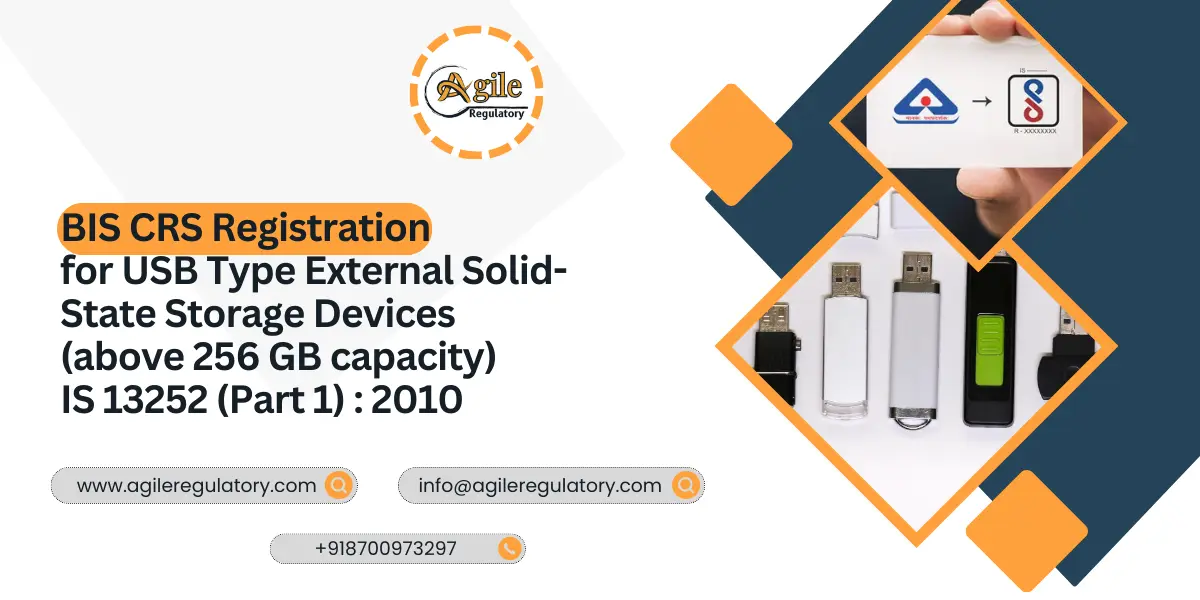
The Bureau of Indian Standards (BIS) mandates Compulsory Registration Scheme (CRS) certification for USB-type external solid-state storage devices with capacities above 256 GB.
Nishi Chawla
22 Jan 2026
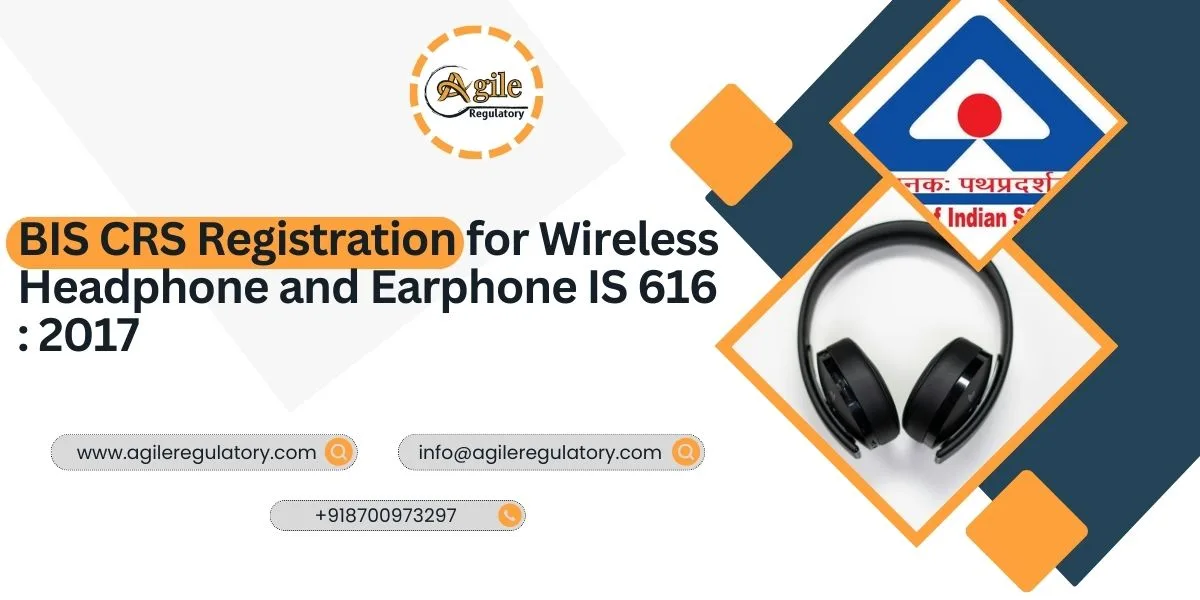
BIS CRS Registration for Wireless Headphones and Earphones as per IS 616:2017 is mandatory for selling these products in India. It ensures safety, quality, and legal compliance while helping brands gain customer trust and smooth market entry.
Nishi Chawla
21 Jan 2026
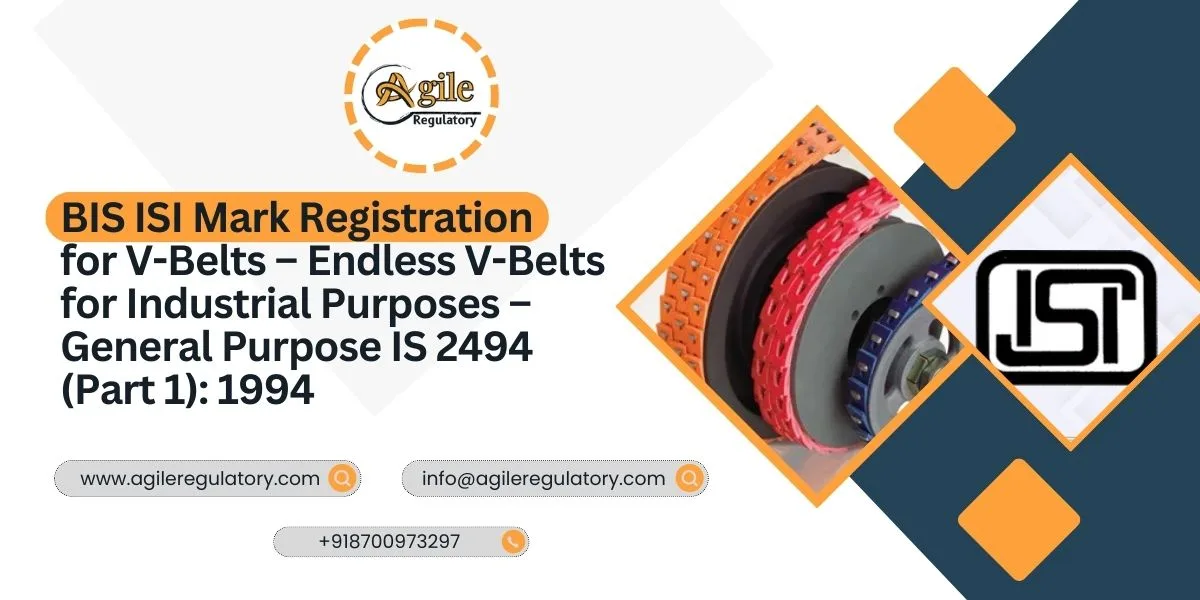
BIS ISI Mark Registration for V-Belts under IS 2494 (Part 1): 1994 specifies the quality, performance, and safety requirements for endless V-belts used in general industrial applications, ensuring durability, reliability, and compliance with Indian standa
Nishi Chawla
21 Jan 2026
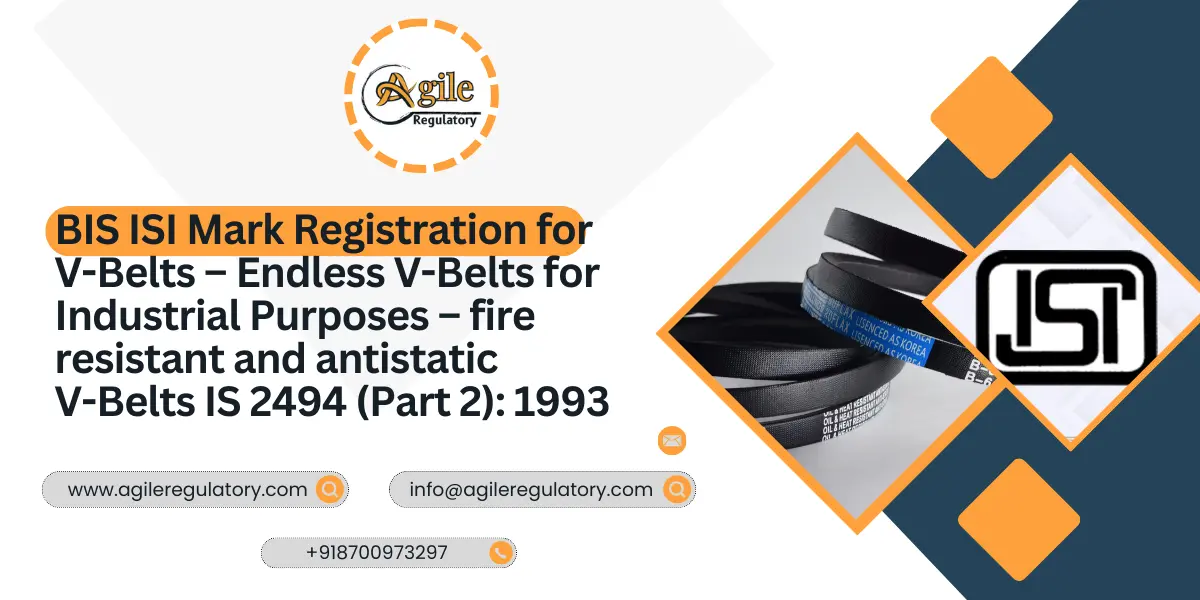
BIS ISI Mark Registration for fire resistant and antistatic endless V-belts is mandatory under IS 2494 (Part 2): 1993
Divya Saxena
20 Jan 2026
BIS CRS Registration 2026 introduces revised rules for testing, labeling, and documentation to strengthen product safety and compliance.
We simplify compliance through a proven 4-step process: Consultation, Documentation, Submission, and certification. From understanding requirements to getting final approvals, we deliver a smooth, timely, and fully compliant journey for your business.


What our customer says about us
Lavkush Sharma
KTPL Instruments
Fantastic support from the team. Their expertise transformed our approach, driving remarkable outcomes. A must-have partner for businesses seeking effective consulting solutions. Highly recommended.

Nitin Mukesh
Justrack IOT
Agile Regualtory delivers exceptional solutions. Their insightful guidance streamlined our processes and boosted profitability. Highly recommended for businesses seeking expert consulting services to thrive.
Pradeep Varma
Coaire Compressor
Impressed by Agile Regulatory's expertise. Their strategic insights and practical solutions have elevated our business operations. A reliable partner for effective consulting services. Highly recommended for growth-focused businesses.

Bharat Bachwani
Easy Polymer
Extraordinary consulting services. Their insightful solutions and dedicated team reshaped our business, driving remarkable improvements. Highly recommend it for transformative results.

Atul Jain
Tarus International
Incredible experience with Agile Regulatory. Their innovative strategies and expert advice revitalized our business model, resulting in impressive growth. Highly recommend their exceptional consulting services.
Paramjeet Singh
Anchor Weighing
Top-tier consulting! offered strategic solutions that revolutionized our approach. Their deep expertise and personalized guidance made a significant impact on our success. Highly recommend their services.
Anshul Rathi
AM Capacitor
Agile Regulatory exceeded expectations! Their tailored solutions, expertise, and proactive approach led to remarkable results. Highly recommend for businesses seeking impactful and strategic guidance.

Shekhar Maurya
Imaxx Pro Aquistic
Outstanding service! delivered targeted solutions with professionalism and expertise. Their insights elevated our business strategies, resulting in noticeable growth. Highly recommended for exceptional consultation.
Trusted by over 1,00,000 + Global Brands in the past 15+ years


.webp)








Leave a Reply
Your email address will not be published. Required fields are marked *