


Get Instant Solution By an Expert Advisor
(4.8)
Fast replies · No spam · Real experts
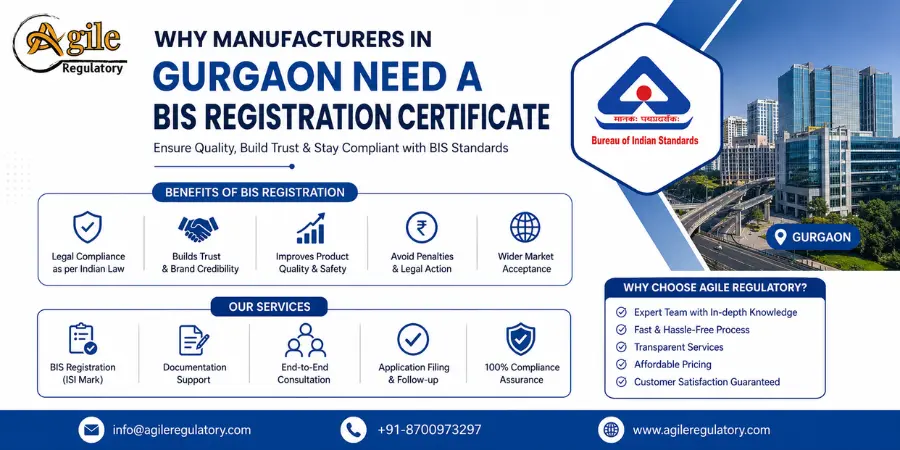
Over 300 product categories now carry mandatory BIS certification requirements under gazette-notified Quality Control Orders. A large share of those categories maps directly onto Gurgaon's production base. Manufacturers who don't know their product's certification status aren't just running a compliance risk. They're running a market access risk.
BIS registration is the legal pre-condition for manufacturing, storing, selling, or importing any QCO-notified product in India. No valid certificate means no legal right to sell.
Most of what Gurgaon manufacturers produce falls under one of these three certification routes:
|
Scheme |
Who It Covers |
What It Involves |
|
Scheme I (ISI Mark) |
Domestic manufacturers of consumer goods, steel, cement, electrical equipment, chemicals, industrial products |
Factory inspection by BIS, product testing at recognised lab, ISI mark on product |
|
Scheme II (CRS) |
Manufacturers of electronics, IT products, solar components, select chemicals and textiles |
Self-declaration of conformity after lab testing; R-number assigned on product |
|
FMCS |
Foreign manufacturers across Scheme I categories |
Same inspection process applied to overseas production facility |
How to Apply for BIS Certificate Registration in India in 2025?
Three factors make BIS compliance more pressing here than in most other cities.
Product range: Steel, wiring accessories, domestic electrical appliances, LED lighting, automotive parts, packaged consumer goods: nearly all sit under mandatory BIS. A manufacturer in Gurgaon making two or three different product lines may be looking at multiple simultaneous certification obligations.
Buyer scrutiny: Large OEMs and retail chains with procurement offices in or near Gurgaon run supplier compliance checks before approving purchase orders. A BIS certificate has become a baseline document in that process, not something requested as an afterthought.
Export implications: Shipments leaving Indian ports without valid certification, where one is required, create clearance problems at both the Indian and receiving-country end.
These are indicative figures only. BIS fees vary by product category, scheme, number of models, and enterprise size.
CRS (Scheme II) applicants can expect:
Application and lab testing: Rs. 50,000 to Rs. 1,50,000 depending on models and scope
Per-model lab testing: Rs. 10,000 to Rs. 30,000
ISI Mark (Scheme I) costs are structured differently:
Application fee, factory inspection charges, and lab testing costs are product-specific
License fee after grant Rs. 1,000 annually
Annual minimum marking fee applies post-certification
MSMEs qualify for concessions on BIS fees. Grouping multiple product models in a single application reduces per-unit testing costs.
Start by identifying the Indian Standard that governs your product. That IS code determines the scheme, the test parameters, and the lab requirements. Getting this wrong at the start wastes months.
Once the standard is confirmed, register on the BIS portal at manakonline.in. Product samples go to a BIS-recognised laboratory. Test reports are valid for 90 days at time of submission, not from the date of testing. That window matters when planning application timing.
For Scheme I, the application goes in on Form V with technical documentation. BIS officers then conduct a factory inspection covering production processes, quality controls and premises. Certification follows if the product and facility meet the standard
For CRS, Form I and a self-declaration of conformity are submitted through the SMART Registration portal. There's no factory inspection under CRS. The R-number on the certificate goes on the product itself.
After certification, compliance doesn't stop. BIS runs periodic market surveillance and audits. Failures caught post-certification lead to suspension, not just warnings.
A buyer finds out mid-relationship that a supplier's BIS certificate lapsed. Most don't wait for it to be renewed. They switch suppliers.
That's the commercial version of the risk. The legal version runs under the BIS Act, 2016: penalties for selling or distributing a QCO-notified product without valid certification include product seizure, fines, and imprisonment. BIS enforcement teams conduct market sweeps. Repeat violations escalate penalties significantly.
Agile Regulatory works with manufacturers across Gurgaon on BIS certification, from scheme identification and documentation through lab coordination, portal filing, and post-certification audit support. Get your product compliance position reviewed before your next production run.
BIS Chennai Certificate Registration Process, Documents, and Fees
Not for every product. Mandatory certification applies only to products covered by gazette-notified QCOs. Currently over 300 product categories fall under this requirement. Check your IS code against the current QCO list before assuming either way.
Scheme I typically takes 30 to 45 days post-submission assuming the factory inspection goes smoothly. CRS runs faster often 15 to 30 days given there's no factory inspection requirement
ISI mark (Scheme I) covers most consumer, industrial and construction goods. It requires a factory visit. CRS (Scheme II) covers electronics and IT products, runs on a self-declaration model and issues a registration certificate with an R-number instead of a license


You might also be interested in these articles.
Divya Saxena
21 Sep 2026
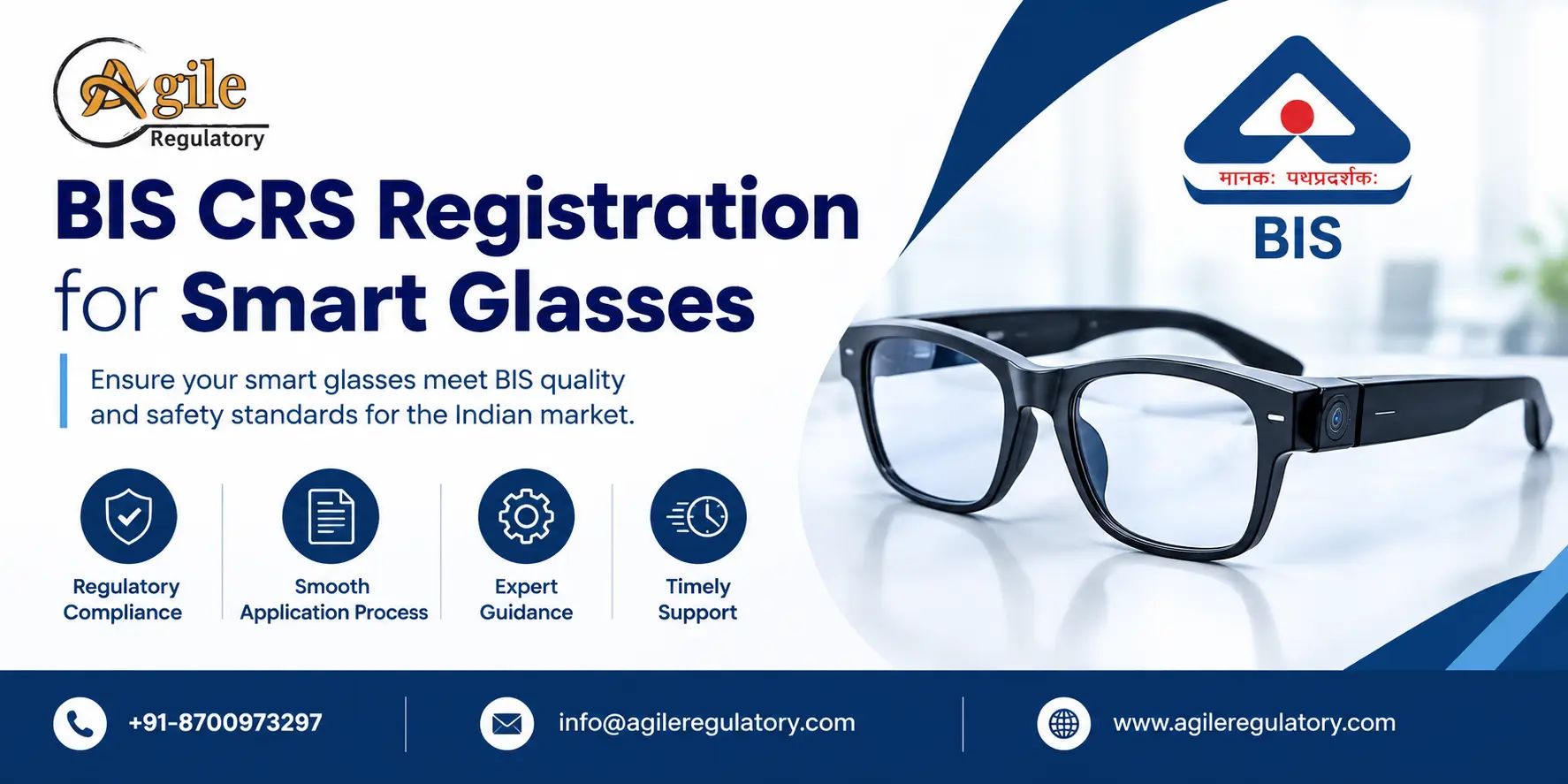
BIS CRS Registration for Smart Glasses helps businesses understand applicable standards, testing requirements, documentation, and registration steps for compliant smart glasses in the Indian market.
Nishi Chawla
27 Apr 2026
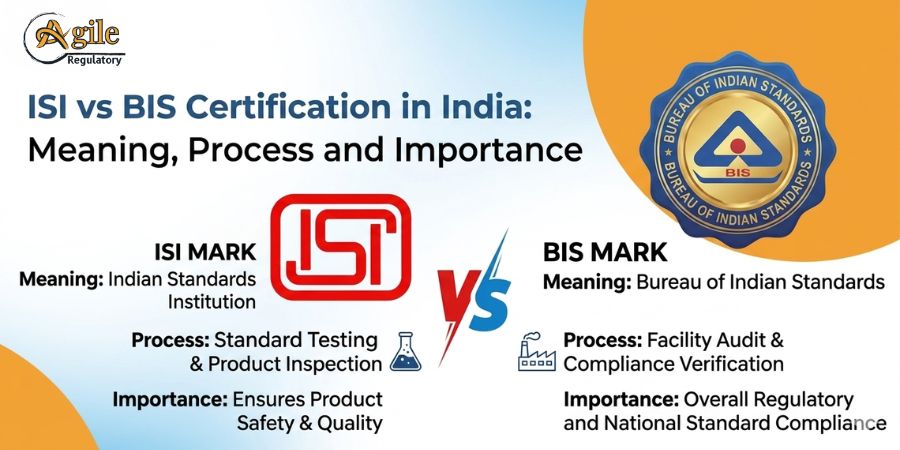
The mark stayed the same. The ISI Indian Standards Institution, was founded in 1947 as India's first national standardization body. It made the ISI mark and ran product certification in India for many years. Parliament passed the Bureau of Indian Standard
Nishi Chawla
16 Apr 2026
CRS Registration under BIS is a mandatory certification for certain electronic and IT products in India to ensure they meet prescribed safety standards. Introduced by the Bureau of Indian Standards, the Compulsory Registration Scheme (CRS) requires manufa
Nishi Chawla
10 Apr 2026
BIS registration for air filters used in general ventilation under IS 17570 (Part 1): 2021 aligns with ISO 16890-2: 2016 standards. This certification ensures that air filters meet quality, performance, and efficiency requirements for improved indoor air
Nishi Chawla
10 Apr 2026
BIS Registration for toasters, grills, and roasters under IS 302 (Part 2/Sec 9): 2009 is mandatory to ensure these appliances meet Indian safety and quality standards. This certification verifies that the products are tested for electrical safety, perform
Nishi Chawla
07 Apr 2026
Agile Regulatory offers reliable BIS ISI Mark consulting services in Punjab. We help businesses with end-to-end certification support and compliance. Ensure fast approval and smooth processing with our expert team.
Nishi Chawla
01 Apr 2026
BIS registration is mandatory for domestic electric clothes washing machines in India. It ensures product safety and compliance with IS 302 standards. Expert guidance helps achieve quick and hassle-free certification.
Nishi Chawla
01 Apr 2026
BIS registration ensures quality, safety, and compliance for corrugated and semi-corrugated asbestos cement sheets under IS 459:1992 standards' official requirements.
Nishi Chawla
30 Mar 2026
BIS registration for range hoods ensures compliance with Indian safety standards under IS 302 (Part 2/Sec 31): 2009. It is mandatory for manufacturers and importers to sell these products in the Indian market. Expert assistance from Agile Regulatory sim
Nishi Chawla
30 Mar 2026
BIS registration ensures safety and quality compliance for skin and hair care appliances under IS 302 (Part 2/Sec 23):2009 standards.
Nishi Chawla
27 Mar 2026
IS 302 (Part 2/Sec 75): 2018 is an Indian Standard that specifies safety requirements for commercial dispensing appliances and vending machines, including those used for food, beverages, and other products.
Nishi Chawla
27 Mar 2026
BIS registration under IS 302 (Part 2/Sec 80): 2017 is mandatory for electric fans to ensure safety and compliance with Indian standards. Our service provides end-to-end support including documentation, product testing, and certification, ensuring a smoot
Nishi Chawla
24 Mar 2026
BIS certification ensures multi-burner oil pressure stoves meet safety, quality, and performance standards for reliable, efficient, and safe household use.
Nishi Chawla
16 Mar 2026
A BIS Hallmark Consultant helps jewelers and businesses obtain mandatory hallmark certification for gold and silver in India. They assist with registration, documentation, compliance, and coordination with the Bureau of Indian Standards (BIS). Their exper
Nishi Chawla
10 Mar 2026
Learn about the BIS Registration for Asbestos Cement Flat Sheets as per IS 2096:1992. Understand the certification process, required documents, testing standards, and compliance requirements to legally manufacture or import asbestos cement flat sheets in
Nishi Chawla
10 Mar 2026
BIS Registration for Asbestos Cement Pressure Pipes and Joints ensures compliance with IS 1592:2003 standards in India. Manufacturers must obtain BIS certification to use the ISI mark and sell products in the Indian market. Our experts assist with docum
Nishi Chawla
03 Mar 2026
BIS ISI Mark registration for asbestos cement pipes and fittings under IS 6908:1991 ensures quality compliance for sewerage and drainage systems.
Nishi Chawla
03 Mar 2026
BIS ISI certification is mandatory for Asbestos Cement Building Boards under IS 2098:1997. Manufacturers must comply with quality standards and pass BIS-approved lab testing. We provide end-to-end support for smooth and quick ISI mark registration.
Nishi Chawla
27 Feb 2026
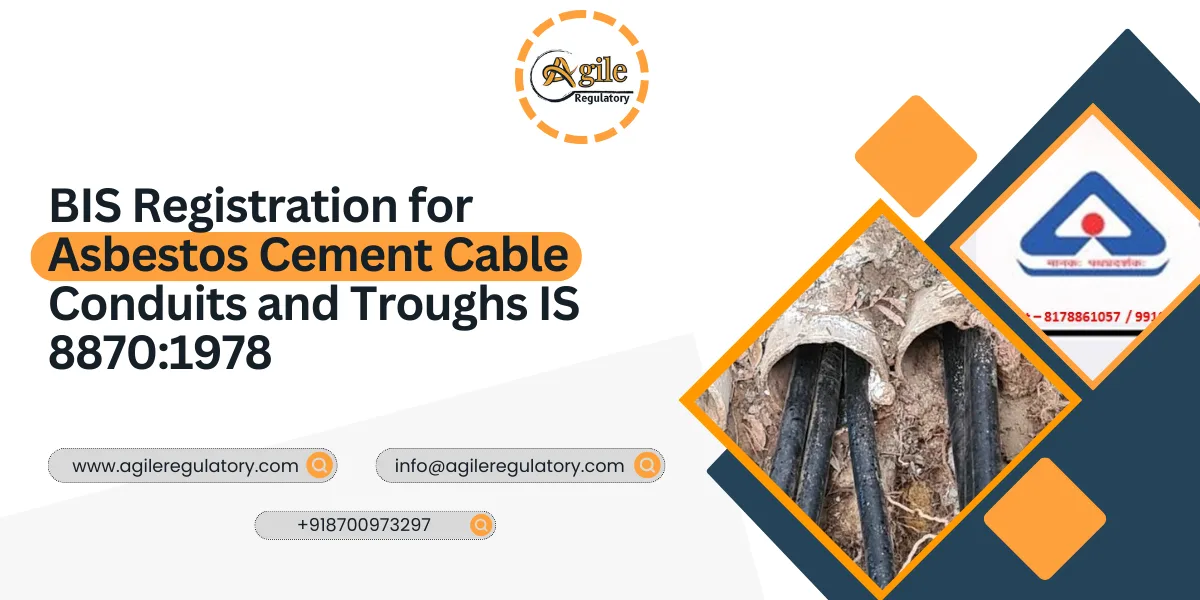
BIS registration under the Bureau of Indian Standards (BIS) is mandatory for manufacturers of asbestos cement cable conduits and troughs in India.
Nishi Chawla
27 Feb 2026
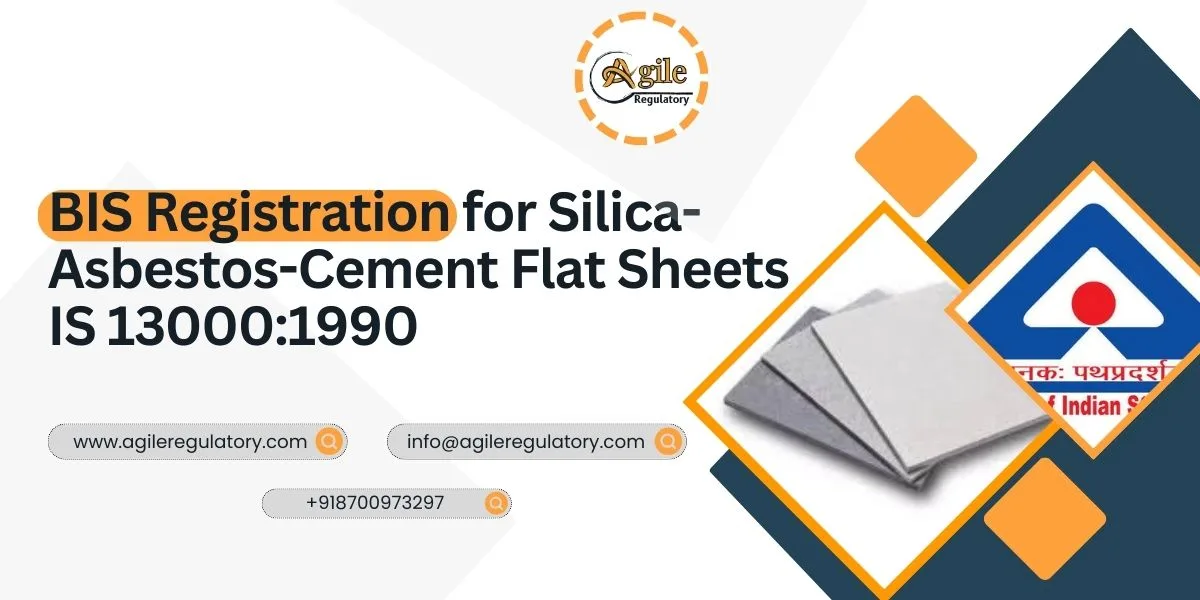
BIS Registration for Silica-Asbestos-Cement Flat Sheets under IS 13000:1990 is mandatory to ensure product quality and safety compliance in India. Manufacturers must meet the standards set by the Bureau of Indian Standards before selling in the Indian mar
Nishi Chawla
24 Feb 2026
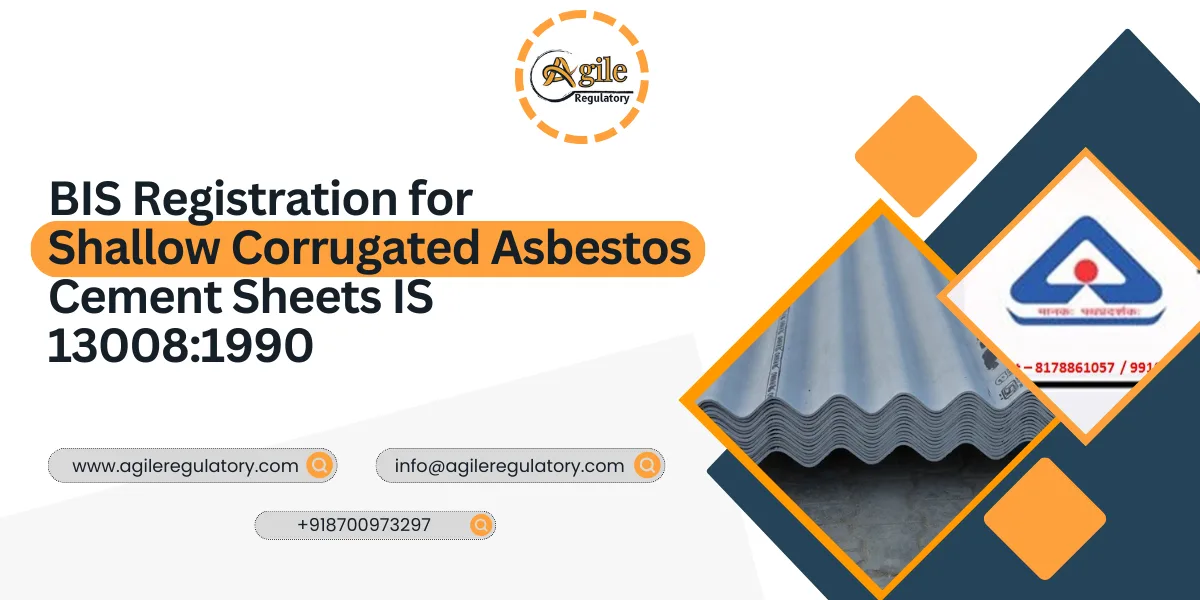
BIS registration for Shallow Corrugated Asbestos Cement Sheets under IS 13008:1990 is mandatory in India to ensure product quality, safety, and compliance with national standards.
Nishi Chawla
24 Feb 2026
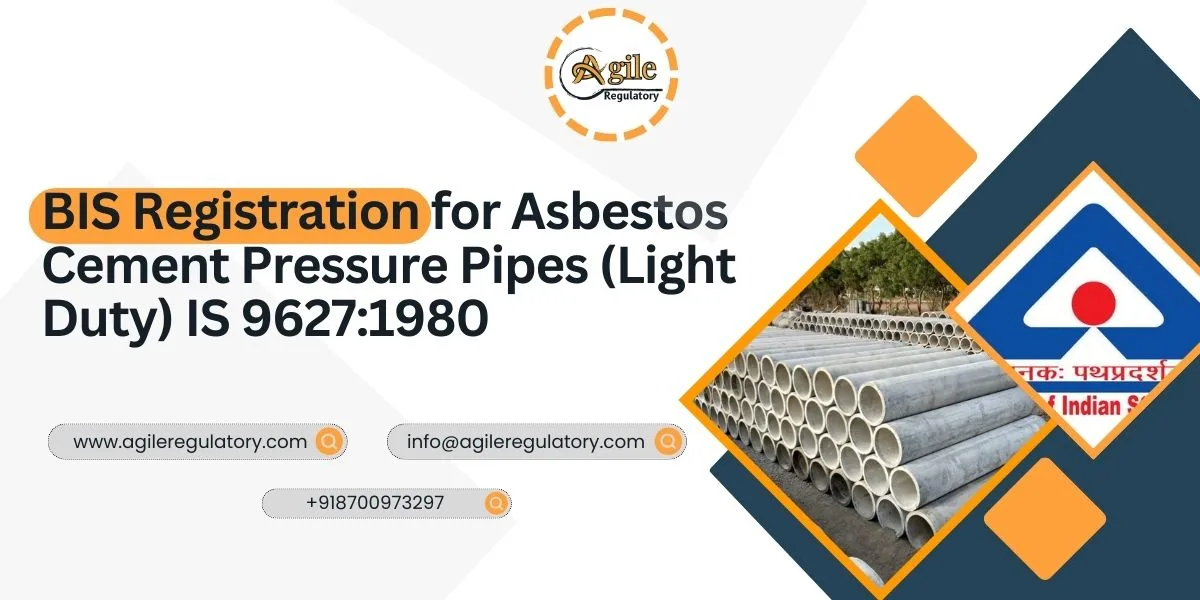
BIS Registration for Asbestos Cement Pressure Pipes (Light Duty) under IS 9627:1980 is mandatory for compliance in India. Manufacturers must obtain ISI Certification to ensure product quality and safety standards. We provide end-to-end support for docum
Nishi Chawla
23 Feb 2026
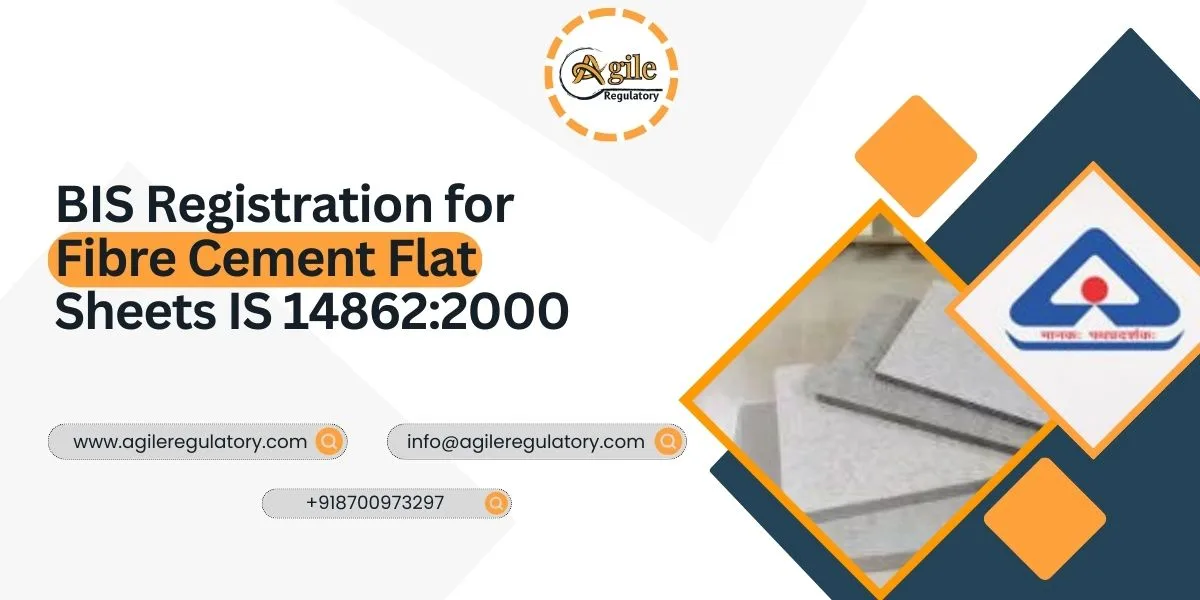
This guide explains the process of obtaining BIS (Bureau of Indian Standards) registration for fibre cement flat sheets as per the IS 14862:2000 standard, ensuring compliance with Indian quality and safety regulations.
Nishi Chawla
23 Feb 2026
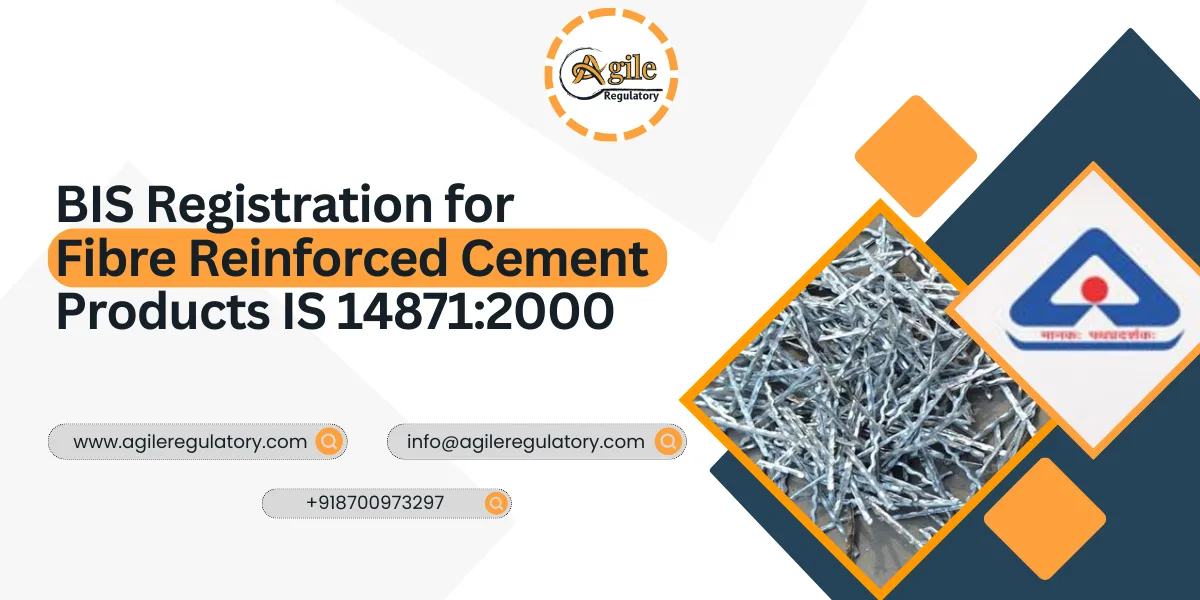
BIS registration for fiber-reinforced cement products under IS 14871:2000 ensures quality, safety, and compliance with Indian standards.
Nishi Chawla
20 Feb 2026
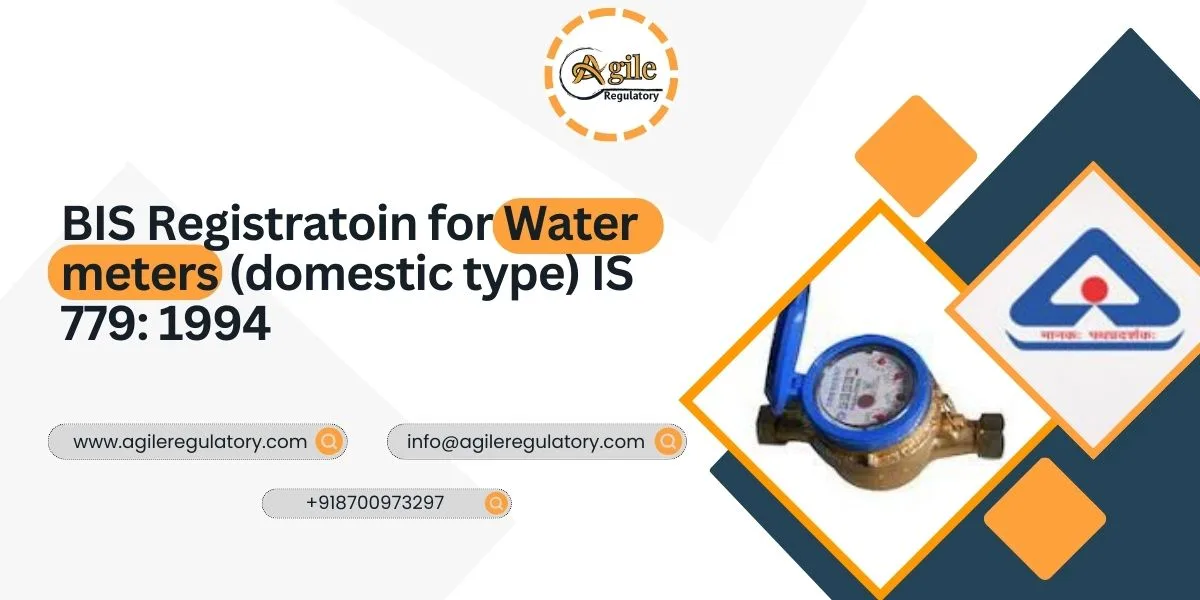
BIS Registration for Water Meters (Domestic Type) under IS 779: 1994 is mandatory to ensure quality, accuracy, and compliance with Indian standards. The certification verifies that domestic water meters meet performance, safety, and durability requirement
Nishi Chawla
20 Feb 2026
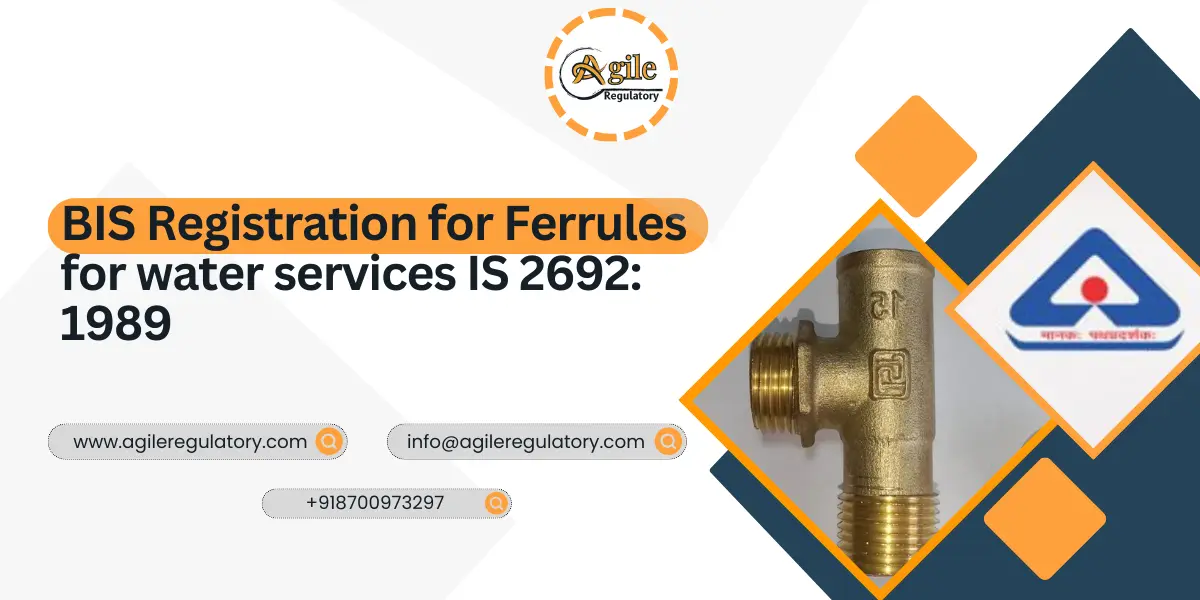
BIS registration ensures ferrules for water services comply with IS 2692:1989 prescribed national standards set by Bureau of Indian Standards.
We simplify compliance through a proven 4-step process: Consultation, Documentation, Submission, and certification. From understanding requirements to getting final approvals, we deliver a smooth, timely, and fully compliant journey for your business.


What our customer says about us

Lavkush Sharma
KTPL Instruments
Agile Regulatory handled my BIS Certification registration smoothly. Their expert team ensured quick approvals, transparent pricing, and a completely stress-free compliance experience.

Nitin Mukesh
Justrack IOT
We are grateful to Agile Regulatory for their excellent support. Their team showed patience, expertise, and professionalism throughout, providing clear guidance and making the entire process smooth and hassle-free.
Pradeep Varma
Coaire Compressor
Being an excellent BIS Certification Consultant provider, they help customers with all requirements such as BIS Certification, CDSCO services, Agile Regulatory support, legal issues, and lab testing with quick results.

Bharat Bachwani
Easy Polymer
With the help of Agile Regulatory, we have made significant progress in our business. Their service is fast, genuine, and reliable. We look forward to continued success together in the future.

Atul Jain
Tarus International
Many thanks to Agile Regulatory for all the support, guidance, and expert advice. Their professional approach and consistent assistance have made a significant difference.

Paramjeet Singh
Anchor Weighing
Top-tier consulting! offered strategic solutions that revolutionized our approach. Their deep expertise and personalized guidance made a significant impact on our success. Highly recommend their services.

Anshul Rathi
AM Capacitor
Agile Regulatory exceeded expectations! Their tailored solutions, expertise, and proactive approach led to remarkable results. Highly recommend for businesses seeking impactful and strategic guidance.

Shekhar Maurya
Imaxx Pro Aquistic
Outstanding service! delivered targeted solutions with professionalism and expertise. Their insights elevated our business strategies, resulting in noticeable growth. Highly recommended for exceptional consultation.
Trusted by over 1,00,000 + Global Brands in the past 15+ years




.webp)





Leave a Reply
Your email address will not be published. Required fields are marked *