


Get Instant Solution By an Expert Advisor
(4.8)
Fast replies · No spam · Real experts
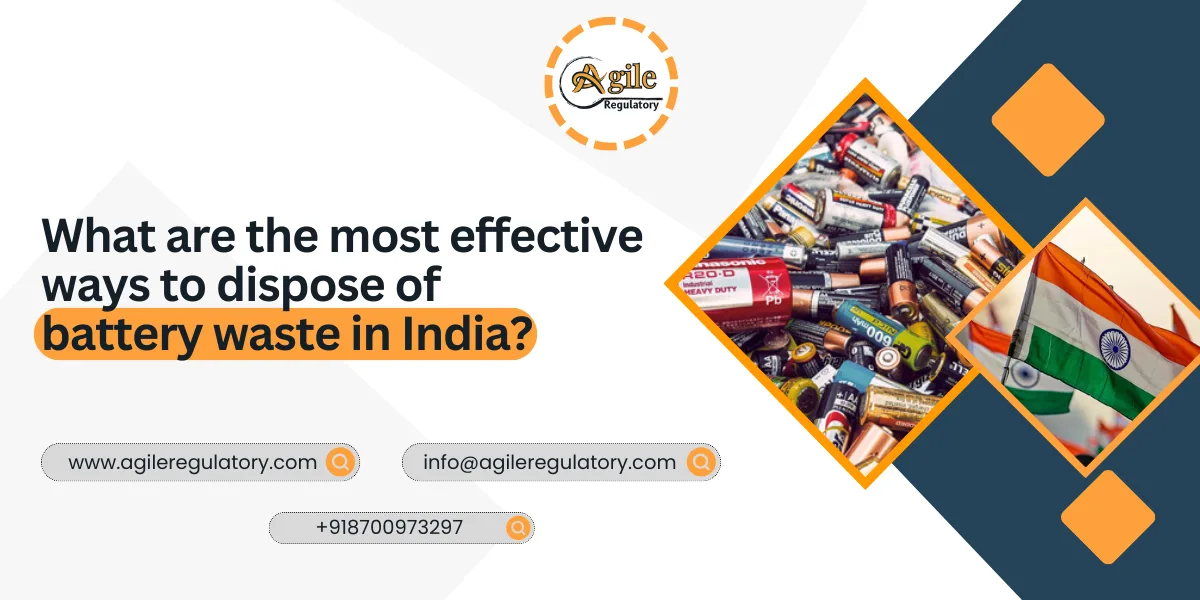
Batteries play a vital role in modern life. From smartphones and laptops to electric vehicles and household appliances, batteries power many of the devices we rely on every day. However, as battery usage continues to grow in India, the problem of battery waste is also increasing. Improper disposal of batteries can cause serious environmental and health hazards because they contain toxic materials such as lead, mercury, cadmium, and lithium.
If these materials leak into soil or water, they can contaminate ecosystems and pose risks to human health. Therefore, proper battery waste disposal is essential for sustainable development and environmental protection in India. This blog explores the most effective ways to dispose of battery waste safely and responsibly.
What are the most popular E-waste disposal Methods in India?
Battery waste refers to used or discarded batteries that can no longer be used for their intended purpose. In India, several types of batteries contribute to waste generation, including:
Improper disposal of batteries can lead to significant environmental damage. Many people still throw used batteries in regular household waste, which eventually ends up in landfills. When batteries break down in landfills, they release toxic substances into the soil and groundwater.
For example, lead from lead-acid batteries can contaminate soil and water sources. Mercury and cadmium can harm aquatic life and enter the food chain. Lithium-ion batteries may also cause fire hazards if not handled properly. Therefore, responsible disposal practices are necessary to minimize these risks.
The Indian government has introduced regulations to address the growing problem of battery waste. One of the most important policies is the Battery Waste Management Rules, which aim to ensure the proper collection, recycling, and disposal of used batteries.
These rules promote Extended Producer Responsibility (EPR), which means manufacturers and importers are responsible for collecting and recycling the batteries they sell. This system encourages companies to establish collection centers and recycling programs to manage battery waste effectively.
One of the most important steps in managing battery waste is segregation. Used batteries should never be mixed with regular household garbage. Instead, they should be stored separately in a safe container until they can be properly disposed of.
India has many authorized collection centers that accept used batteries for recycling. These centers are often operated by battery manufacturers, retailers, or recycling companies.
Consumers can drop off their used batteries at these locations, ensuring they are handled safely and recycled in an environmentally responsible manner.
Recycling is one of the most effective ways to manage battery waste. Certified recycling facilities are equipped with the technology needed to extract valuable materials such as lead, lithium, nickel, and cobalt from used batteries.
These recovered materials can then be reused to manufacture new batteries and other products. Recycling not only reduces environmental pollution but also conserves natural resources.
Many battery manufacturers in India offer take-back programs, where consumers can return used batteries to retailers or service centers. These programs are part of the Extended Producer Responsibility system.
Take-back programs make it easier for consumers to dispose of batteries properly while ensuring that manufacturers handle recycling and waste management responsibly.
Public awareness plays a crucial role in effective battery waste disposal. Many people are still unaware of the environmental risks associated with improper battery disposal.
Educational campaigns, school programs, and community initiatives can help inform citizens about safe disposal methods. When people understand the importance of responsible waste management, they are more likely to adopt sustainable practices.
Before disposing of used batteries, it is important to store them safely. Batteries should be kept in a cool, dry place and protected from extreme heat or moisture. For lithium-ion batteries, covering the terminals with tape can help prevent short circuits.
Proper storage reduces the risk of leakage, fire hazards, and accidental damage.
BIS CRS Mark Registration for Lead Acid Battery IS-16270:2014
Despite the availability of regulations and recycling systems, several challenges remain in battery waste management in India. One major issue is the lack of awareness among consumers about proper disposal methods. Many people still dispose of batteries in regular trash.
Another challenge is the presence of informal recycling sectors that may use unsafe methods to extract valuable metals. These practices can harm workers and pollute the environment. Strengthening regulations and encouraging safe recycling practices are essential to address these issues.
Battery waste is an increasingly important environmental issue in India. Improper disposal can lead to serious health and environmental consequences due to the toxic materials present in batteries. However, effective solutions such as segregation, authorized collection centers, recycling facilities, and producer take-back programs can help manage this waste responsibly.


We simplify compliance through a proven 4-step process: Consultation, Documentation, Submission, and certification. From understanding requirements to getting final approvals, we deliver a smooth, timely, and fully compliant journey for your business.


What our customer says about us

Lavkush Sharma
KTPL Instruments
Agile Regulatory handled my BIS Certification registration smoothly. Their expert team ensured quick approvals, transparent pricing, and a completely stress-free compliance experience.

Nitin Mukesh
Justrack IOT
We are grateful to Agile Regulatory for their excellent support. Their team showed patience, expertise, and professionalism throughout, providing clear guidance and making the entire process smooth and hassle-free.
Pradeep Varma
Coaire Compressor
Being an excellent BIS Certification Consultant provider, they help customers with all requirements such as BIS Certification, CDSCO services, Agile Regulatory support, legal issues, and lab testing with quick results.

Bharat Bachwani
Easy Polymer
With the help of Agile Regulatory, we have made significant progress in our business. Their service is fast, genuine, and reliable. We look forward to continued success together in the future.

Atul Jain
Tarus International
Many thanks to Agile Regulatory for all the support, guidance, and expert advice. Their professional approach and consistent assistance have made a significant difference.

Paramjeet Singh
Anchor Weighing
Top-tier consulting! offered strategic solutions that revolutionized our approach. Their deep expertise and personalized guidance made a significant impact on our success. Highly recommend their services.
Anshul Rathi
AM Capacitor
Agile Regulatory exceeded expectations! Their tailored solutions, expertise, and proactive approach led to remarkable results. Highly recommend for businesses seeking impactful and strategic guidance.

Shekhar Maurya
Imaxx Pro Aquistic
Outstanding service! delivered targeted solutions with professionalism and expertise. Their insights elevated our business strategies, resulting in noticeable growth. Highly recommended for exceptional consultation.
Trusted by over 1,00,000 + Global Brands in the past 15+ years





Leave a Reply
Your email address will not be published. Required fields are marked *