


Get Instant Solution By an Expert Advisor
(4.8)
Fast replies · No spam · Real experts
.webp)
The answer is that an EV battery may still have value even when it is no longer suitable for powering a vehicle. Depending on its condition, battery cells and modules can potentially be tested, refurbished, repurposed for stationary energy storage, or sent to an authorised recycler. At the same time, businesses involved in manufacturing, importing, selling, recycling, or refurbishing batteries need to understand their responsibilities under India's Battery Waste Management Rules, 2022.
For businesses entering the EV battery ecosystem, understanding what is EPR certificate is and how Extended Producer Responsibility works is therefore important for maintaining regulatory compliance.
An EV battery does not necessarily become completely useless when it can no longer provide the performance required by an electric vehicle. A battery pack contains multiple cells and modules. Over time, factors such as charging cycles, temperature, age, and usage can reduce battery capacity. When its capacity falls below the level required for an EV, the battery may no longer be practical for vehicle use. However, some of its components may still have sufficient capacity for other applications.
Depending on the battery's condition, possible options include:
This approach supports the concept of a circular economy by keeping useful battery materials in circulation for as long as possible.
Yes, in some cases. The possibility of reuse depends on the battery's State of Health (SoH), cell condition, thermal stability, internal resistance, and physical condition. A battery that has lost some capacity but remains structurally and electrically stable may be suitable for a second-life application.
For example, batteries removed from EVs may potentially be used for:
However, batteries showing severe damage, swelling, leakage, thermal damage or other safety risks should not simply be reused. They require appropriate handling and treatment by qualified entities.
Plastic Waste EPR Credits Process Explained India
Lithium-ion batteries contain materials that can have economic and environmental value. Recovering these materials through appropriate recycling can reduce the demand for virgin resources and minimise the quantity of battery waste entering unsuitable disposal channels.
For manufacturers and importers, recycling is also connected to regulatory obligations. Under the Battery Waste Management Rules, 2022, the rules apply to batteries across different chemistries, shapes, volumes, weights, material compositions and uses. Producers have Extended Producer Responsibility obligations for batteries introduced into the market. This makes proper collection, recycling, refurbishment and documentation an important part of battery lifecycle management.
EPR stands for Extended Producer Responsibility. An EPR certificate is generally associated with compliance under applicable waste-management regulations and demonstrates or supports the fulfilment of prescribed EPR obligations. In the battery-waste framework, registered recyclers generate certificates/credits based on eligible recycling activities, which producers can use toward their EPR targets. It is important to understand that EPR requirements differ depending on the waste category. Battery EPR, e-waste EPR and plastic packaging EPR operate under different regulatory frameworks and portals.
For battery producers, CPCB operates a dedicated Battery Waste Management EPR portal for producer, recycler and refurbisher registration.
The EPR registration full form is Extended Producer Responsibility Registration. For businesses dealing with batteries, EPR is not simply a certificate for display. It is part of a compliance mechanism through which producers are expected to meet recycling or refurbishing obligations associated with batteries introduced into the Indian market.
Under the Battery Waste Management Rules, producers, recyclers and refurbishers have specific registration and compliance responsibilities. Producers are required to meet their EPR obligations, while recyclers and refurbishers are also brought into the CPCB's online system.
Depending on the business model and activities involved, EPR obligations can apply to entities such as:
The exact applicability should be evaluated based on the entity's role, battery type, sales arrangement and activities. CPCB's Battery EPR portal specifically provides registration routes for producers, recyclers and refurbishers.
Businesses should keep their regulatory and company information ready before starting the registration process.
Typical EPR certificate requirements may include:
The exact information required can vary according to the applicant category and the CPCB portal requirements.
The current CPCB producer registration interface, for example, asks for GST number, company details, establishment information, business type, registered address, PAN/CIN and authorised-person details.
Businesses can generally begin the process by identifying the applicable waste category and applicant type and then registering through the relevant CPCB EPR portal.
For battery-related compliance, the CPCB Battery Waste EPR portal provides online registration facilities for producers, recyclers and refurbishers. A general process can include:
Determine whether the business qualifies as a producer, manufacturer, recycler or refurbisher under the applicable rules.
Register on the applicable CPCB EPR portal using the required business and authorised-person details.
Provide company, GST, PAN, address, and contact information as required.
Submit relevant information about battery types, materials, production/import/sales data, and other applicable details.
Upload the documents and declarations requested by the portal.
Review the information carefully before submitting the application.
If clarification or additional information is requested, the applicant should respond within the prescribed process.
Registration is not the end of the compliance process. Producers may have continuing obligations relating to EPR targets, returns, recycling and documentation.
CPCB's portal also provides guidance manuals and SOPs for producers, recyclers and refurbishers.
Businesses searching for an EPR certificate to apply online or an EPR certificate online should first identify the correct EPR category. This is important because an EPR registration for batteries is different from registration under the E-Waste Management Rules or Plastic Waste Management Rules.
For example, CPCB maintains a dedicated EPR portal for battery waste, while its E-Waste Management System separately handles producer registration and EPR obligations under the E-Waste Management Rules, 2022. Therefore, applying through the correct portal and selecting the correct applicant category can help avoid unnecessary delays.
One common question from businesses is: what is the EPR certificate cost?
There is no single universal EPR certificate price applicable to every business. The overall cost can depend on factors such as:
Businesses should therefore assess the complete compliance requirement rather than choosing a service only on the basis of an advertised price.
Businesses often search for an EPR certificate sample or EPR certificate format before applying. However, the format and information displayed on an official registration document or certificate may vary depending on the applicable waste-management rules, applicant category, and regulatory portal.
For battery EPR, CPCB's official guidance explains the registration and EPR-credit framework. It is therefore better to verify the current official document format rather than relying on an outdated sample available online.
There is also an important distinction between registration and EPR certificates/credits generated through recycling activities. CPCB's FAQ notes that, under the Battery Waste Management Rules, registration is granted through the prescribed registration mechanism rather than through a separate generic "EPR Registration Certificate" in the way the phrase is sometimes used commercially.
Once an EV battery is determined to be unsuitable for reuse or refurbishment, it may be sent through an appropriate recycling chain. A compliant recycling process can involve:
Registered recyclers play an important role because producers use recycling certificates/credits generated from eligible recycling activity to meet their EPR obligations.
There is no single answer for every battery. If a battery is technically safe and retains sufficient capacity, refurbishment or second-life use may extend its useful life.
If the battery has reached a condition where safe reuse is not practical, recycling becomes the more appropriate option.
The objective should be to follow a responsible hierarchy:
Assess → Reuse/Refurbish where safe → Recycle → Recover Materials → Dispose of Residual Waste Responsibly
This can reduce waste while maximising the value recovered from battery materials.
Businesses involved in EV batteries should avoid the following mistakes:
Battery EPR should not be confused with e-waste or plastic packaging EPR.
Businesses may have continuing responsibilities relating to EPR targets, returns, records and recycling.
Producers should work within the applicable framework and ensure recycling is carried out through appropriate registered entities.
Accurate records of batteries introduced into the market and recycling-related activities are important for compliance.
Regulatory portals and requirements can change. Businesses should always verify the latest CPCB requirements before filing.
The CPCB Battery EPR portal continues to provide registration facilities, SOPs, guidance manuals and updates for producers, recyclers and refurbishers. The portal also contains communications concerning EPR targets, annual returns, labelling, EPR-credit transactions and other compliance matters.
The CPCB portal currently states that producers, recyclers and refurbishers are required to use the online system for the applicable registration and compliance activities under the Battery Waste Management Rules, 2022.
Businesses should monitor the official portal regularly because compliance requirements, filing schedules and procedural instructions can be updated.
What is an EPR Certificate for Import?
A dead electric vehicle battery does not necessarily mean the end of its useful life. Batteries that are still technically suitable may be repaired, refurbished or repurposed for second-life applications, while batteries that have reached the end of their usable life can enter an appropriate recycling process.
For businesses manufacturing, importing, selling, recycling or refurbishing batteries, understanding EPR obligations is equally important. The EPR full form is Extended Producer Responsibility, and the framework places responsibility on producers to support the responsible management of batteries introduced into the market.
If you are planning EPR certificate online registration or need assistance understanding the applicable EPR requirements, Agile Regulatory can help businesses assess their applicability, prepare documentation, and navigate the relevant compliance process.
An EPR certificate or EPR-related credit/documentation is associated with fulfilling Extended Producer Responsibility obligations under applicable waste-management rules. For battery waste, eligible recycling activity can generate EPR certificates/credits that producers may use toward their prescribed obligations.
The EPR certificate full form is commonly expressed in relation to Extended Producer Responsibility. EPR means Extended Producer Responsibility, under which producers have responsibilities for managing the environmental impact of products they introduce into the market.
Yes, in suitable cases. A battery that no longer provides sufficient performance for an EV may still be usable in stationary energy storage or other second-life applications, provided it passes appropriate safety and technical assessments.
The EPR certificate requirements depend on the applicable waste category and applicant type. For battery-related registration, businesses may need company, GST, PAN, authorised-person, battery and sales/production-related information along with other documents requested by CPCB.
Businesses can use the relevant CPCB EPR portal for their waste category. Battery producers, recyclers and refurbishers can use the CPCB Battery Waste Management EPR portal for the applicable registration process.


You might also be interested in these articles.
Preeti Gupta
09 Sep 2026
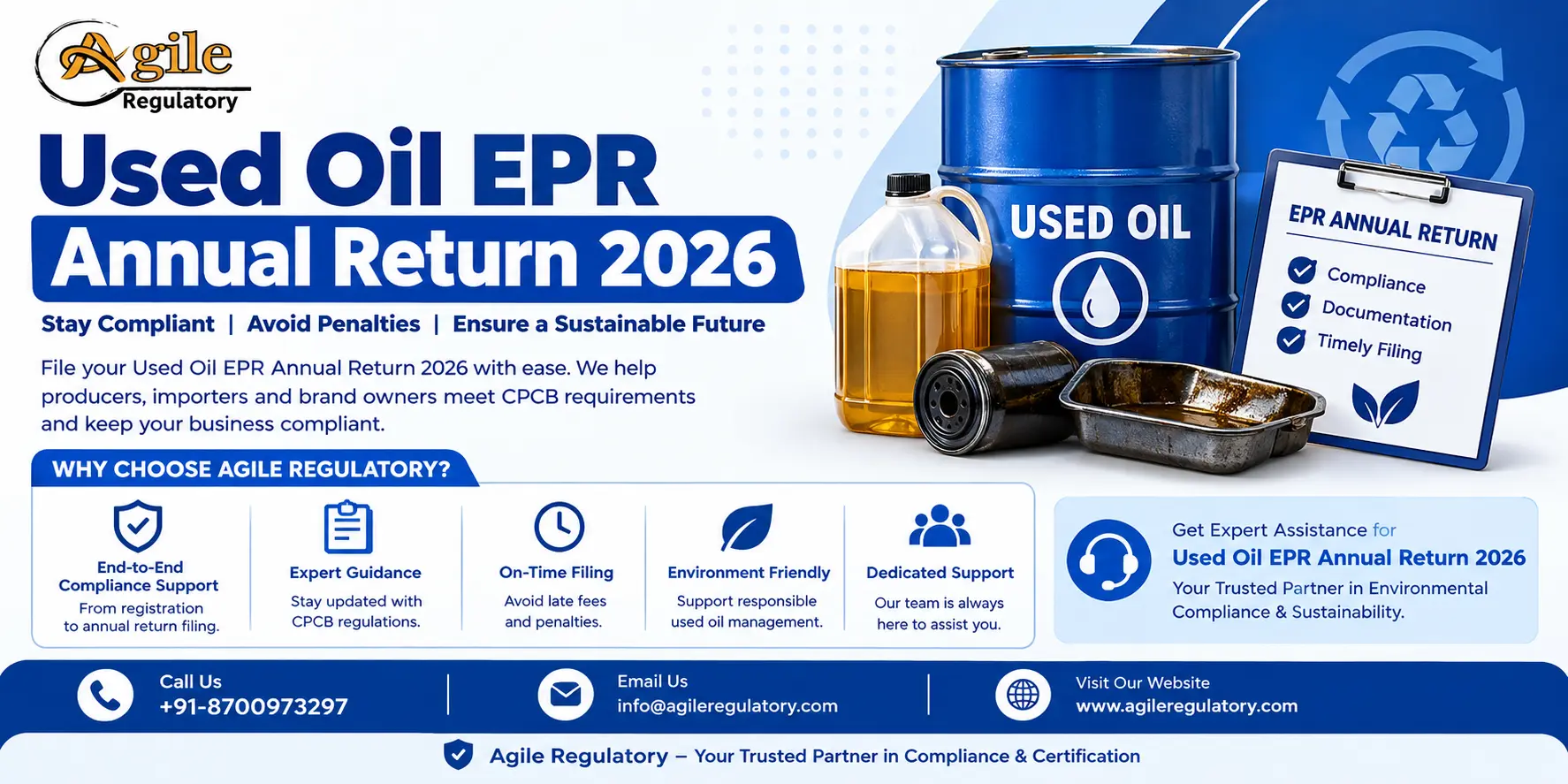
Understand the Used Oil EPR Annual Return 2026 deadline, filing process, compliance requirements, and key steps businesses need to follow for smooth EPR compliance in India.
Divya Saxena
20 Aug 2026
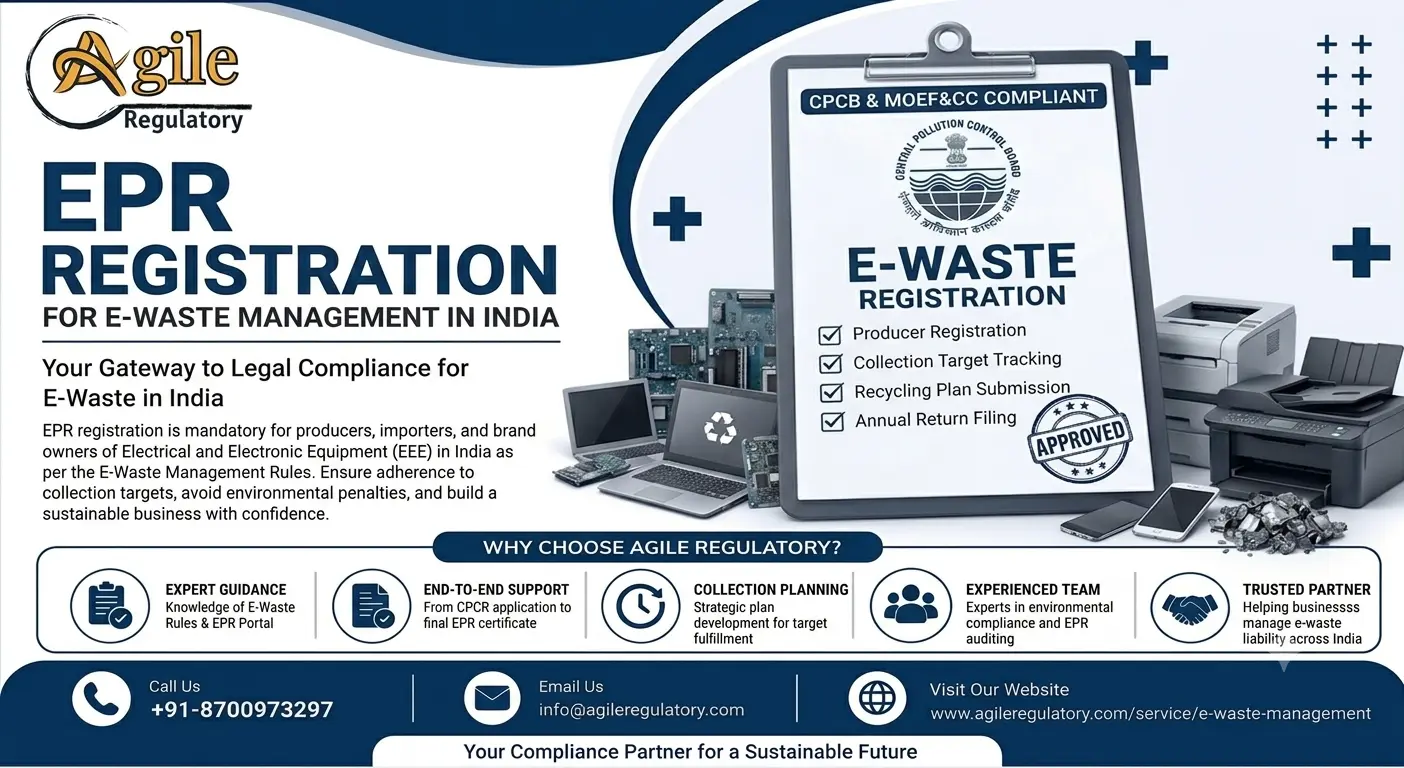
EPR Registration for E-Waste Management in India helps businesses comply with e-waste regulations by ensuring responsible collection, recycling, and disposal of electronic waste.
Preeti Gupta
13 Aug 2026
The EPR system in India is becoming more digital and compliance-focused, making it important for Producers, Importers and Brand Owners (PIBOs) to maintain accurate registration details, waste-processing records and annual returns. Understanding the latest
Divya Saxena
07 Aug 2026
EPR Registration in India helps eligible businesses meet Extended Producer Responsibility requirements and manage their environmental obligations. Learn about the registration process, required documents, benefits, and compliance requirements.
Nishi Chawla
04 Jun 2026
EPR Registration in Ghaziabad is a mandatory compliance requirement for businesses involved in manufacturing, importing, selling, or branding products that generate plastic waste, e-waste, battery waste, or other regulated waste streams. Under the Extende
Nishi Chawla
04 May 2026
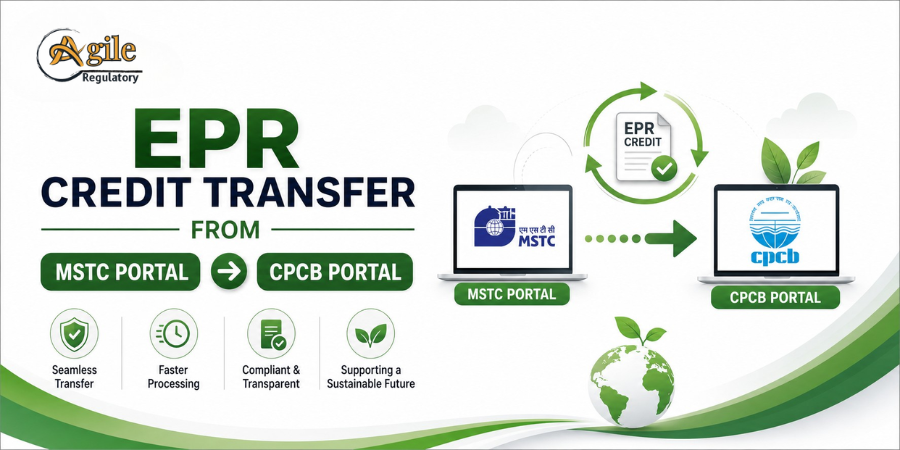
EPR credit transfer from MSTC to the CPCB portal is an essential step for producers, importers, and brand owners to meet their Extended Producer Responsibility
Nishi Chawla
01 May 2026
New importers need to register under EPR with the Central Pollution Control Board (CPCB) and ensure proper waste collection, recycling, or disposal through authorized recyclers. They must maintain records, meet annual targets, and submit compliance report
Nishi Chawla
01 May 2026
Manufacturers can reduce EPR credit costs during high-demand periods by adopting a proactive and strategic approach. Key steps include building long-term partnerships with authorized recyclers, securing credits in advance when prices are lower, and mainta
Nishi Chawla
30 Apr 2026
This guide explains the complete process of bulk uploading EPR invoices on the CPCB portal, helping businesses manage compliance efficiently and avoid common submission errors.
Nishi Chawla
15 Apr 2026
EPR applications in India often get rejected due to incomplete documentation, incorrect details, or non-compliance with guidelines set by the Central Pollution Control Board. This 2026 guide explains the common reasons for rejection and provides practical
Divya Saxena
24 Mar 2026
EPR credits are earned via certified recyclers processing e-waste, enabling producers to meet targets, maintain compliance, and support sustainable waste management.
Vanshika Mathur
24 Mar 2026
Businesses can obtain EPR (Extended Producer Responsibility) credits by purchasing them from CPCB-authorized Plastic Waste Processors (PWPs). These processors recycle plastic waste and generate credits on the Central Pollution Control Board portal. Compan
Vanshika Mathur
13 Mar 2026
Renewing an EPR certificate is essential for businesses dealing with e-waste, plastic, batteries, or tyres in India. This guide explains the EPR renewal process, documents required, and timelines for 2026. Learn how to stay compliant with CPCB regulatio
We simplify compliance through a proven 4-step process: Consultation, Documentation, Submission, and certification. From understanding requirements to getting final approvals, we deliver a smooth, timely, and fully compliant journey for your business.


What our customer says about us

Lavkush Sharma
KTPL Instruments
Agile Regulatory handled my BIS Certification registration smoothly. Their expert team ensured quick approvals, transparent pricing, and a completely stress-free compliance experience.

Nitin Mukesh
Justrack IOT
We are grateful to Agile Regulatory for their excellent support. Their team showed patience, expertise, and professionalism throughout, providing clear guidance and making the entire process smooth and hassle-free.
Pradeep Varma
Coaire Compressor
Being an excellent BIS Certification Consultant provider, they help customers with all requirements such as BIS Certification, CDSCO services, Agile Regulatory support, legal issues, and lab testing with quick results.

Bharat Bachwani
Easy Polymer
With the help of Agile Regulatory, we have made significant progress in our business. Their service is fast, genuine, and reliable. We look forward to continued success together in the future.

Atul Jain
Tarus International
Many thanks to Agile Regulatory for all the support, guidance, and expert advice. Their professional approach and consistent assistance have made a significant difference.

Paramjeet Singh
Anchor Weighing
Top-tier consulting! offered strategic solutions that revolutionized our approach. Their deep expertise and personalized guidance made a significant impact on our success. Highly recommend their services.
Anshul Rathi
AM Capacitor
Agile Regulatory exceeded expectations! Their tailored solutions, expertise, and proactive approach led to remarkable results. Highly recommend for businesses seeking impactful and strategic guidance.

Shekhar Maurya
Imaxx Pro Aquistic
Outstanding service! delivered targeted solutions with professionalism and expertise. Their insights elevated our business strategies, resulting in noticeable growth. Highly recommended for exceptional consultation.
Trusted by over 1,00,000 + Global Brands in the past 15+ years


.webp) Electric vehicles are becoming an important part of India's mobility sector, but the growing number of EVs also raises an important question: what happens when an electric vehicle battery reaches the end of its useful life? Does a dead EV battery have to be discarded, or can it be repaired, reused, refurbished, or recycled?
Electric vehicles are becoming an important part of India's mobility sector, but the growing number of EVs also raises an important question: what happens when an electric vehicle battery reaches the end of its useful life? Does a dead EV battery have to be discarded, or can it be repaired, reused, refurbished, or recycled?
.webp)



Leave a Reply
Your email address will not be published. Required fields are marked *