


Get Instant Solution By an Expert Advisor
(4.8)
Fast replies · No spam · Real experts
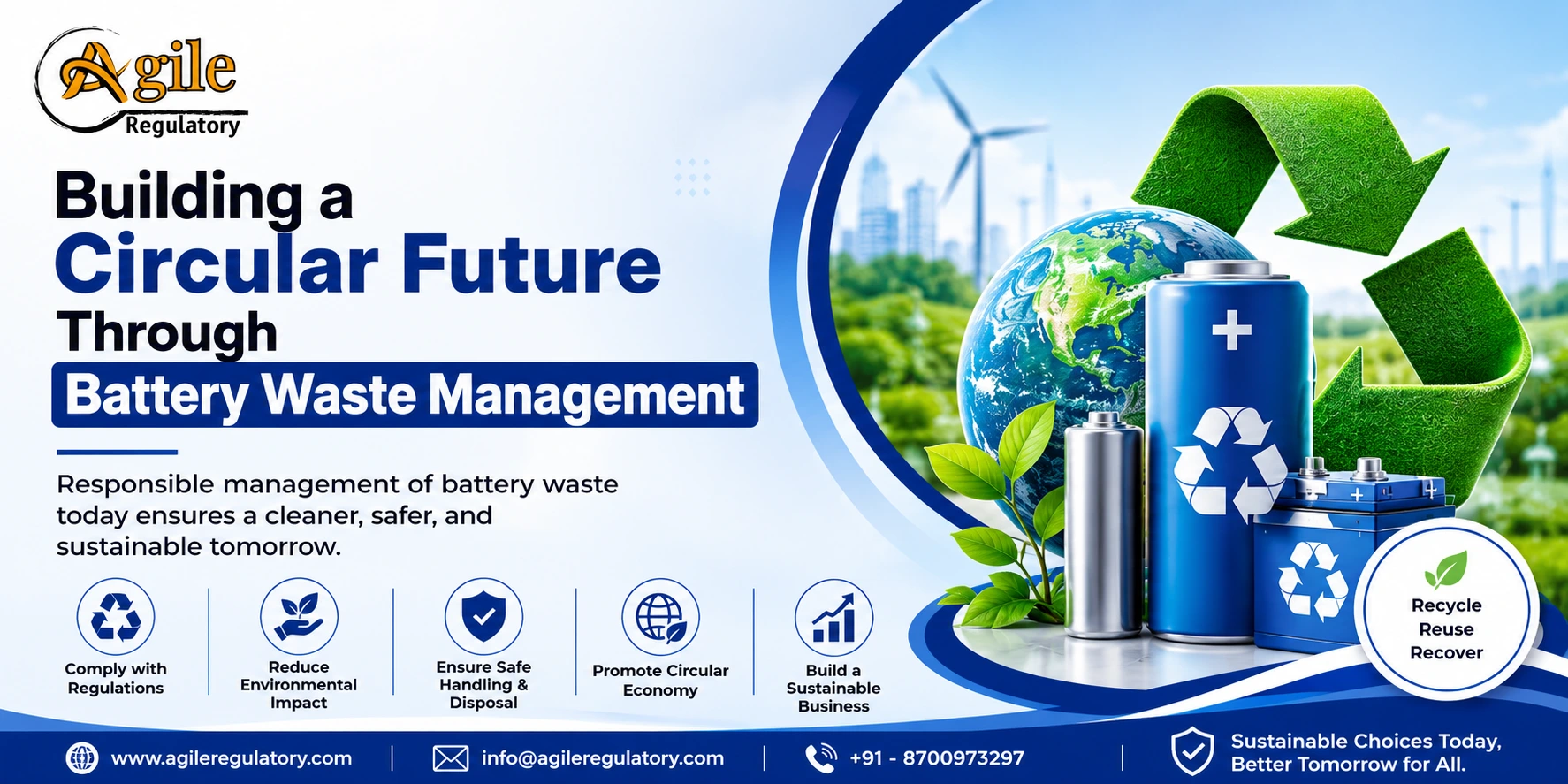
In December 2025, 4,022 registered producers and 487 recyclers signed up on the CPCB portal, according to the IBEF. Battery Waste Management Rules (BWMR), 2022, control battery production, distribution, and recycling. According to ICEA–Accenture, India is reusing only 1% of its lithium-ion batteries.
With the right steps like getting an EPR certificate, India will have a manufacturing industry worth Rs. 31,150 crore (US$ 3.5 billion) by 2030.
Special care is needed for lithium-ion waste because it is considered hazardous. Damaged or punctured cells can overheat and start a fire. These fires are hard to put out with water and release toxic fumes. Workers risk damage to the lungs, skin, and nervous system with exposure to heavy metals, acids, and chemical residues.
To avoid this scenario, safety is first and foremost:
Never throw lithium-ion batteries into household bins or burn them.
Do not open, puncture, or crush a cell.
Keep damaged batteries away.
Store them in a cool, dry place, and hand them to an authorised collection point when used.
If a battery catches fire, evacuate the area and call emergency services on 112.
Only Central Pollution Control Board (CPCB) registered recyclers should dismantle or process these batteries.
EPR Registration in Waste Management
Lithium-ion batteries have lithium, cobalt, nickel and other key minerals, which are heavily imported by India. Direct recycling and recreating as new cells will help take care of a massive load.
An EV battery with low power may work well for powering up a shop. Hence, the circular model simply means “Reuse first, Recycle later”.
The full form of EPR is Extended Producer Responsibility. Producers, importers, brand owners, and recyclers must register on the CPCB portal. Recyclers and manufacturers register so they can report how much waste they collect and recycle each year, since the government sets a target for each business.
Electronics and packaging companies also need to apply for CPCB plastic waste registration. Similarly, import-export companies need this certificate to get clearance from customs.
You can complete the EPR application through the official CPCB portal at epr.cpcb.gov.in. The CPCB system is now unified. So businesses can log in to one platform for battery, e-waste, and plastic waste registration.
For the EPR certificate, you need to prepare:
Company incorporation documents,
GST and PAN details,
IEC code for importers, factory or office address proof,
product and battery category details,
past sales or import volumes, and
Agreements with authorised recyclers.
The government fees for the EPR registration range from ₹10,000 to ₹40,000. Costs vary by category, business size, and turnover. Check the current fee schedule on the CPCB portal itself before you budget.
Many experts recommend hiring a consultant to handle your business paperwork, including the returns you have to file every three months. Your business must also follow the rules in the Environment (Protection) Act, 1986 to avoid fines. After a consultant files anything for you, log in to the official CPCB (Central Pollution Control Board) website yourself and check that the registration is listed under your company's name, not someone else's. It's always worth being careful when you hire someone to do this work for you.
EPR Registration in Ghaziabad: Complete Guide for Businesses in 2026
Lithium-ion battery waste management involves the collection, transportation, recycling, refurbishment, and safe disposal of used lithium-ion batteries. Proper management helps recover valuable materials such as lithium, cobalt, nickel, and copper while reducing fire, pollution, and environmental risks.
Used lithium-ion batteries are collected and transported to authorized facilities for sorting, processing, recycling, or refurbishment. Recyclers can recover materials such as lithium, cobalt, nickel, copper, and other metals, which can then be used in new products.


We simplify compliance through a proven 4-step process: Consultation, Documentation, Submission, and certification. From understanding requirements to getting final approvals, we deliver a smooth, timely, and fully compliant journey for your business.


What our customer says about us

Lavkush Sharma
KTPL Instruments
Agile Regulatory handled my BIS Certification registration smoothly. Their expert team ensured quick approvals, transparent pricing, and a completely stress-free compliance experience.

Nitin Mukesh
Justrack IOT
We are grateful to Agile Regulatory for their excellent support. Their team showed patience, expertise, and professionalism throughout, providing clear guidance and making the entire process smooth and hassle-free.
Pradeep Varma
Coaire Compressor
Being an excellent BIS Certification Consultant provider, they help customers with all requirements such as BIS Certification, CDSCO services, Agile Regulatory support, legal issues, and lab testing with quick results.

Bharat Bachwani
Easy Polymer
With the help of Agile Regulatory, we have made significant progress in our business. Their service is fast, genuine, and reliable. We look forward to continued success together in the future.

Atul Jain
Tarus International
Many thanks to Agile Regulatory for all the support, guidance, and expert advice. Their professional approach and consistent assistance have made a significant difference.

Paramjeet Singh
Anchor Weighing
Top-tier consulting! offered strategic solutions that revolutionized our approach. Their deep expertise and personalized guidance made a significant impact on our success. Highly recommend their services.
Anshul Rathi
AM Capacitor
Agile Regulatory exceeded expectations! Their tailored solutions, expertise, and proactive approach led to remarkable results. Highly recommend for businesses seeking impactful and strategic guidance.

Shekhar Maurya
Imaxx Pro Aquistic
Outstanding service! delivered targeted solutions with professionalism and expertise. Their insights elevated our business strategies, resulting in noticeable growth. Highly recommended for exceptional consultation.
Trusted by over 1,00,000 + Global Brands in the past 15+ years


 Indian firms are exploring developments in lithium-ion batteries to make electric power generation possible. Lithium-ion cells are rechargeable batteries used in electric bikes, laptops, and phones. All batteries expire and turn into battery waste once their power runs out. If that waste isn't recycled properly, it can damage the environment.
Leave a Reply
Your email address will not be published. Required fields are marked *