Used Oil EPR Annual Return 2026: Deadline, Process and Compliance
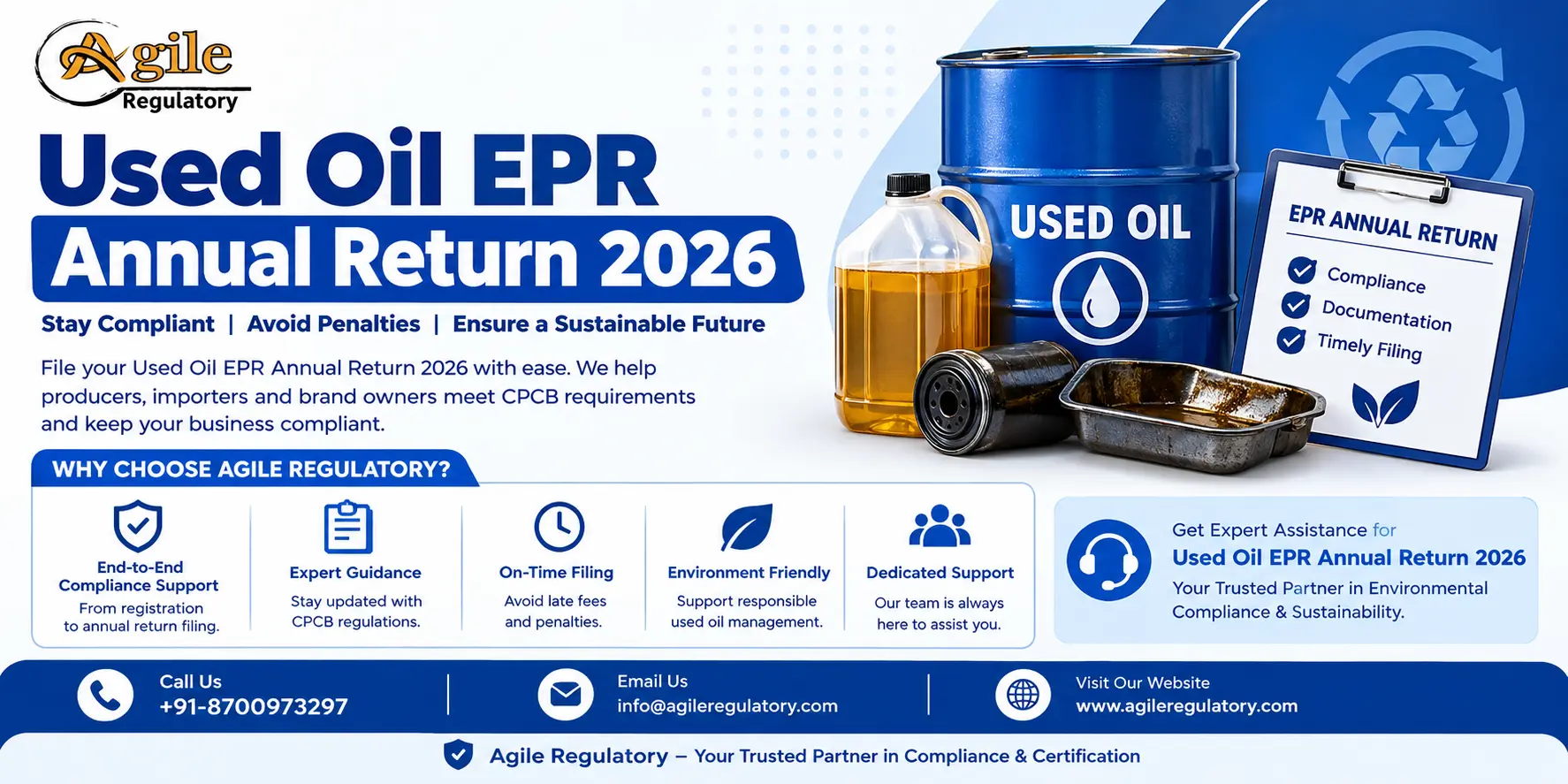
If your company makes, imports, collects, or recycles oil in India, there is one deadline you cannot ignore this year. The Used Oil EPR annual return deadline for 2026, along with its process and compliance rules, has changed. With the new date, the government has given businesses extra breathing room to get their documents right.
Here is everything explained in plain language.
What is Used Oil EPR?
EPR stands for Extended Producer Responsibility. If your business sells oil, you must safely recycle it after use.
Used oil is the dark, dirty oil left over after oil has been used in engines, machines, and gearboxes. It is still valuable as it can be re-refined back into base oil. But if thrown into drains and soil, it dangerously pollutes water and land.
The Ministry of Environment (MoEFCC) said the Second Amendment Rules, 2023 had incorporated a new chapter on used oil into the Hazardous and Other Wastes Rules to prevent that. The system became active from 1 April 2024 and is managed by the Central Pollution Control Board. This is what is called the Used Oil EPR CPCB.
The Big 2026 Update: EPR Annual Return Due Date Extended
For FY 2025–26, the original filing date was 30 June 2026. That date has now been pushed back. A recent extension notice moves the deadline to 30 November 2026.
|
Detail |
Status |
|
Financial Year |
FY 2025–26 |
|
Old deadline |
30 June 2026 |
|
New deadline |
30 November 2026 |
|
Who it applies to |
Producers and recyclers |
The extension was given because many businesses faced technical and data problems while matching their records with the portal.
Note: An extension is not a discount. Your registration, targets, certificates, and record-keeping duties all still apply. You simply get more time to file correctly.
Get Free Consultation!
Who Has to File the Used Oil EPR Annual Return?
Four types of stakeholders are required to file:
-
Producers – Companies that manufacture or import base oil or lubricating oil
-
Importers – Those bringing used oil into India
-
Collection agents – Businesses that collect used oil from garages, factories, and workshops
-
Recyclers – Re-refiners who process used oil and generate EPR certificates
If you play more than one role, you need separate registration for each role.
Step-by-Step Process on the Used Oil EPR Portal
Filing takes place entirely online through the Used Oil EPR Portal. You can reach it through the Common EPR Portal page on the CPCB website, which links all waste streams together, including the e-waste portal, plastic, battery, and tyre portals.
Here are the procedures to apply:
-
Register for EPR and subscribe: Create your login, select your category, and upload company documents like GST, PAN, CIN, factory license, and pollution board consent. EPR registration must be approved before you can submit anything else.
-
Log in and pick the financial year: Select FY 2025–26 from the drop-down in the annual return section.
-
Enter sales or recycling data: Producers report the amount of base oil and lubricating oil sold or imported. Recyclers report amounts collected and recycled.
-
Check your EPR target: Your target is based on sales made in previous years, so the number should agree with your own accounts.
-
Attach EPR certificates: Producers meet targets by buying certificates generated by registered recyclers. This is the EPR certification part of the system, and every certificate must be traceable.
-
Reconcile before you submit: Match invoices, GST records, transport documents and portal figures. Mismatches are the single biggest reason returns get rejected.
-
Declare, pay and submit: The return is only counted as filed after the declaration and payment step is completed.
-
Download the acknowledgement: Save the Used Oil EPR PDF acknowledgement and supporting files. This is your proof of compliance if CPCB asks questions later.
What Happens If You Miss the Deadline?
Skipping the return is not a small mistake. It can lead to show-cause notices, environmental compensation charges, and in serious cases, suspension or cancellation of your registration for up to five years. Giving false information carries the same risk.
Since everything is digital and linked to your GST invoices, errors are easy for the regulator to spot.
What Does the Deadline Extension Mean for Businesses?
The 2026 deadline extension gives eligible businesses additional time to complete their FY 2025–26 compliance, particularly where technical or operational issues have delayed data compilation or reconciliation. However, it does not suspend Used Oil EPR requirements. Registration, EPR fulfilment, record-keeping, and annual reporting obligations continue to apply.
Businesses should use the extended period to verify their EPR obligations and certificates, reconcile portal data, review records, and complete their Annual Return. Early action is recommended to allow time to resolve discrepancies or missing documentation.
Do You Need an EPR Consultant?
Not every business does. If your volumes are small and your records are tidy, you can file on your own. But if you handle thousands of transactions across multiple states, a good EPR consultant like Agile Regulatory saves time by reconciling data, checking certificate validity, and spotting gaps before submission rather than after rejection.
Do not wait until late November. Start now: pull your FY 2025–26 sales and recycling data, confirm your registration status, verify your certificates, fix mismatches, then file. Businesses that treat the extension as extra preparation time are the ones that finish the year with clean, defensible compliance records.
FAQs
1. Who is required to file the Used Oil EPR Annual Return?
Producers, importers, recyclers, and other entities covered under the Used Oil EPR framework may be required to submit an annual return, depending on their role and applicable compliance obligations.
2. What happens if the Used Oil EPR Annual Return is filed late?
Late filing can result in non-compliance and may expose the entity to applicable regulatory action, environmental compensation, or other consequences under the prevailing EPR framework.
3. Can I revise the Used Oil EPR Annual Return after submission?
Revision depends on the functionality and rules of the applicable EPR portal. If an error is identified, the entity should check whether the portal permits correction or contact the concerned authority for the prescribed procedure.
4. Where can I check the latest Used Oil EPR Annual Return requirements for 2026?
The latest requirements should be checked against current CPCB notifications, applicable EPR regulations, and the official EPR portal, because deadlines and portal procedures can change.

About the Author
View ProfilePreeti Gupta
Content Writer & Compliance Specialist
Preeti Gupta is an experienced content writer with expertise in writing about Business Legal Compliance, Certifications, and Registrations. She specializes in topics related to BIS, EPR, Medical Devices, Cosmetics, Drugs, Import-Export, FSSAI, WPC, and other regulatory compliances.