


Get Instant Solution By an Expert Advisor
(4.8)
Fast replies · No spam · Real experts
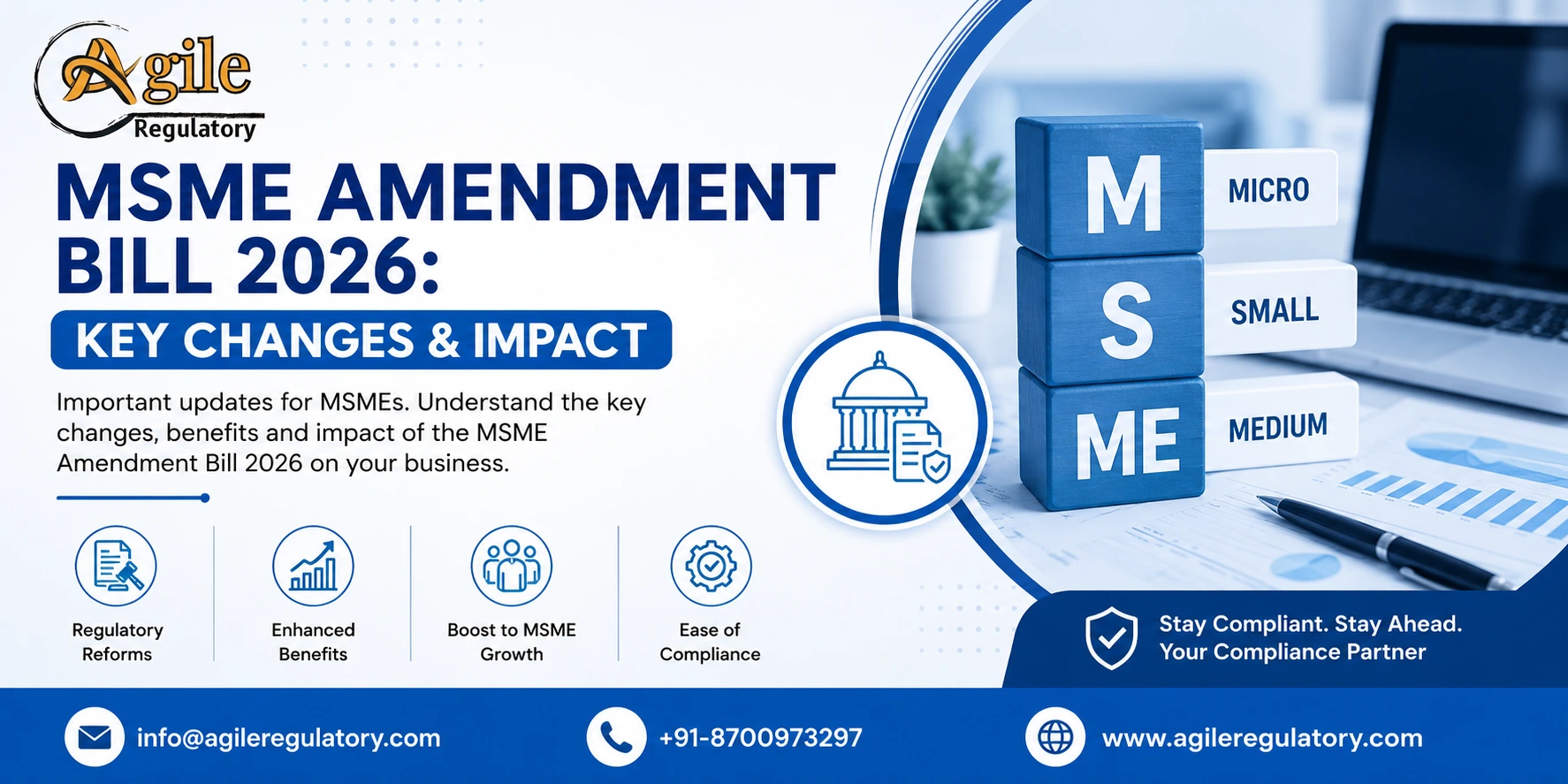
The Micro, Small and Medium Enterprises Development (Amendment) Bill, 2026 brings important changes to the legal framework governing MSMEs in India. The Bill was passed by the Rajya Sabha on 3 August 2026 and by the Lok Sabha on 7 August 2026. It seeks to update the MSMED Act, 2006 in line with the changing needs of India's MSME sector.
The amendments focus on strengthening the MSME ecosystem, improving ease of doing business, addressing delayed payments, supporting digital registration, simplifying compliance and creating a more effective dispute-resolution mechanism. For business owners, understanding these changes is important for maintaining proper registration and taking advantage of the available protections and benefits.
At Agile Regulatory, we help businesses understand regulatory requirements and complete the relevant registration and compliance processes with greater clarity.
The MSME Amendment Bill 2026 amends selected provisions of the Micro, Small and Medium Enterprises Development Act, 2006.
The MSMED Act was introduced in 2006, when the structure and scale of India's small-business sector were considerably different. With the expansion of digital businesses, manufacturing units, service providers and formal supply chains, the government has introduced amendments to modernise the framework.
The 2026 amendments address areas such as:
The government has also provided permanence to the Udyam Registration Portal as a digital, free and voluntary registration platform for MSMEs.
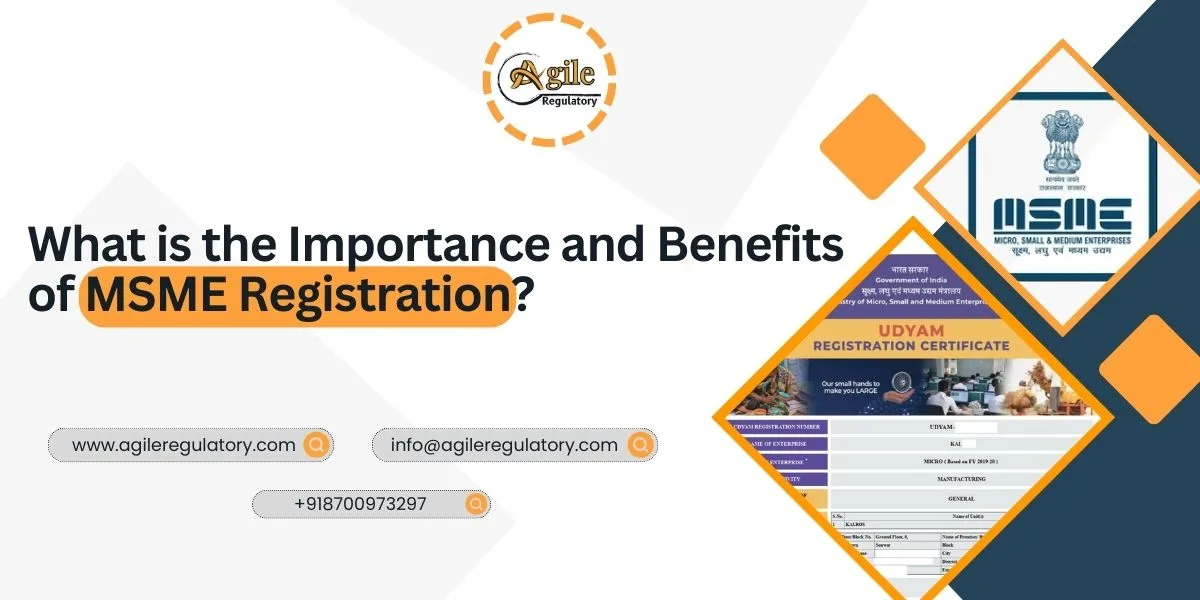
What is the Importance and Benefits of MSME Registration?
The MSME sector has expanded significantly over the last few years. According to the government, Udyam registrations increased from 1.65 crore as of 1 April 2023 to around 9.16 crore in August 2026, while the sector provides employment to more than 40 crore people.
The amendment aims to address some of the practical challenges faced by businesses, particularly:
Businesses have grown in terms of investment, turnover and operational capacity. The updated framework provides a more suitable basis for classifying enterprises.
Delayed payments can create serious working-capital problems for micro and small enterprises. The amendment strengthens mechanisms for resolving such disputes.
The introduction of Online Dispute Resolution is intended to make dispute settlement more accessible, time-efficient and cost-effective.
The amendments aim to reduce unnecessary regulatory burdens and improve the ease of doing business for MSMEs.
The amended framework continues the use of a dual criterion based on investment in plant and machinery or equipment and turnover.
The current Udyam framework provides the following thresholds:
|
Enterprise Category |
Investment Limit |
Turnover Limit |
|---|---|---|
|
Micro Enterprise |
Up to ₹2.5 crore |
Up to ₹10 crore |
|
Small Enterprise |
Up to ₹25 crore |
Up to ₹100 crore |
|
Medium Enterprise |
Up to ₹125 crore |
Up to ₹500 crore |
These revised limits have been applicable from 1 April 2025 and are reflected on the official Udyam Registration portal.
This broader classification framework allows more growing businesses to continue receiving MSME recognition as their investment and turnover increase.
One of the important changes is the permanence given to the Udyam Registration Portal as a digital registration platform.
Udyam Registration is:
The official portal also states that no enterprise needs to file more than one Udyam Registration, although multiple business activities can be included in one registration.
Delayed payment is one of the biggest challenges for micro and small enterprises.
The 2026 amendment strengthens the legal mechanism for dealing with delayed payments and enforcement of awards. It also provides for Online Dispute Resolution to support faster settlement of disputes.
The amendment further provides that where an application to set aside a decree, award or order remains pending for more than six months, courts are required to order payment of at least 50% of the awarded amount to the micro or small enterprise supplier, subject to the applicable legal framework.
This can provide additional financial protection to eligible micro and small enterprises involved in payment disputes.
The amendment introduces an Online Dispute Resolution mechanism for eligible MSME disputes.
ODR can help businesses resolve disputes without relying entirely on lengthy traditional litigation. Digital dispute resolution can potentially reduce costs and make the process more accessible for small businesses operating with limited resources.
For MSMEs, quicker dispute resolution can also help improve cash flow and working-capital management.
The amendments are intended to create a more business-friendly regulatory environment.
The government has highlighted decriminalisation, simplified compliance and institutional mechanisms for promoting MSMEs as important objectives of the amendment.
This means the reform is not limited to registration. It is intended to improve the broader regulatory environment in which MSMEs operate.
The changes can have practical implications for businesses that are already registered or planning to enter the MSME framework.
Businesses that meet the applicable classification criteria can obtain formal recognition through Udyam.
The increased investment and turnover thresholds allow more businesses to remain within the MSME classification as they expand.
Micro and small enterprises may benefit from strengthened mechanisms for recovering eligible delayed payments.
The continued development of the Udyam system makes registration and related processes more accessible through digital platforms.
The updated legal framework provides a clearer structure for MSME classification and dispute resolution.
Udyam Registration is the official government registration mechanism for recognising an enterprise as a Micro, Small or Medium Enterprise.
After successful registration, the enterprise receives a permanent Udyam Registration Number and an online certificate. The official portal states that the registration is free, paperless and based on self-declaration.
Businesses should use the official government portal for registration and avoid unofficial websites claiming to provide government registration for a mandatory fee.
The process is primarily digital and does not normally require uploading a large set of documents.
Businesses generally need relevant information such as:
The government portal states that PAN and applicable GST-linked information is integrated with government databases.
An MSME certificate generally refers to the certificate issued after successful Udyam Registration.
The certificate contains the enterprise's registration details and a dynamic QR code through which relevant information can be accessed on the government portal. The registration does not require periodic renewal.
Businesses should keep their registration information updated whenever there are relevant changes in business details.
No. MSME/Udyam registration and a local trade licence are different regulatory requirements.
Udyam registration identifies an enterprise under the MSME framework, while a trade licence may be required by a municipal or local authority depending on the nature and location of the business.
Therefore, obtaining Udyam registration does not automatically replace other licences or approvals applicable to a particular business.
Similarly, the terms small business registration, MSME licence, and MSME trade licence should not be treated as interchangeable with Udyam Registration. The exact licence requirements depend on the business activity, location and applicable laws.
Formal MSME recognition can be useful for eligible enterprises in several ways.
Eligible MSMEs may be able to access government schemes and support programmes subject to the specific eligibility requirements of each scheme.
Eligible micro and small enterprises can benefit from the statutory framework dealing with delayed payments.
The Udyam system provides a simplified online registration mechanism.
Formal registration can help establish the enterprise's identity within the MSME ecosystem.
The revised classification thresholds provide greater room for businesses to grow while remaining within the applicable MSME category.
Businesses should not assume that the amendment requires them to immediately obtain a new registration.
Instead, existing enterprises should:
Udyam registration is described by the government as voluntary, and the official portal provides a free registration process.
However, businesses may find formal MSME recognition useful when applying for schemes, participating in certain procurement opportunities or using protections and facilities available under the MSME framework.
The requirement for any separate licence or approval depends on the nature of the business and applicable local or sector-specific regulations.
|
Particular |
Udyam Registration |
Trade Licence |
|---|---|---|
|
Main purpose |
MSME recognition |
Permission to conduct specified business activities |
|
Issuing authority |
Ministry of MSME / Udyam system |
Relevant local authority |
|
Registration nature |
Digital MSME registration |
Local regulatory licence |
|
Renewal |
No periodic renewal for Udyam registration |
Depends on applicable local rules |
|
Applicability |
Eligible MSMEs |
Depends on business activity and location |
|
Government fee |
Udyam registration is free |
Depends on the applicable authority |
Therefore, businesses should identify their complete compliance requirements rather than relying on a single registration.
Understanding the MSME framework can be difficult when a business has multiple registrations, licences or regulatory obligations.
Agile Regulatory assists businesses with regulatory and compliance-related requirements, including MSME-related registration guidance and other business approvals.
Our team can help businesses understand the applicable process, organise the required information and navigate the relevant registration requirements.
For businesses planning MSME Registration, maintaining accurate enterprise details and choosing the correct business classification is important for long-term compliance.
The MSME Amendment Bill 2026 represents an important update to India's MSME regulatory framework. Its focus on updated classification, permanent digital registration, delayed-payment mechanisms, Online Dispute Resolution and ease of doing business can have a meaningful impact on growing enterprises.
For business owners, the key step is to understand their current MSME classification, maintain accurate Udyam information and review the other registrations and licences applicable to their activities.
If you need assistance with MSME Registration, Udyam-related compliance or other business regulatory requirements, Agile Regulatory can help you understand the applicable process and documentation.
MSME Registration in India: A Complete Guide
The MSME Amendment Bill 2026 amends provisions of the MSMED Act, 2006. It focuses on MSME classification, delayed payments, Online Dispute Resolution, ease of doing business and strengthening the MSME ecosystem.
Yes. The Bill was passed by the Rajya Sabha on 3 August 2026 and by the Lok Sabha on 7 August 2026. The applicability of individual provisions is subject to the relevant commencement and legal requirements.
Yes. The official Udyam portal states that MSME registration is free of cost, paperless and based on self-declaration.
No. The official Udyam portal states that there is no need for renewal of Udyam Registration. Businesses should, however, keep their information accurate and updated as applicable.
No. Udyam registration and a trade licence serve different purposes. A trade licence may be required by the relevant local authority depending on the business activity and location.
Yes. A business meeting the applicable MSME classification criteria can register through the Udyam system. The current classification is based on investment and turnover thresholds.
The amendment strengthens mechanisms for addressing delayed payments and provides for Online Dispute Resolution. It also includes provisions concerning payment of at least 50% of an awarded amount in certain pending challenges involving micro and small enterprise suppliers.


You might also be interested in these articles.
Divya Saxena
17 Sep 2026
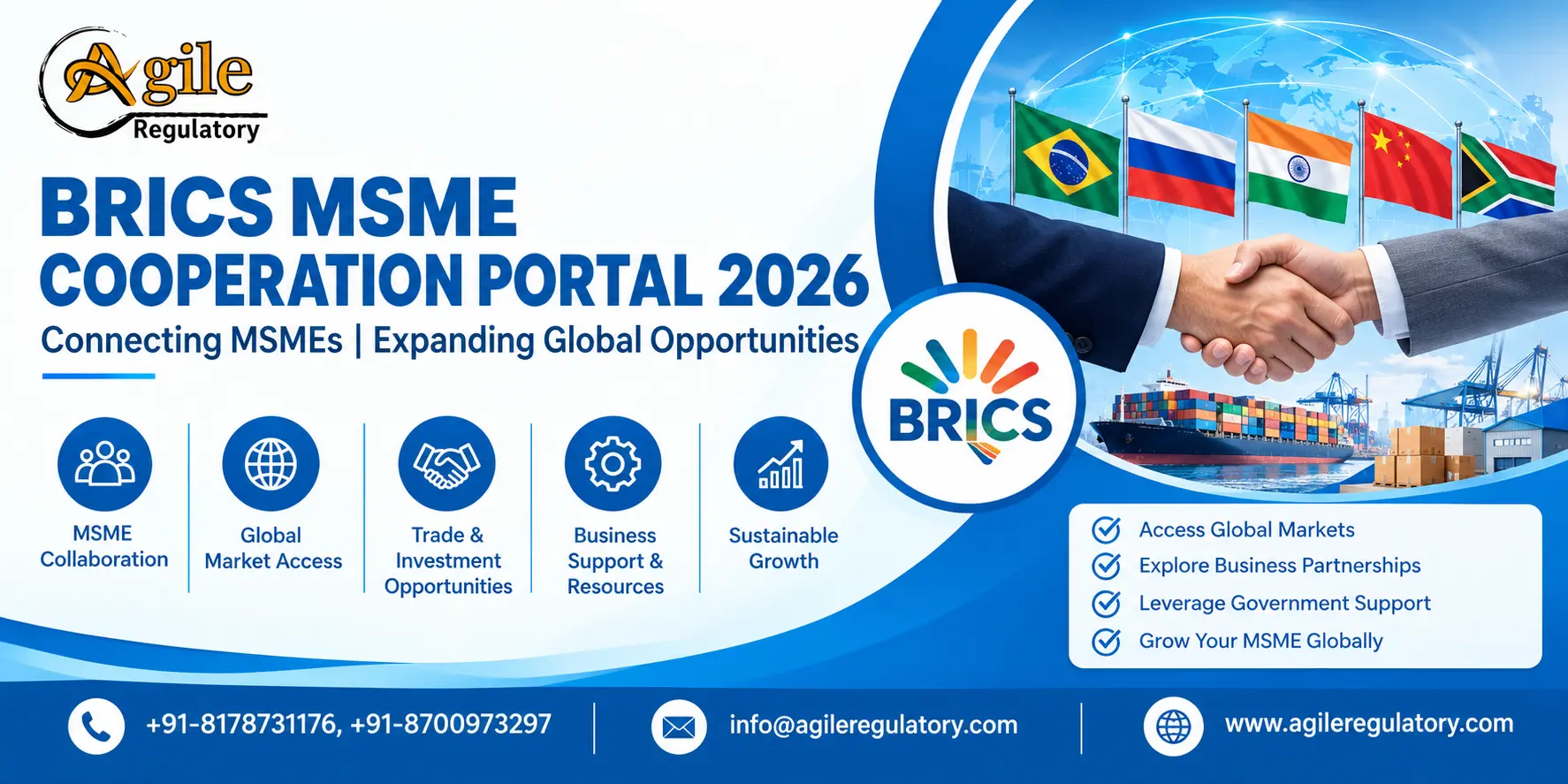
The BRICS MSME Cooperation Portal 2026 can provide Indian MSMEs with opportunities to explore international collaboration, connect with businesses across BRICS countries, and understand potential avenues for market expansion. This guide explains the porta
Sanskriti
22 Aug 2026
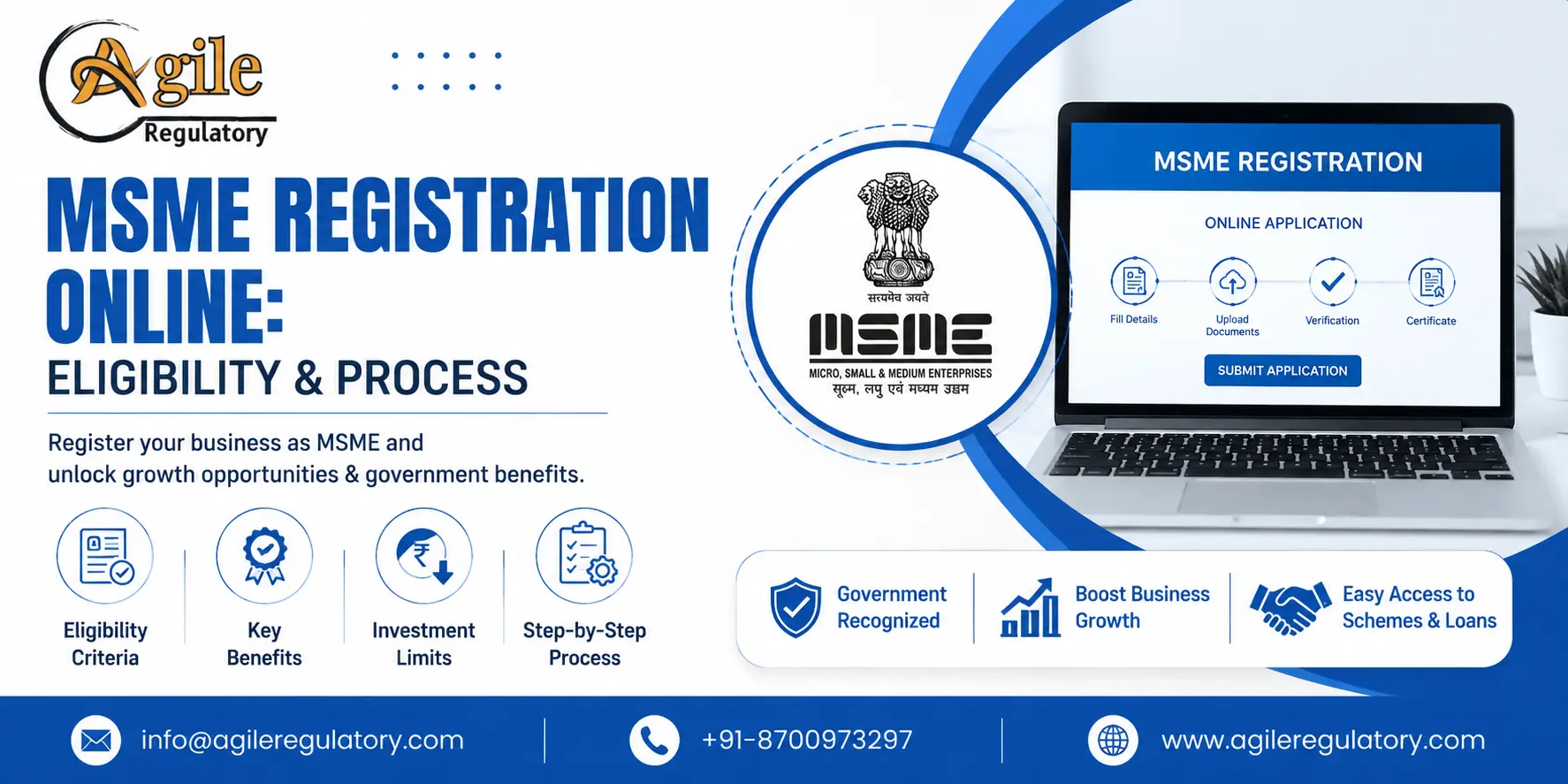
Learn MSME Registration Online, including eligibility criteria, key benefits, required documents, investment limits, and the complete step-by-step registration process for businesses.
Divya Saxena
21 Aug 2026
MSME Registration in India, officially known as Udyam Registration, helps eligible micro, small and medium enterprises obtain formal recognition from the Government of India. The registration is online, paperless and free through the official Udyam Regist
Nishi Chawla
07 May 2026
NSIC Registration helps MSMEs access government tenders, financial benefits, and procurement opportunities. It improves business credibility, reduces tender costs, and supports small businesses in securing government contracts more easily.
Vanshika Mathur
11 Mar 2026
MSME registration helps small businesses gain official recognition and access government benefits. Registered enterprises can avail loans, subsidies, and protection against delayed payments. It supports business growth by providing financial assistance,
We simplify compliance through a proven 4-step process: Consultation, Documentation, Submission, and certification. From understanding requirements to getting final approvals, we deliver a smooth, timely, and fully compliant journey for your business.


What our customer says about us

Lavkush Sharma
KTPL Instruments
Agile Regulatory handled my BIS Certification registration smoothly. Their expert team ensured quick approvals, transparent pricing, and a completely stress-free compliance experience.

Nitin Mukesh
Justrack IOT
We are grateful to Agile Regulatory for their excellent support. Their team showed patience, expertise, and professionalism throughout, providing clear guidance and making the entire process smooth and hassle-free.

Pradeep Varma
Coaire Compressor
Being an excellent BIS Certification Consultant provider, they help customers with all requirements such as BIS Certification, CDSCO services, Agile Regulatory support, legal issues, and lab testing with quick results.

Bharat Bachwani
Easy Polymer
With the help of Agile Regulatory, we have made significant progress in our business. Their service is fast, genuine, and reliable. We look forward to continued success together in the future.

Atul Jain
Tarus International
Many thanks to Agile Regulatory for all the support, guidance, and expert advice. Their professional approach and consistent assistance have made a significant difference.

Paramjeet Singh
Anchor Weighing
Top-tier consulting! offered strategic solutions that revolutionized our approach. Their deep expertise and personalized guidance made a significant impact on our success. Highly recommend their services.
Anshul Rathi
AM Capacitor
Agile Regulatory exceeded expectations! Their tailored solutions, expertise, and proactive approach led to remarkable results. Highly recommend for businesses seeking impactful and strategic guidance.

Shekhar Maurya
Imaxx Pro Aquistic
Outstanding service! delivered targeted solutions with professionalism and expertise. Their insights elevated our business strategies, resulting in noticeable growth. Highly recommended for exceptional consultation.
Trusted by over 1,00,000 + Global Brands in the past 15+ years





Leave a Reply
Your email address will not be published. Required fields are marked *