


Get Instant Solution By an Expert Advisor
(4.8)
Fast replies · No spam · Real experts
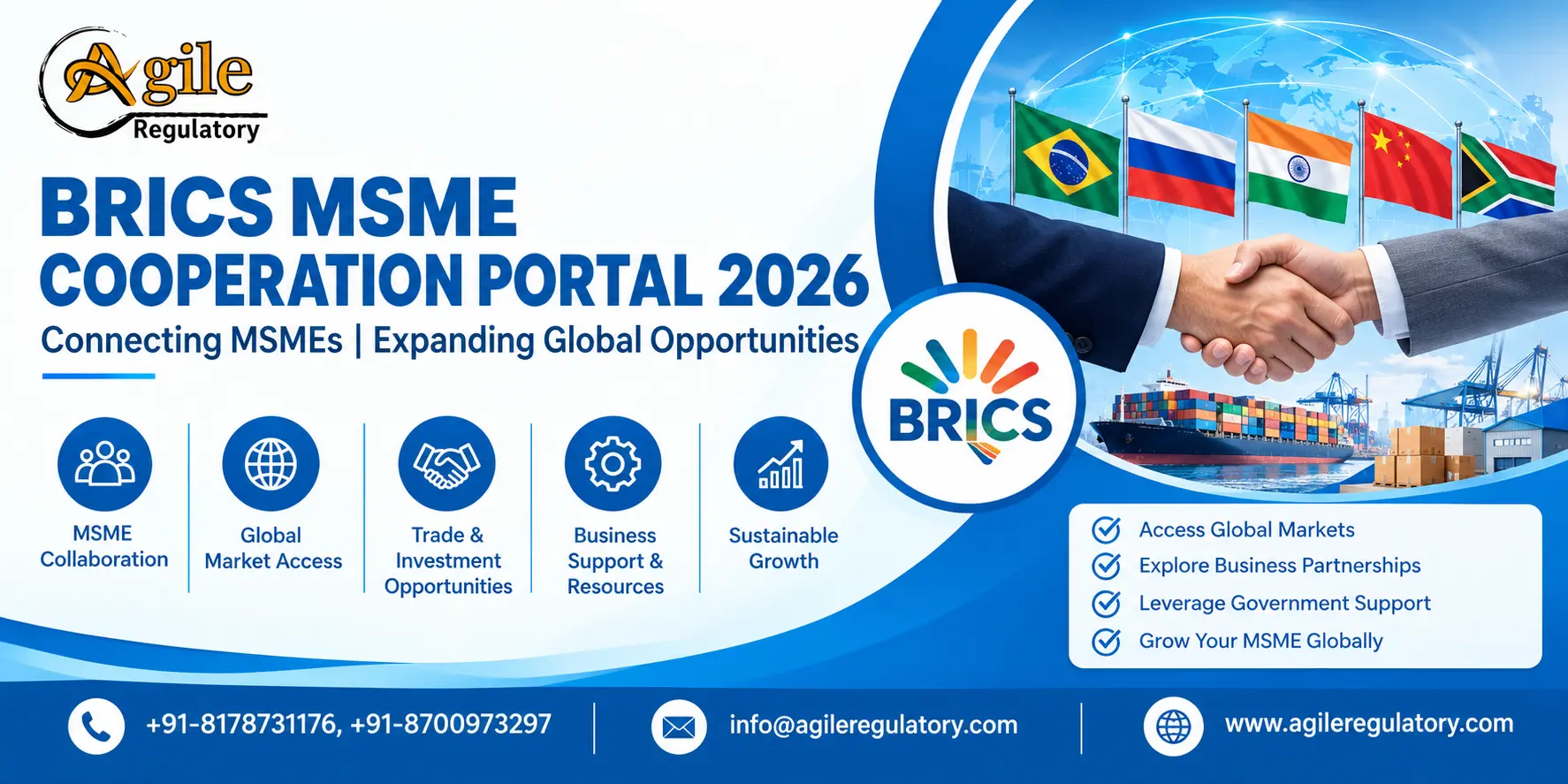
The portal is intended to create a digital ecosystem connecting MSMEs with relevant stakeholders such as technology centres, trade associations, financial institutions, training organisations and policymakers. The Government of India has stated that the initiative is designed to help small enterprises connect with knowledge, finance and new markets.
For Indian MSMEs looking to expand beyond the domestic market, this development can make internationalisation more accessible. However, businesses entering overseas markets must also pay attention to product standards, regulatory approvals, packaging requirements and sector-specific registrations.
The BRICS MSME Cooperation Portal is a digital platform being developed to facilitate greater interaction and cooperation among MSMEs from BRICS member countries.
According to the Government of India, the portal will support MSMEs, technology centres, clusters, trade associations, financial institutions, training and capacity-building institutions and other stakeholders. Its broader objective is to improve access to markets and finance and encourage internationalisation of MSMEs.
The initiative forms part of the wider BRICS agenda for strengthening MSME participation in international trade and global value chains.
The 2026 BRICS New Delhi Declaration also recognised the importance of MSME internationalisation and highlighted challenges such as access to affordable finance and participation in global value chains.
Small businesses often face several barriers when entering international markets. These can include limited access to foreign buyers, difficulty finding business partners, financing constraints, technology gaps and unfamiliar regulatory requirements.
The BRICS MSME Cooperation Portal is intended to support cooperation in these areas by creating connections between businesses and relevant institutions.
During India's 2026 BRICS Chairship, MSME cooperation has included discussions around finance, credit readiness, fintech-driven ecosystems and international trade. The Ministry of MSME also convened SME Working Group discussions focused on improving access to finance for MSMEs.
The initiative is therefore part of a broader effort rather than simply another business registration platform.
The portal can be relevant to different categories of Indian businesses, including:
Manufacturing MSMEs
Export-oriented businesses
Technology companies
Startups
Service-sector enterprises
Product manufacturers
Businesses looking for international partnerships
MSMEs seeking technology and capacity-building opportunities
Enterprises interested in BRICS markets
Businesses involved in manufacturing and exports may particularly benefit if they are preparing to enter new markets.
However, participation in an international business ecosystem does not automatically replace the regulatory requirements applicable to a particular product or industry.
Indian MSMEs interested in international expansion should prepare their business and regulatory documentation before approaching new markets.
A practical preparation process can include:
An MSME should maintain proper business records and registrations relevant to its operations. This may include business constitution documents, PAN, GST registration, bank details, IEC and Udyam Registration, where applicable.
Having organised documentation can make it easier to respond to buyer, banking and regulatory requirements.
Different products can have different regulatory requirements in India and overseas markets.
For example, manufacturers of products covered under applicable Indian standards may need BIS Registration or a BIS licence depending on the product and applicable scheme.
Businesses should identify the relevant Indian standards before manufacturing or exporting regulated products.
Businesses dealing with drugs, medical devices, cosmetics and certain healthcare-related products should examine applicable requirements administered through the Central Drugs Standard Control Organisation (CDSCO).
Depending on the product and activity, approvals, licences, registrations or import-related permissions may be required.
Therefore, an MSME planning international expansion should review its CDSCO Registration or applicable regulatory pathway before entering the market.
Environmental obligations are becoming increasingly relevant for manufacturers, importers and brand owners.
Businesses dealing with products or materials covered by India's Extended Producer Responsibility framework may need EPR Registration and related compliance.
Depending on the business activity, requirements can involve plastic packaging, electronic products, batteries and other regulated waste categories.
For an export-oriented MSME, understanding its domestic EPR obligations can help maintain a structured regulatory framework while scaling operations.
Importers and businesses dealing with packaged commodities should also examine the applicable Legal Metrology requirements.
LMPC Registration is particularly relevant to importers of pre-packaged commodities where applicable.
Packaging information such as importer details, manufacturer details, net quantity, MRP and other declarations may need to comply with applicable Legal Metrology requirements.
Proper packaging compliance becomes especially important when businesses are expanding their distribution networks and working with multiple markets.
Businesses involved in newspapers, periodicals or certain publishing activities may need to consider RNI Registration and applicable publication-related requirements.
Although RNI requirements are different from product certification or export regulations, businesses operating in the publishing sector should identify the applicable registration process before commencing regulated activities.
How to Get RNI Registration for Newspaper in India
One of the key objectives of the BRICS MSME framework is to strengthen the internationalisation of MSMEs.
The 2026 New Delhi Declaration specifically acknowledged the importance of MSMEs in economic growth and recognised access to affordable finance as a major constraint to their participation in trade and global value chains. It also welcomed guiding principles concerning credit assessment for export-oriented MSMEs and work on an invoice-discounting mechanism.
For Indian businesses, this could create opportunities to explore partnerships, buyers, technology exchanges and other forms of cooperation within BRICS economies.
However, businesses should distinguish between market-access opportunities and regulatory approval. Finding an overseas buyer does not by itself mean that a product meets the legal requirements of the destination market.
The BRICS MSME Cooperation Portal should not be treated as a general loan or grant application portal. Its purpose is broader: connecting MSMEs with relevant ecosystems involving markets, finance, technology, capacity building and institutional stakeholders.
The 2026 BRICS framework has also included initiatives related to MSME finance, startup cooperation and internationalisation. The BRICS Startup Innovation Fund has been discussed as a mechanism to support innovation-driven entrepreneurship.
Businesses should therefore verify the eligibility, application process and funding terms of any specific financing programme rather than assuming that portal participation guarantees funding.
The BRICS MSME Cooperation Portal is not a substitute for statutory registrations applicable to Indian businesses. Businesses should separately maintain registrations and approvals required under Indian laws.
Depending on the nature of the business, this may include:
Udyam Registration
GST Registration
IEC
BIS Registration
CDSCO Registration or applicable approval
EPR Registration
LMPC Registration
RNI Registration
Other sector-specific licences and approvals
The exact requirements depend on the products, business activities and applicable laws.
As Indian MSMEs explore new markets and expand their operations, regulatory readiness becomes an important part of business planning. Depending on the product, industry and business activity, an MSME may need different registrations, certifications or approvals before manufacturing, importing, selling or distributing products.
BIS Registration may be required for products covered under mandatory certification or registration requirements. Manufacturers should identify the applicable Indian Standard and certification scheme before placing regulated products in the market.
Businesses involved in pharmaceuticals, medical devices, cosmetics and related products should assess applicable CDSCO Registration and licensing requirements.
Manufacturers, importers and brand owners dealing with specified waste categories may need EPR Registration and fulfilment of associated obligations.
Importers of pre-packaged commodities should review LMPC Registration and Legal Metrology packaging and declaration requirements.
Publishers and businesses operating eligible newspapers or periodicals should review applicable RNI Registration and related publication requirements.
These registrations are not created specifically for BRICS participation. Instead, they form part of the broader regulatory preparedness that businesses may need while expanding their operations.
Despite new international cooperation initiatives, MSMEs may still face practical challenges.
These can include:
Understanding foreign market regulations
Meeting product standards
Finding reliable overseas buyers
Managing logistics and documentation
Accessing affordable trade finance
Protecting intellectual property
Understanding customs procedures
Meeting packaging and labelling requirements
Maintaining environmental obligations
Adapting products to different markets
The BRICS framework itself recognises finance and global value-chain participation as areas requiring greater cooperation.
Indian MSMEs interested in BRICS opportunities can start by conducting a regulatory and export-readiness review.
A useful checklist is:
Confirm Udyam and other business registrations.
Review IEC and export documentation.
Identify target BRICS markets.
Research product-specific requirements.
Check whether BIS certification or registration applies.
Review CDSCO requirements for healthcare-related products.
Check EPR obligations for applicable products.
Review LMPC requirements for packaged commodities.
Verify RNI requirements for eligible publishing activities.
Organise technical, financial and business documents.
Monitor official BRICS MSME portal developments.
Evaluate potential international partners and buyers.
This approach can help businesses distinguish between market opportunities and the regulatory steps required to participate effectively.
The BRICS MSME Cooperation Portal 2026 represents part of India's wider effort to strengthen MSME internationalisation, access to finance, technology cooperation and participation in global value chains. Government initiatives under India's 2026 BRICS Chairship have placed significant attention on connecting small businesses with new markets and strengthening their ability to participate in international trade.
For Indian MSMEs, the next step is to combine market expansion with proper regulatory preparation. Businesses should assess applicable requirements such as BIS Registration, CDSCO Registration, EPR Registration, LMPC Registration and RNI Registration, depending on their industry and activities.
By keeping registrations, technical documents, product information and business records organised, MSME registration can be better prepared to explore emerging opportunities across BRICS markets.
The BRICS MSME Cooperation Portal is a digital ecosystem intended to support MSMEs across BRICS countries by connecting them with markets, finance, technology, training and relevant stakeholders.
No. The initiative is intended to support broader MSME cooperation. However, export-oriented and internationally expanding businesses may find the market-access and internationalisation aspects particularly relevant.
No. BIS Registration remains a separate regulatory requirement where applicable to a product.
No. CDSCO Registration or other CDSCO approvals depend on the nature of the product and business activity, particularly in regulated healthcare sectors.
EPR Registration may apply to manufacturers, importers, brand owners and other entities covered under specific waste-management frameworks. The requirement depends on the applicable product and regulatory category.
Importers dealing with applicable pre-packaged commodities should review Legal Metrology requirements, including whether LMPC Registration applies to their activities.
RNI Registration is a separate regulatory requirement for eligible publishing activities. It is not a requirement created by the BRICS MSME Cooperation Portal.
No. Participation can provide opportunities for networking, knowledge sharing and market exploration, but business outcomes depend on the individual enterprise, market conditions, product suitability and regulatory readiness.


You might also be interested in these articles.
Sanskriti
27 Aug 2026
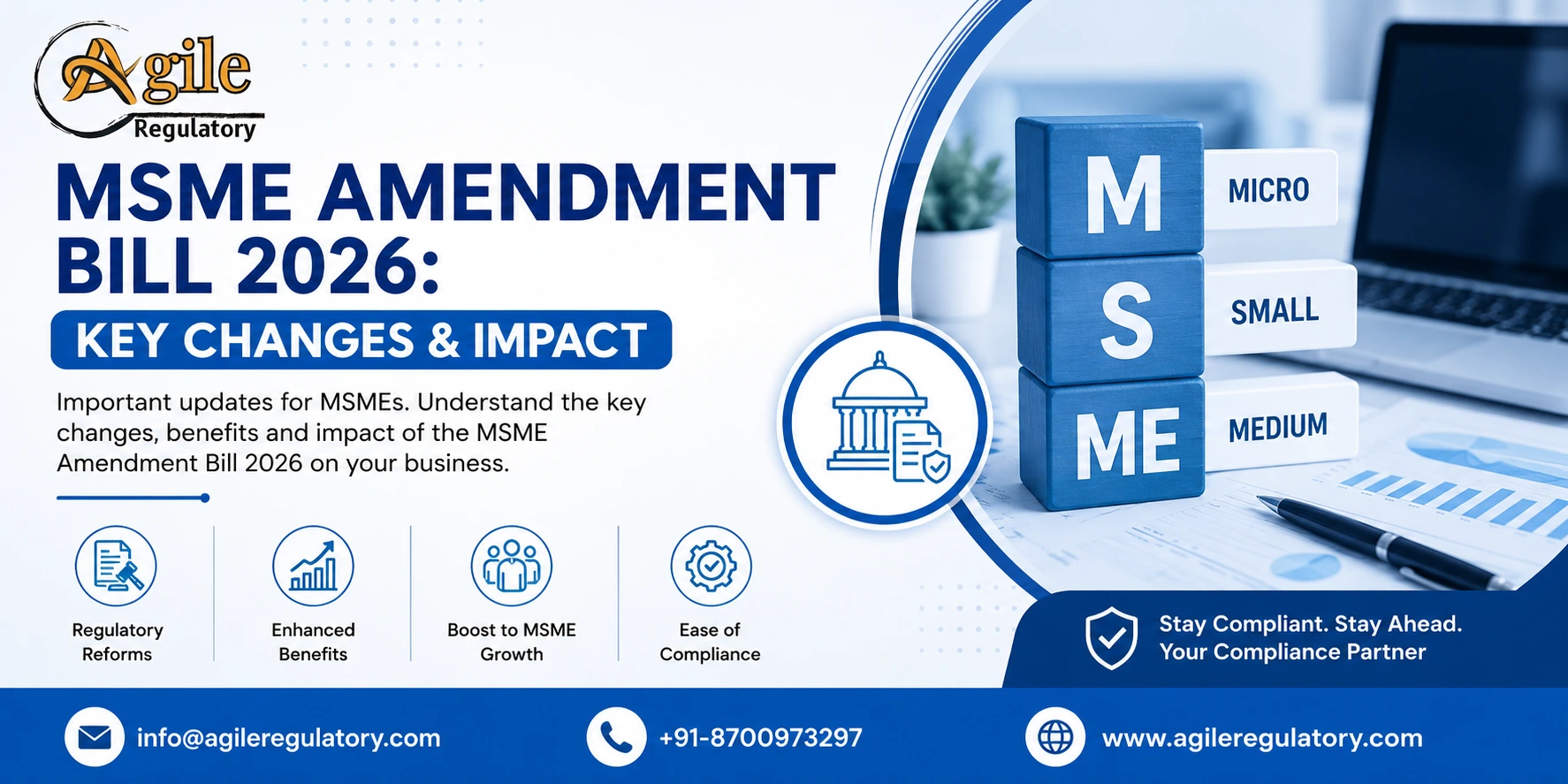
The MSME Amendment Bill 2026 introduces digital registration, faster dispute resolution, stronger payment recovery, TReDS-based settlements, and simplified compliance to improve liquidity, growth, competitiveness, and ease of doing business.
Sanskriti
22 Aug 2026
Learn MSME Registration Online, including eligibility criteria, key benefits, required documents, investment limits, and the complete step-by-step registration process for businesses.
Divya Saxena
21 Aug 2026
MSME Registration in India, officially known as Udyam Registration, helps eligible micro, small and medium enterprises obtain formal recognition from the Government of India. The registration is online, paperless and free through the official Udyam Regist
Nishi Chawla
07 May 2026
NSIC Registration helps MSMEs access government tenders, financial benefits, and procurement opportunities. It improves business credibility, reduces tender costs, and supports small businesses in securing government contracts more easily.
Vanshika Mathur
11 Mar 2026
MSME registration helps small businesses gain official recognition and access government benefits. Registered enterprises can avail loans, subsidies, and protection against delayed payments. It supports business growth by providing financial assistance,
We simplify compliance through a proven 4-step process: Consultation, Documentation, Submission, and certification. From understanding requirements to getting final approvals, we deliver a smooth, timely, and fully compliant journey for your business.


What our customer says about us

Lavkush Sharma
KTPL Instruments
Agile Regulatory handled my BIS Certification registration smoothly. Their expert team ensured quick approvals, transparent pricing, and a completely stress-free compliance experience.

Nitin Mukesh
Justrack IOT
We are grateful to Agile Regulatory for their excellent support. Their team showed patience, expertise, and professionalism throughout, providing clear guidance and making the entire process smooth and hassle-free.
Pradeep Varma
Coaire Compressor
Being an excellent BIS Certification Consultant provider, they help customers with all requirements such as BIS Certification, CDSCO services, Agile Regulatory support, legal issues, and lab testing with quick results.

Bharat Bachwani
Easy Polymer
With the help of Agile Regulatory, we have made significant progress in our business. Their service is fast, genuine, and reliable. We look forward to continued success together in the future.
Atul Jain
Tarus International
Many thanks to Agile Regulatory for all the support, guidance, and expert advice. Their professional approach and consistent assistance have made a significant difference.

Paramjeet Singh
Anchor Weighing
Top-tier consulting! offered strategic solutions that revolutionized our approach. Their deep expertise and personalized guidance made a significant impact on our success. Highly recommend their services.

Anshul Rathi
AM Capacitor
Agile Regulatory exceeded expectations! Their tailored solutions, expertise, and proactive approach led to remarkable results. Highly recommend for businesses seeking impactful and strategic guidance.

Shekhar Maurya
Imaxx Pro Aquistic
Outstanding service! delivered targeted solutions with professionalism and expertise. Their insights elevated our business strategies, resulting in noticeable growth. Highly recommended for exceptional consultation.
Trusted by over 1,00,000 + Global Brands in the past 15+ years


 The BRICS MSME Cooperation Portal 2026 is an important initiative aimed at strengthening cooperation among micro, small and medium enterprises across BRICS countries. India’s BRICS Chairship in 2026 has placed significant attention on MSME internationalisation, access to finance, technology adoption and participation in global value chains.

Leave a Reply
Your email address will not be published. Required fields are marked *