


Get Instant Solution By an Expert Advisor
(4.8)
Fast replies · No spam · Real experts
.webp)
A compliance checklist meaning is a structured list of laws, registrations, approvals, documents, filings, renewals, and other regulatory obligations that a business needs to follow. It provides a practical way to monitor whether the required compliance activities have been completed on time.
For a manufacturing company, the checklist may cover factory approvals, environmental permissions, labour requirements, taxation, product certifications, employee records, packaging declarations, waste management, and periodic returns.
A proper compliance checklist template can include the name of the compliance, applicable authority, frequency, due date, responsible person, required documents, status, and renewal date.
Manufacturing units operate across multiple regulatory areas. Failure to maintain required approvals or submit applicable returns can result in penalties, notices, operational disruptions, or problems during inspections.
A structured compliance system helps businesses:
BIS also states that products covered under compulsory certification must obtain the applicable BIS licence, while manufacturers need appropriate infrastructure, process controls, quality control, and testing capabilities.
The first step is to identify the registrations applicable to the business and manufacturing premises. Depending on the business structure and location, this may include:
The exact requirements depend on the state, factory size, manufacturing activity, and applicable regulations.
Environmental compliance is an important part of manufacturing operations. Depending on the manufacturing process and pollution category, a unit may require approvals from the relevant State Pollution Control Board.
Businesses should evaluate requirements relating to:
Manufacturers should identify the applicable waste category instead of assuming that every factory has the same environmental obligations.
Product-specific regulations are another major part of manufacturing compliance. Depending on the product, a manufacturer may need mandatory certification, testing, registration, or approval.
BIS certification is applicable to products covered under relevant Indian Standards and mandatory certification requirements. The Bureau of Indian Standards explains that compulsory certification applies to products notified by the Central Government.
Manufacturers should verify:
BIS documentation can include manufacturing process details, machinery information, testing arrangements, calibration records, technical files, and product information depending on the applicable scheme.
Manufacturers selling packaged goods should also review Legal Metrology requirements.
LMPC registration may be relevant to businesses involved in importing or dealing with packaged commodities under applicable Legal Metrology requirements. Packaging declarations may include information such as the manufacturer's or packer's details, quantity, MRP, customer-care information, and other prescribed particulars, depending on the product and applicable rules.
Manufacturers and importers should review their packaging artwork and declarations before products enter the market.
People-related obligations should be tracked separately through an employee compliance checklist. Depending on employee strength, state, and business structure, requirements can include:
Manufacturing businesses should also maintain appropriate workplace safety systems because factory operations may involve machinery, chemicals, electrical equipment, heat, pressure, or other occupational risks.
A manufacturing unit should regularly review its factory and workplace safety obligations. The compliance framework can include:
The applicable requirements can differ according to the nature of the manufacturing activity and the state in which the facility operates.
Financial compliance should also be included in the company's master checklist. Businesses should monitor:
Maintaining a compliance calendar helps finance and management teams avoid missed deadlines.
RNI registration is not a general manufacturing licence. It is relevant to publishers of newspapers and periodicals under the applicable registration framework.
However, if a manufacturing company also publishes a newspaper, magazine, journal, or periodical as part of its business activities, the company should separately evaluate whether registration under the applicable periodical registration framework is required.
This distinction is important because not every registration applies to every manufacturing business.
Documents Required for Manufacturing Compliance
The exact documents depend on the applicable approvals, but businesses may commonly need:
For BIS-related applications, official requirements can include factory address proof, manufacturing process flow charts, machinery lists, testing equipment details, calibration certificates, and technical documentation depending on the applicable certification scheme.
A useful compliance checklist template should contain more than just the name of a licence. It should help the company monitor compliance throughout the year.
A practical format can include:
|
Compliance Area |
Requirement |
Authority |
Frequency |
Due Date |
Status |
|
Factory |
Factory Licence |
Applicable State Authority |
As applicable |
Renewal date |
Pending/Done |
|
Environment |
CTE/CTO |
State Pollution Control Board |
As applicable |
Due date |
Pending/Done |
|
Product |
BIS requirement |
BIS |
As applicable |
Renewal date |
Pending/Done |
|
Packaging |
Legal Metrology |
Applicable Authority |
As applicable |
Due date |
Pending/Done |
|
Employees |
Labour compliances |
Applicable Authorities |
Monthly/Periodic |
Due date |
Pending/Done |
|
Tax |
GST compliance |
GST Authority |
Periodic |
Due date |
Pending/Done |
The checklist should be reviewed monthly or quarterly and updated whenever a new product, factory location, employee category, manufacturing process, or regulation is introduced.
Some common mistakes include:
A manufacturing compliance system should therefore be customised according to the company's actual activities.
Managing multiple registrations, certifications, renewals, and regulatory requirements can become difficult for growing manufacturing businesses. Agile Regulatory helps businesses understand applicable compliance requirements and manage regulatory processes with a structured approach.
Our team can assist businesses with regulatory registrations, documentation, product certifications, environmental compliance, and other business approvals based on the applicable requirements.
From BIS certification and LMPC registration to other industry-specific regulatory approvals, the objective is to help businesses maintain an organised compliance framework and reduce avoidable regulatory delays.
A manufacturing business needs a proactive approach to regulatory compliance rather than handling approvals only when an inspection or renewal becomes due. A detailed statutory compliance checklist helps management track licences, employee obligations, environmental requirements, product certifications, packaging rules, taxation, and other applicable requirements.
The right compliance structure will depend on the company's products, manufacturing process, factory location, employee strength, and business activities. Regular reviews can help identify gaps before they become serious regulatory issues.
Agile Regulatory can help manufacturers identify applicable registrations and certifications, organise documentation, and manage regulatory processes efficiently.
A compliance checklist is a structured list of registrations, licences, filings, renewals, records, and regulatory obligations that a manufacturing business needs to monitor and complete.
No. BIS certification is not automatically mandatory for every manufactured product. It depends on whether the particular product is covered under a compulsory BIS certification requirement.
LMPC requirements depend on the nature of the packaged commodity and the business activity. Manufacturers and other concerned entities should check the applicable Legal Metrology requirements for their products and packaging.
No. RNI registration is not a general requirement for manufacturing businesses. It is associated with applicable newspaper and periodical publishing activities.
A manufacturing compliance checklist should ideally be reviewed regularly, such as monthly or quarterly, and whenever the business introduces a new product, location, process, employee category, or regulatory requirement.


You might also be interested in these articles.
Preeti Gupta
13 Aug 2026
The EPR system in India is becoming more digital and compliance-focused, making it important for Producers, Importers and Brand Owners (PIBOs) to maintain accurate registration details, waste-processing records and annual returns. Understanding the latest
Nishi Chawla
22 Jun 2026
Discover how Tea Board Registration in Delhi helps tea exporters access global markets, enhance credibility, and streamline export compliance for business growth.
Nishi Chawla
06 Jun 2026
MD 42 License in Noida is essential for medical device manufacturers and importers to ensure legal compliance, build market credibility, avoid penalties, and expand business opportunities.
Nishi Chawla
19 May 2026
ICEGATE registration is an essential process for import-export businesses in India. It allows importers, exporters, customs brokers, and logistics companies to access online customs services through the Indian Customs Electronic Gateway (ICEGATE). With re
Nishi Chawla
09 May 2026
APEDA Registration is essential for businesses involved in the export of agricultural and processed food products from India. This complete guide for 2026 explains the APEDA registration process, required documents, eligibility, benefits, and compliance r
Nishi Chawla
25 Apr 2026
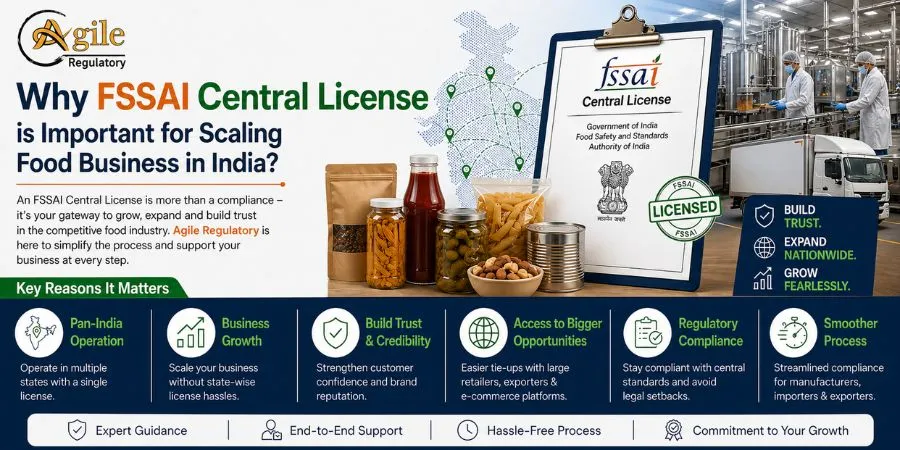
An FSSAI central license is essential for food businesses aiming to scale across India. It ensures legal compliance, builds consumer trust, and allows operations in multiple states and large-scale production.
Nishi Chawla
20 Apr 2026
The GeM (Government e-Marketplace) Portal Registration is a simple online process that allows sellers, service providers, and organizations to register and sell goods or services directly to government departments in India.
Nishi Chawla
20 Apr 2026
Rubber Board Registration helps rubber businesses gain official recognition, access government benefits, improve market credibility, and expand trade opportunities. It ensures compliance with industry regulations and supports better pricing, exports, and
Nishi Chawla
08 Apr 2026
Create an account, complete the Startup India registration form, upload required documents, self-certify eligibility, and track application status until the certificate is issued.
We simplify compliance through a proven 4-step process: Consultation, Documentation, Submission, and certification. From understanding requirements to getting final approvals, we deliver a smooth, timely, and fully compliant journey for your business.


What our customer says about us

Lavkush Sharma
KTPL Instruments
Agile Regulatory handled my BIS Certification registration smoothly. Their expert team ensured quick approvals, transparent pricing, and a completely stress-free compliance experience.

Nitin Mukesh
Justrack IOT
We are grateful to Agile Regulatory for their excellent support. Their team showed patience, expertise, and professionalism throughout, providing clear guidance and making the entire process smooth and hassle-free.
Pradeep Varma
Coaire Compressor
Being an excellent BIS Certification Consultant provider, they help customers with all requirements such as BIS Certification, CDSCO services, Agile Regulatory support, legal issues, and lab testing with quick results.

Bharat Bachwani
Easy Polymer
With the help of Agile Regulatory, we have made significant progress in our business. Their service is fast, genuine, and reliable. We look forward to continued success together in the future.

Atul Jain
Tarus International
Many thanks to Agile Regulatory for all the support, guidance, and expert advice. Their professional approach and consistent assistance have made a significant difference.

Paramjeet Singh
Anchor Weighing
Top-tier consulting! offered strategic solutions that revolutionized our approach. Their deep expertise and personalized guidance made a significant impact on our success. Highly recommend their services.

Anshul Rathi
AM Capacitor
Agile Regulatory exceeded expectations! Their tailored solutions, expertise, and proactive approach led to remarkable results. Highly recommend for businesses seeking impactful and strategic guidance.

Shekhar Maurya
Imaxx Pro Aquistic
Outstanding service! delivered targeted solutions with professionalism and expertise. Their insights elevated our business strategies, resulting in noticeable growth. Highly recommended for exceptional consultation.
Trusted by over 1,00,000 + Global Brands in the past 15+ years


.webp)

.webp)
(1).webp)


Leave a Reply
Your email address will not be published. Required fields are marked *