


Get Instant Solution By an Expert Advisor
(4.8)
Fast replies · No spam · Real experts
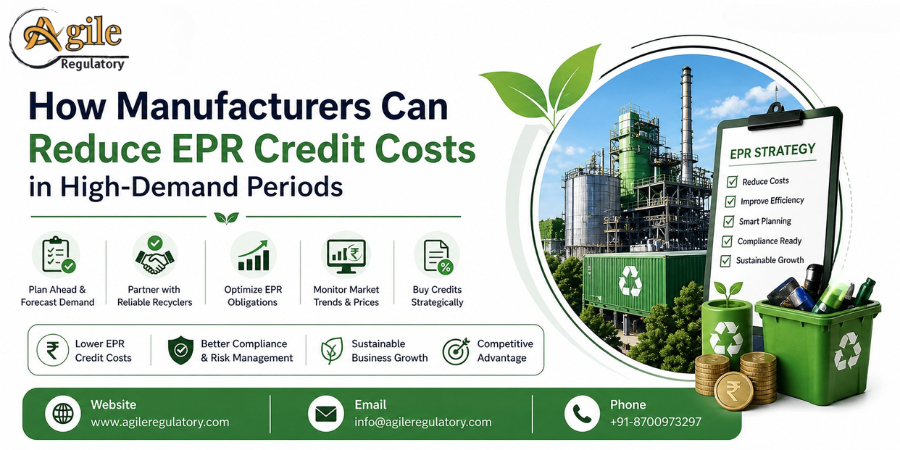
The manufacturers who pay the most for EPR credits are rarely the ones with the biggest compliance obligations. They're the ones who show up to buy credits in February and March, when every other PIBO in their category is doing the same thing. Supply tightens, prices spike, and the same credits that would have cost ₹0.80 per kg in October cost ₹1.50 or more before March 31. That 20–30% volatility in the EPR credit market isn't a market anomaly; it's a predictable pattern, and most manufacturers are financing it with their own late planning.
There's a different way to approach this. The EPR registration process and compliance cycle are structured enough that credit demand peaks are foreseeable months in advance. The cost-reduction strategies that actually work aren't complicated; they're mostly about timing, relationships, and treating EPR certification as a year-round operational function rather than a Q4 scramble.
Why Your EPR Application Gets Rejected in India & How to Fix It (Complete 2026 Guide)
EPR certificate's full form is Extended Producer Responsibility certificate. EPR registration's full form expands to the same. An EPR certificate means an independently verified document, issued through the CPCB portal by a registered recycler, confirming that a specific quantity of a specific waste category was processed in compliance with CPCB standards. When a manufacturer purchases these certificates through the MSTC Electronic Trading Platform, those purchases count toward their annual recycling target.
CPCB established a Pricing Oversight Committee in 2024 to set price bands for plastic; the band is ₹0.50 to ₹1.50 per kg. Battery and e-waste credits trade at significantly higher ranges: ₹20–₹50 per kg for battery categories and ₹10–₹30 per kg for EPR certificates for e-waste. Even within a fixed price band, the difference between buying at the floor and buying at the ceiling across a full year's obligation is material for any mid- to large-volume manufacturer.
The most basic cost-control move is also the least commonly done. Your EPR registration certificate carries the target obligations CPCB assigned based on the import or production volumes you declared. Those targets are fixed at the start of the financial year, April 1. You know before the year starts exactly how many kilograms of credits you'll need for plastic categories I, II, III, and IV separately and for each EEE category under e-waste or each battery chemistry under battery waste.
Run that calculation in March, before the new year opens. Convert each target into a monthly credit acquisition budget. This turns credit buying from a deadline-driven activity into a scheduled procurement function, and scheduled procurement, by definition, happens outside the peak window when everyone else is buying.
July to September is the lowest-demand period in the EPR credit market. Annual returns have just been filed. The deadline pressure that drove Q4 and Q1 purchases is gone.
An EPR consultant or in-house compliance team that monitors MSTC trading volumes can identify these supply-surplus periods and time bulk purchases accordingly. CPCB's rules allow a manufacturer to purchase credits up to their current year's liability plus any carryover from prior years plus 10% of the current year's liability. That 10% buffer is worth using; buying slightly ahead of your minimum requirement during low-demand periods reduces your exposure to the year-end price environment entirely.
One caveat: verify that the recyclers you're purchasing from have valid and current Consent to Operate (CTO) certificates. In 2023, approximately 600,000 fake plastic EPR certificates circulated in the market before CPCB's e-invoicing mandate closed the gap.
Manufacturers who buy exclusively on the MSTC spot market pay market rates by definition. Those who have established relationships with registered recyclers through MOUs or multi-year agreements can negotiate forward pricing that isn't subject to the same seasonal volatility.
A recycler who knows they have a committed buyer for 500 MT of Category II plastic credits per quarter has more predictable revenue. In exchange, they're often willing to lock in pricing at or near the quarterly floor rate rather than waiting for year-end demand to push prices up. This arrangement benefits both sides, and it's entirely permissible under the CPCB's EPR registration framework as long as both parties are portal-registered and all transactions flow through the MSTC platform with valid e-invoices.
PROs Producer Responsibility Organizations are registered entities under CPCB's framework that aggregate collection and recycling activities across multiple PIBOs. Engaging a PRO shifts the operational burden of collection and credit generation to a specialized intermediary, which is particularly useful for manufacturers who lack the logistics infrastructure to manage direct recycler relationships at scale.
The cost case for PRO engagement depends on your obligation size and your geographic spread. For manufacturers importing into multiple states, a PRO with national collection networks often achieves economies of scale that make their per-kg rate competitive with spot market purchases, particularly outside peak demand windows. The EPR certificate requirements for PRO-generated credits are identical to those from direct recycler purchases; what changes is who manages the logistics.
Plastic EPR obligations are divided across four categories with different recycling economics and different price points. Category IV (multi-layered plastic and compostable carry bags) typically commands higher prices because the recycling infrastructure for it is thinner. Category I (rigid plastic packaging) trades at the lower end. Manufacturers who have both categories in their obligation, and many do, can sequence their purchases to front-load the lower-priced categories and manage Category IV procurement more tightly.
|
Strategy |
When to Execute |
Estimated Cost Impact |
Complexity |
|
Annual target pre-calculation |
March (before new FY) |
Eliminates unplanned purchases |
Low |
|
Front-load purchases in Q1–Q2 |
July–September |
Avoids 15–30% peak premium |
Low–Medium |
|
MOU with registered recyclers |
Before the year starts |
Locks floor-range pricing |
Medium |
|
PRO engagement for multi-state ops |
At the registration stage |
Economies of scale in logistics |
Medium |
|
Category-level purchase sequencing |
Quarterly review |
Optimizes across obligation mix |
Medium–High |
|
MSTC price monitoring |
Monthly |
Identifies windows for bulk buying |
Low |
Environmental compensation under India's EPR framework isn't a flat fine; it's calculated on the actual quantity of unfulfilled obligation, carries forward into the following year's liability, and compounds if left unaddressed. In July 2025, BPCL received a ₹1 crore EC for used oil EPR lapses; a Delhi importer faced ₹19.82 crore in cumulative penalties across states for plastic waste non-compliance. These are real enforcement outcomes, not hypothetical risk.
What are the benefits of EPR services for recycling e-waste?
The calculation is simple: buying credits during off-peak periods at ₹0.80 per kg versus ₹1.50 per kg at year-end saves money. Paying environmental compensation on a shortfall plus carrying the unfulfilled obligation into next year at the same elevated prices multiplies the cost.
For manufacturers with a valid EPR license and an active EPR registration certificate, the compliance framework is already in place. The cost variable is almost entirely in execution timing and relationship management.
Your EPR certificate online decoration. Status must be active and current for MSTC trading access to function. A registration showing pending renewal, documentation gaps, or CPCB queries locks your trading account on the MSTC platform. This is the scenario manufacturers want to avoid heading into Q4. A suspended trading account in November or December means you can't buy credits during the remaining low-demand window before the year-end rush.
For EPR certificate online applications, renewals must be filed via Form-1 at least 60 days before your certificate's expiry date. EPR registration fees and annual processing charges 25% of the registration fee due at annual return time should be built into the compliance budget rather than treated as unexpected costs.
Credit price management in the Indian EPR market comes down to one discipline: acting before the rest of the market does. The compliance calendar is published. The demand peaks are predictable. The price bands are set by CPCB's Pricing Oversight Committee. What separates manufacturers who pay floor-range credit prices from those who pay ceiling rates is almost always the timing of their planning, not the size of their obligation.
If you need support with EPR registration for plastic waste, EPR certification for e-waste, credit purchase strategy, MSTC onboarding, or annual return filing, Agile Regulatory provides end-to-end EPR compliance management for manufacturers, importers, and brand owners across all CPCB waste categories. Our team of experienced EPR certificate consultants and EPR authorization consultants works with clients throughout the compliance year, not just at deadline time.


You might also be interested in these articles.
Preeti
09 Sep 2026
Understand the Used Oil EPR Annual Return 2026 deadline, filing process, compliance requirements, and key steps businesses need to follow for smooth EPR compliance in India.
Divya Saxena
20 Aug 2026
EPR Registration for E-Waste Management in India helps businesses comply with e-waste regulations by ensuring responsible collection, recycling, and disposal of electronic waste.
Divya Saxena
20 Aug 2026
Can a dead electric vehicle battery be reused or recycled? Learn how battery reuse, recycling, EPR registration, and battery waste compliance work in India.
Preeti Gupta
13 Aug 2026
The EPR system in India is becoming more digital and compliance-focused, making it important for Producers, Importers and Brand Owners (PIBOs) to maintain accurate registration details, waste-processing records and annual returns. Understanding the latest
Divya Saxena
07 Aug 2026
EPR Registration in India helps eligible businesses meet Extended Producer Responsibility requirements and manage their environmental obligations. Learn about the registration process, required documents, benefits, and compliance requirements.
Nishi Chawla
04 Jun 2026
EPR Registration in Ghaziabad is a mandatory compliance requirement for businesses involved in manufacturing, importing, selling, or branding products that generate plastic waste, e-waste, battery waste, or other regulated waste streams. Under the Extende
Nishi Chawla
04 May 2026
EPR credit transfer from MSTC to the CPCB portal is an essential step for producers, importers, and brand owners to meet their Extended Producer Responsibility
Nishi Chawla
01 May 2026
New importers need to register under EPR with the Central Pollution Control Board (CPCB) and ensure proper waste collection, recycling, or disposal through authorized recyclers. They must maintain records, meet annual targets, and submit compliance report
Nishi Chawla
30 Apr 2026
This guide explains the complete process of bulk uploading EPR invoices on the CPCB portal, helping businesses manage compliance efficiently and avoid common submission errors.
Nishi Chawla
15 Apr 2026
EPR applications in India often get rejected due to incomplete documentation, incorrect details, or non-compliance with guidelines set by the Central Pollution Control Board. This 2026 guide explains the common reasons for rejection and provides practical
Divya Saxena
24 Mar 2026
EPR credits are earned via certified recyclers processing e-waste, enabling producers to meet targets, maintain compliance, and support sustainable waste management.
Vanshika Mathur
24 Mar 2026
Businesses can obtain EPR (Extended Producer Responsibility) credits by purchasing them from CPCB-authorized Plastic Waste Processors (PWPs). These processors recycle plastic waste and generate credits on the Central Pollution Control Board portal. Compan
Vanshika Mathur
13 Mar 2026
Renewing an EPR certificate is essential for businesses dealing with e-waste, plastic, batteries, or tyres in India. This guide explains the EPR renewal process, documents required, and timelines for 2026. Learn how to stay compliant with CPCB regulatio
We simplify compliance through a proven 4-step process: Consultation, Documentation, Submission, and certification. From understanding requirements to getting final approvals, we deliver a smooth, timely, and fully compliant journey for your business.


What our customer says about us
Lavkush Sharma
KTPL Instruments
Agile Regulatory handled my BIS Certification registration smoothly. Their expert team ensured quick approvals, transparent pricing, and a completely stress-free compliance experience.

Nitin Mukesh
Justrack IOT
We are grateful to Agile Regulatory for their excellent support. Their team showed patience, expertise, and professionalism throughout, providing clear guidance and making the entire process smooth and hassle-free.
Pradeep Varma
Coaire Compressor
Being an excellent BIS Certification Consultant provider, they help customers with all requirements such as BIS Certification, CDSCO services, Agile Regulatory support, legal issues, and lab testing with quick results.

Bharat Bachwani
Easy Polymer
With the help of Agile Regulatory, we have made significant progress in our business. Their service is fast, genuine, and reliable. We look forward to continued success together in the future.

Atul Jain
Tarus International
Many thanks to Agile Regulatory for all the support, guidance, and expert advice. Their professional approach and consistent assistance have made a significant difference.

Paramjeet Singh
Anchor Weighing
Top-tier consulting! offered strategic solutions that revolutionized our approach. Their deep expertise and personalized guidance made a significant impact on our success. Highly recommend their services.
Anshul Rathi
AM Capacitor
Agile Regulatory exceeded expectations! Their tailored solutions, expertise, and proactive approach led to remarkable results. Highly recommend for businesses seeking impactful and strategic guidance.

Shekhar Maurya
Imaxx Pro Aquistic
Outstanding service! delivered targeted solutions with professionalism and expertise. Their insights elevated our business strategies, resulting in noticeable growth. Highly recommended for exceptional consultation.
Trusted by over 1,00,000 + Global Brands in the past 15+ years




.webp)
.webp)



Leave a Reply
Your email address will not be published. Required fields are marked *