


Get Instant Solution By an Expert Advisor
(4.8)
Fast replies · No spam · Real experts
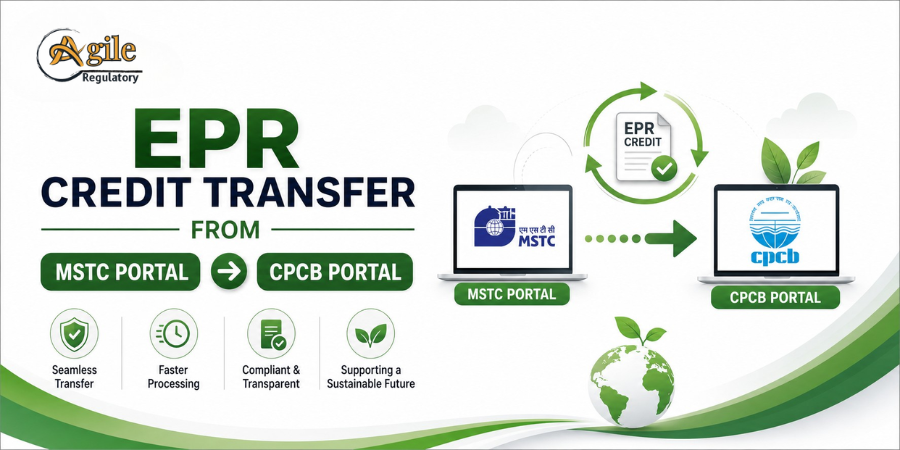
A lot of manufacturers think that buying EPR credits on MSTC closes their compliance loop. It doesn't. The purchase happens on MSTC's trading platform, but the credits only count toward your annual recycling target when they appear in your compliance ledger on the CPCB portal. These are two separate systems, and the transfer between them has its own process, its own validation steps, and its own failure points.
If you file your annual return in June and the credits you purchased in February haven't transferred correctly to your CPCB ledger, the portal shows a shortfall. That shortfall triggers environmental compensation, regardless of what your MSTC account confirms. Understanding how the transfer works and what can prevent it from completing is what separates a compliant annual return from a disputed one.
EPR certificate full form is Extended Producer Responsibility certificate. The distinction between what happens on MSTC and what happens on CPCB's portal follows logically from how the framework is structured.
CPCB's EPR portals eprplastic.cpcb.gov.in, ewasteportal.cpcb.gov.in, eprbattery.cpcb.gov.in, eprtyres.cpcb.gov.in are where your EPR registration certificate lives, where your annual recycling targets are assigned, and where your compliance ledger is maintained. Every credit that counts toward your target must eventually appear here.
MSTC's Electronic Trading Platform (EPRETP) is the commercial layer of the market where recyclers with surplus credits and PIBOs with compliance shortfalls find each other, negotiate, and transact. MSTC Limited, a Government of India enterprise, was authorised by CPCB's Tender Committee to design and operate this platform. It earns commission on traded volume. Its job is price discovery and trade facilitation, not compliance record-keeping.
|
Function |
MSTC ETP |
CPCB EPR Portal |
|
Primary Role |
Commercial trading marketplace |
Compliance registration and ledger |
|
Who Uses It |
PIBOs buying credits, recyclers selling surplus |
All registered PIBOs, recyclers, PROs |
|
What It Records |
Trade transactions and pricing |
Credit generation, transfer, target fulfilment |
|
Credit Generation |
Does not generate credits |
Credits generated here by verified recyclers |
|
Annual Return Filing |
Not applicable |
Annual return filed here (Form-1 by June 30) |
|
Target Verification |
Not applicable |
The compliance ledger determines the target status |
|
Regulatory Authority |
CPCB-authorised operator |
Central Pollution Control Board |
|
Revenue Model |
Commission on traded volume |
Government regulatory function |
You can't transfer credits that don't exist yet. Before a credit appears in anyone's MSTC account or CPCB ledger, a registered recycler has to generate it.
The generation process on the CPCB portal works like this: a recycler who has processed waste uploaded their electricity consumption records, material recovery logs, and end-product sales invoices submits this data to CPCB for verification. Once CPCB validates the processing data, the portal generates EPR certificates in the recycler's digital wallet. For e-waste, CPCB has implemented blockchain-based verification, each credit is backed by a timestamped digital certificate tied to a specific physical recycling event.
Credit wallets are category-specific. A recycler who processes Category I rigid plastic generates Category I credits. Those credits can only be transferred to a PIBO with a Category I obligation. They cannot offset a Category II or Category IV shortfall regardless of how the transaction is structured on MSTC.
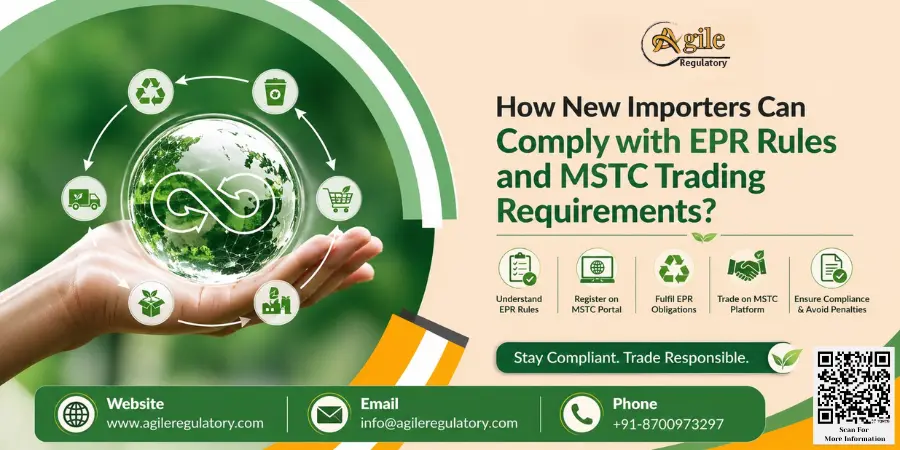
How New Importers Can Comply with EPR Rules and MSTC Trading Requirements?
Before the transfer step begins, three conditions must be satisfied on both sides of the transaction.
Your EPR registration must be active on the CPCB portal with correct and current details. An inactive, pending, or suspended EPR license blocks credit receipt in your compliance ledger. If your registration is up for renewal, do that first. Credits transferred to an account in a non-active state don't automatically reconcile once the account is restored.
The recycler or PRO transferring credits to you must also be registered and active on the same CPCB portal. A recycler whose Consent to Operate (CTO) has lapsed or whose CPCB registration is suspended cannot initiate a valid transfer, and any credits they attempt to transfer carry no compliance value. Verify your trading counterparty's portal status before the MSTC transaction is concluded, not after.
Log in to your MSTC ETP account. Identify the recycler or PRO offering credits in your required category. The commercial negotiation price per kg happens either through the platform's order matching mechanism or through direct negotiation before the MSTC transaction is logged
The recycler must log into the CPCB EPR portal, navigate to their digital credit wallet and initiate a transfer to your CPCB registration number. They enter your CPCB registration ID and the quantity of credits to transfer
The portal sends an OTP to the authorised signatory of both entities, the recycler and the receiving PIBO. Both OTPs must be entered and verified before the transfer proceeds. If either signatory's registered mobile number is outdated on the portal, the OTP doesn't arrive, and the transfer stalls
Once both OTPs are submitted, the CPCB portal validates the transfer internally. It checks that the recycler's wallet holds sufficient credits of the specified category that your CPCB registration is active and accepts the category being transferred and that the quantity doesn't exceed the recycler's available balance
On successful validation, the portal executes the transfer. Credits are deducted from the recycler's wallet and added to your compliance ledger on the CPCB portal under the corresponding category. Your target fulfilment percentage updates automatically to reflect the newly received credits
The CPCB portal generates a transfer acknowledgement once credits are in your ledger. Download and save this document with the MSTC trade reference number, the date, the category, and the quantity. These documents together constitute your audit trail for the credit purchase and transfer. During CPCB audits or Environmental Compensation disputes, the ability to produce both the MSTC trade confirmation and the CPCB transfer acknowledgement demonstrates the full chain of the transaction
The month before your annual return is due is not the time to discover transfer gaps. Run a reconciliation exercise quarterly or at a minimum, before each filing deadline.
Pull your CPCB compliance ledger for each category. Calculate: opening target for the year, credits received via transfer to date, any credits generated by your own collection infrastructure, and the remaining gap. Compare the ledger total against your internal records of trades executed on MSTC and MOUs with recyclers. If numbers don't match, identify which transfers are pending or failed before the return window closes.
For EPR certificate for e waste, quarterly return deadlines under the E-Waste (Management) Rules, 2022 make quarterly reconciliation mandatory, not optional. A gap found in Q2 that's corrected before Q3 doesn't compound. The same gap found at the June 30 annual return becomes part of your Environmental Compensation calculation.
EPR registration for plastic waste requires annual Form-1 filing extended to September 30, 2025, for FY 2024-25 under MoEF&CC's June 2025 notification. The extension gives additional reconciliation time, but it doesn't eliminate the underlying target it just shifts the reporting deadline.
How to Complete EPR Bulk Upload of Invoices on CPCB Portal?
A wrong category credit purchase on MSTC is the most expensive mistake. The correction path selling the wrong-category credits back and buying the right ones takes time. Confirm your category-wise target breakdown from your CPCB dashboard before logging into MSTC.
Outdated authorised signatory contact details cause OTP delivery failure. Both your details and the recycler's must be current. A 30-second check before initiating the transfer prevents a multi-day delay.
A recycler with a lapsed CTO or suspended CPCB registration, the credits appear to exist but can't be validly transferred. Verify counterparty status on the CPCB portal before any MSTC transaction is finalized. The portal's public-facing search function lets you check registration status by registration number.
Transfer initiated without confirming the receiver account is active; credits stall in limbo if your account has a pending renewal or documentation query. Resolve all portal queries before the transfer window.
The MSTC-to-CPCB credit transfer is not automatic. Buying credits on MSTC and having those credits appear in your CPCB compliance ledger requires a deliberate sequence of portal actions, from the recycler initiating the transfer to dual OTP validation to your own verification of the ledger update. Each step has a failure point, and each failure point has a resolution path provided you catch it before the return deadline, not after it.
If you need support with EPR registration, credit transfer workflows, MSTC onboarding, or annual return reconciliation, Agile Regulatory provides end-to-end EPR compliance management across plastic, e-waste, battery, and tyre waste categories. Our team of experienced EPR consultants and EPR authorization consultants manages the full cycle, not just the registration.


You might also be interested in these articles.
Preeti Gupta
09 Sep 2026
Understand the Used Oil EPR Annual Return 2026 deadline, filing process, compliance requirements, and key steps businesses need to follow for smooth EPR compliance in India.
Divya Saxena
20 Aug 2026
EPR Registration for E-Waste Management in India helps businesses comply with e-waste regulations by ensuring responsible collection, recycling, and disposal of electronic waste.
Divya Saxena
20 Aug 2026
Can a dead electric vehicle battery be reused or recycled? Learn how battery reuse, recycling, EPR registration, and battery waste compliance work in India.
Preeti Gupta
13 Aug 2026
The EPR system in India is becoming more digital and compliance-focused, making it important for Producers, Importers and Brand Owners (PIBOs) to maintain accurate registration details, waste-processing records and annual returns. Understanding the latest
Divya Saxena
07 Aug 2026
EPR Registration in India helps eligible businesses meet Extended Producer Responsibility requirements and manage their environmental obligations. Learn about the registration process, required documents, benefits, and compliance requirements.
Nishi Chawla
04 Jun 2026
EPR Registration in Ghaziabad is a mandatory compliance requirement for businesses involved in manufacturing, importing, selling, or branding products that generate plastic waste, e-waste, battery waste, or other regulated waste streams. Under the Extende
Nishi Chawla
01 May 2026
New importers need to register under EPR with the Central Pollution Control Board (CPCB) and ensure proper waste collection, recycling, or disposal through authorized recyclers. They must maintain records, meet annual targets, and submit compliance report
Nishi Chawla
01 May 2026
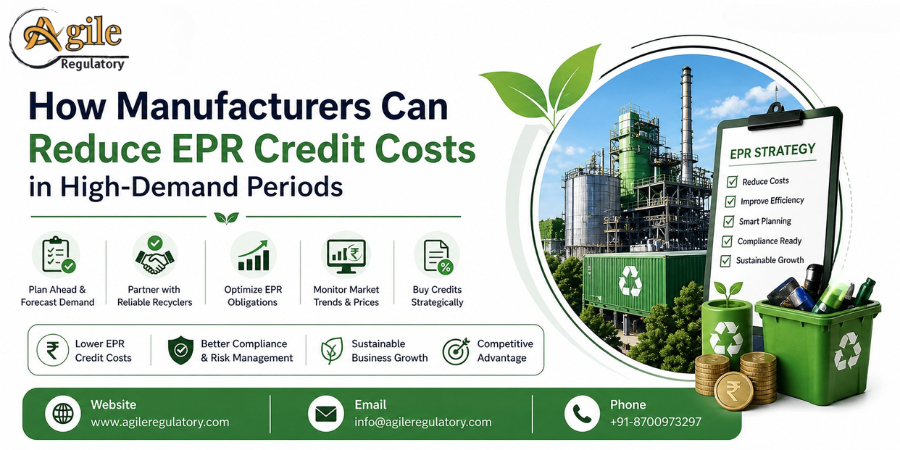
Manufacturers can reduce EPR credit costs during high-demand periods by adopting a proactive and strategic approach. Key steps include building long-term partnerships with authorized recyclers, securing credits in advance when prices are lower, and mainta
Nishi Chawla
30 Apr 2026
This guide explains the complete process of bulk uploading EPR invoices on the CPCB portal, helping businesses manage compliance efficiently and avoid common submission errors.
Nishi Chawla
15 Apr 2026
EPR applications in India often get rejected due to incomplete documentation, incorrect details, or non-compliance with guidelines set by the Central Pollution Control Board. This 2026 guide explains the common reasons for rejection and provides practical
Divya Saxena
24 Mar 2026
EPR credits are earned via certified recyclers processing e-waste, enabling producers to meet targets, maintain compliance, and support sustainable waste management.
Vanshika Mathur
24 Mar 2026
Businesses can obtain EPR (Extended Producer Responsibility) credits by purchasing them from CPCB-authorized Plastic Waste Processors (PWPs). These processors recycle plastic waste and generate credits on the Central Pollution Control Board portal. Compan
Vanshika Mathur
13 Mar 2026
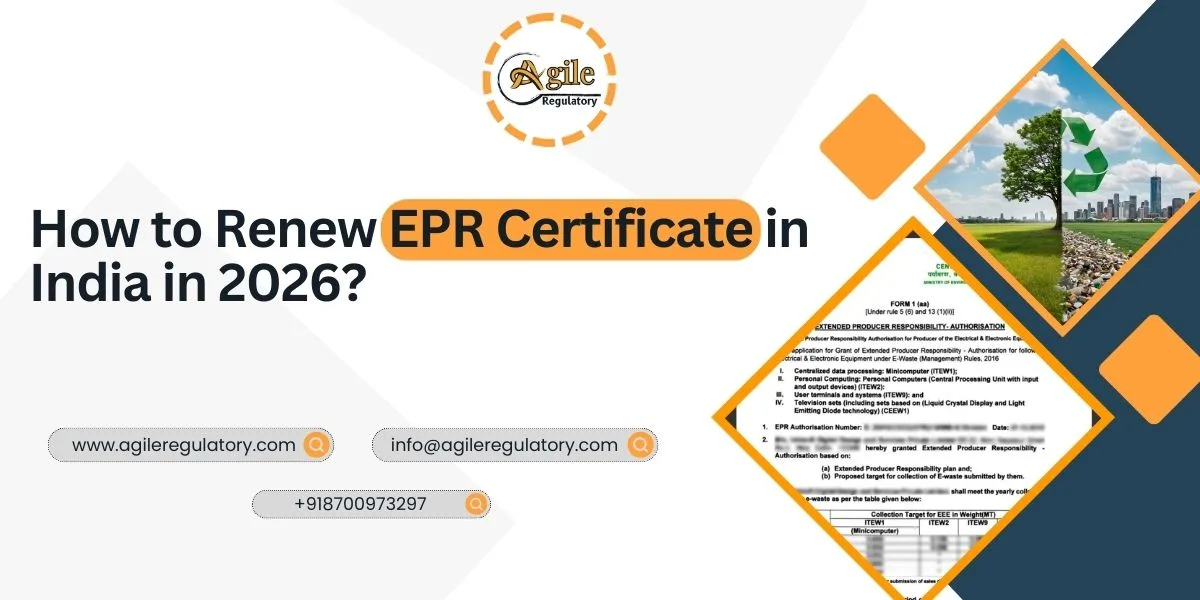
Renewing an EPR certificate is essential for businesses dealing with e-waste, plastic, batteries, or tyres in India. This guide explains the EPR renewal process, documents required, and timelines for 2026. Learn how to stay compliant with CPCB regulatio
We simplify compliance through a proven 4-step process: Consultation, Documentation, Submission, and certification. From understanding requirements to getting final approvals, we deliver a smooth, timely, and fully compliant journey for your business.


What our customer says about us

Lavkush Sharma
KTPL Instruments
Agile Regulatory handled my BIS Certification registration smoothly. Their expert team ensured quick approvals, transparent pricing, and a completely stress-free compliance experience.

Nitin Mukesh
Justrack IOT
We are grateful to Agile Regulatory for their excellent support. Their team showed patience, expertise, and professionalism throughout, providing clear guidance and making the entire process smooth and hassle-free.
Pradeep Varma
Coaire Compressor
Being an excellent BIS Certification Consultant provider, they help customers with all requirements such as BIS Certification, CDSCO services, Agile Regulatory support, legal issues, and lab testing with quick results.

Bharat Bachwani
Easy Polymer
With the help of Agile Regulatory, we have made significant progress in our business. Their service is fast, genuine, and reliable. We look forward to continued success together in the future.

Atul Jain
Tarus International
Many thanks to Agile Regulatory for all the support, guidance, and expert advice. Their professional approach and consistent assistance have made a significant difference.

Paramjeet Singh
Anchor Weighing
Top-tier consulting! offered strategic solutions that revolutionized our approach. Their deep expertise and personalized guidance made a significant impact on our success. Highly recommend their services.
Anshul Rathi
AM Capacitor
Agile Regulatory exceeded expectations! Their tailored solutions, expertise, and proactive approach led to remarkable results. Highly recommend for businesses seeking impactful and strategic guidance.

Shekhar Maurya
Imaxx Pro Aquistic
Outstanding service! delivered targeted solutions with professionalism and expertise. Their insights elevated our business strategies, resulting in noticeable growth. Highly recommended for exceptional consultation.
Trusted by over 1,00,000 + Global Brands in the past 15+ years




.webp)
.webp)



Leave a Reply
Your email address will not be published. Required fields are marked *