


Most people start with a recipe, a vision or a storefront only to find themselves drowning in a sea of regulatory codes, compliance declarations and the anxiety of potential inspections
In 2026 the FSSAI rules will have changed. It is no longer enough just to get a number on a wall. The system has shifted toward a more aggressive and risk-based surveillance model. If you are operating without a clear grasp of these updates, you are leaving your business exposed to heavy fines or worse sudden closure orders
FSSAI License for Export Registration Process in 2026
Government portals are notorious for being confusing. In 2026 the FSSAI has doubled down on digital documentation. They are moving away from paper-based physical files toward a strict and geo-tagged digital verification system
What this means for you:
Don't overcomplicate this. You fit into one of three buckets. Identifying the wrong one is the most common reason applications sit in the "Pending" queue for weeks.
This is for the small players. If your annual turnover is under 12 lakhs INR, this is your entry point. Think small snacks, local tea stalls, or home-based bakers. It is cheap, and the filing is quick, but it is limited. Do not try to scale a larger operation under this license; the FSSAI algorithms will eventually flag your turnover and the transition process can be messy
This is the middle ground. You need this if your revenue sits between 12 lakhs and 20 crores INR. It’s also for businesses with mid-sized production capacities. If you are operating in more than one state, stop here; this license won't work for you. You need a Central License instead
This is the "big league" license. Required for importers, exporters, e-commerce giants, and businesses with operations in central government facilities (like airports or railway stations). If your turnover crosses 20 crores, this is the only option that matters.
The FoSCoS portal is the gatekeeper. While it is accessible, it is not intuitive. Here is how the flow actually works for someone trying to get it right the first time:
Phase 1: Determining the KoB (Kind of Business) Before you upload anything, you must select the correct category.
Phase 2: The Documentation - This is where the process usually grinds to a halt. You will need:
Phase 3: The Scrutiny and Issuance Once submitted, you wait. An officer will review the digital file. If they find an error, they raise a "query." You have a limited window (usually 30 days) to respond. If you miss this window, the application is rejected and your government fee is gone.
How to Apply for FSSAI License for your Restaurant and Food Business in 2026?
In 2026 the cost of being "mostly compliant" is rising. The FSSAI does not offer leniency for ignorance
The Indian food industry is expanding, but the regulatory perimeter is tightening. You cannot afford to treat your FSSAI license as a "one-time" task. It is a living, breathing component of your business that requires active management. Whether you are launching a new brand or managing a chain of outlets, compliance should be your silent partner
Ensure your business is built on a solid foundation. Get in touch with Agile Regulatory today to audit your current status and secure your license properly


You might also be interested in these articles.
Preeti gupta
15 Oct 2026
Planning to start a bakery, home baking business, cake shop, or sweet shop in India? Before selling cakes, bread, biscuits, or traditional sweets, you need to understand which FSSAI approval applies to your business. Choosing between FSSAI Registration, a
Divya Saxena
11 Aug 2026
FSSAI License Registration is essential for food businesses operating in India. This guide explains the types of FSSAI approvals, eligibility, documents required, online registration process, Uttar Pradesh requirements, and the latest 2026 regulatory upda
Nishi Chawla
25 Jun 2026
A Health Trade License is an important legal requirement for businesses involved in food handling, healthcare, hospitality, and other public-facing activities in Uttar Pradesh. Beyond regulatory compliance, this license enhances your business credibility.
Nishi Chawla
06 Jun 2026
A Trade License in Noida is a mandatory business permit issued by local authorities that allows commercial establishments to operate legally. Understanding the registration process, required documents, and applicable fees helps businesses ensure complianc
Nishi Chawla
25 Apr 2026
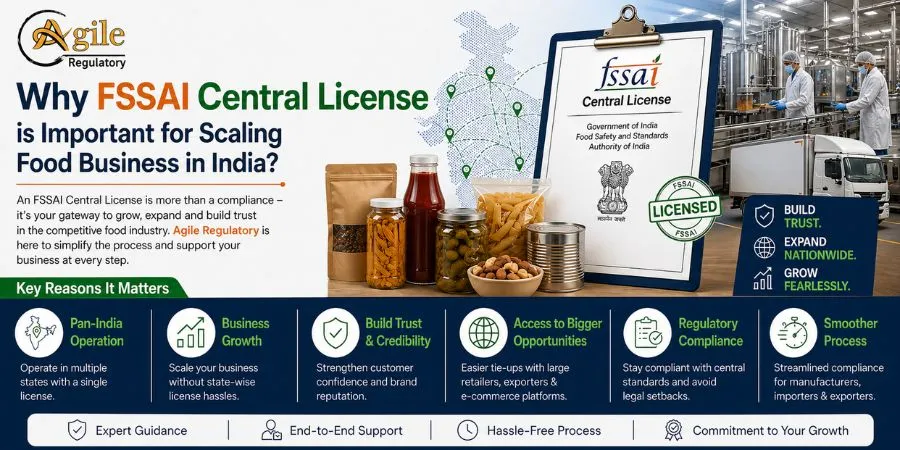
An FSSAI central license is essential for food businesses aiming to scale across India. It ensures legal compliance, builds consumer trust, and allows operations in multiple states and large-scale production.
Vanshika Mathur
27 Mar 2026
Trade License Registration in Andhra Pradesh is essential for legally operating a business in 2026. Our service simplifies the process with complete assistance in documentation, application filing, and approvals, ensuring compliance with local municipal r
Nishi Chawla
23 Mar 2026
FSSAI State Food License in Telangana and Hyderabad is mandatory for food businesses with turnover between ₹12 lakh and ₹20 crore. It ensures compliance with food safety, hygiene, and quality standards under the Food Safety Act. The process includes onlin
Divya Saxena
06 Mar 2026
Getting an FSSAI Food License in Maharashtra and Mumbai is mandatory for anyone running a food-related business such as restaurants, food manufacturing, packaging, or distribution
We simplify compliance through a proven 4-step process: Consultation, Documentation, Submission, and certification. From understanding requirements to getting final approvals, we deliver a smooth, timely, and fully compliant journey for your business.


What our customer says about us

Lavkush Sharma
KTPL Instruments
Agile Regulatory handled my BIS Certification registration smoothly. Their expert team ensured quick approvals, transparent pricing, and a completely stress-free compliance experience.

Nitin Mukesh
Justrack IOT
We are grateful to Agile Regulatory for their excellent support. Their team showed patience, expertise, and professionalism throughout, providing clear guidance and making the entire process smooth and hassle-free.
Pradeep Varma
Coaire Compressor
Being an excellent BIS Certification Consultant provider, they help customers with all requirements such as BIS Certification, CDSCO services, Agile Regulatory support, legal issues, and lab testing with quick results.

Bharat Bachwani
Easy Polymer
With the help of Agile Regulatory, we have made significant progress in our business. Their service is fast, genuine, and reliable. We look forward to continued success together in the future.

Atul Jain
Tarus International
Many thanks to Agile Regulatory for all the support, guidance, and expert advice. Their professional approach and consistent assistance have made a significant difference.

Paramjeet Singh
Anchor Weighing
Top-tier consulting! offered strategic solutions that revolutionized our approach. Their deep expertise and personalized guidance made a significant impact on our success. Highly recommend their services.
Anshul Rathi
AM Capacitor
Agile Regulatory exceeded expectations! Their tailored solutions, expertise, and proactive approach led to remarkable results. Highly recommend for businesses seeking impactful and strategic guidance.

Shekhar Maurya
Imaxx Pro Aquistic
Outstanding service! delivered targeted solutions with professionalism and expertise. Their insights elevated our business strategies, resulting in noticeable growth. Highly recommended for exceptional consultation.
Trusted by over 1,00,000 + Global Brands in the past 15+ years






Leave a Reply
Your email address will not be published. Required fields are marked *