


If your company plans to manufacture, import or distribute medical devices in India regulatory compliance is not optional
Since 2026 the rules for medical devices have become stricter. Authorities are now paying more attention to the safety, quality and traceability of devices than they did before
You cannot simply start selling a device and apply later. The license must come first
Before you can sell your device in India, you need to get a drug license under the Medical Device Rules if it falls into the regulated category. A lot of new businesses and importers forget to do this step early on in their planning. That mistake often causes shipments to be late, products to be taken or notices from the government
How to Download a Drug License in India in 2026
The first thing you must determine is whether your product qualifies as a medical device under Indian law
India regulates medical devices under the Medical Device Rules 2017. These rules classify devices based on risk level
Your product may fall into one of four classes:
For example, products such as thermometers, blood pressure monitors, implants, diagnostic kits or surgical instruments are usually regulated
If your device appears in the notified device list, you must obtain a license before selling it in India
The exact license type depends on what your company does
Many companies discover too late that even software-based medical devices or diagnostic kits require regulatory approval
That is why classification should always be your first step
Medical device licensing in India operates under a central regulatory system
The main authority responsible for approval is the Central Drugs Standard Control Organization
Within CDSCO, approvals are handled through the online portal called SUGAM Portal
However, depending on the device classification, you may deal with two different regulators:
The licensing process follows a structured pathway. Each stage requires careful preparation
Before filing any application confirm the device classification under the Medical Device Rules
Classification mistakes are surprisingly common. If you submit the wrong category, your application will simply be returned
Your next task is building the technical file for the device
This documentation proves that your product is safe and performs as intended
Your file normally includes:
If your company manufactures devices authorities will also check whether your facility follows ISO 13485
All applications must be submitted through the CDSCO online system
You will create a company account, upload documents and select the correct application form
Different activities require different forms.
For example:
After submission the regulator reviews your application
This stage involves technical scrutiny. Officers evaluate whether your device meets safety, performance, and quality requirements.
If something is unclear you will receive a query letter
You must respond within the specified time. Ignoring queries or submitting incomplete replies often results in rejection
Most delays happen during this phase
For manufacturing licenses, regulatory authorities may inspect your facility. Check:
This inspection verifies that your facility actually follows the standards described in your documents
If gaps appear during inspection the authority may ask for corrective actions
Once the authority completes its evaluation, your license is issued through the SUGAM portal
You can then legally manufacture, import, or distribute the medical device in India
But approval does not end your compliance responsibilities
You must continue to maintain quality systems, report adverse events and renew licenses as required
Documents Required for Wholesale Drug License in India
Obtaining a drug license for medical devices in India requires planning, documentation and patience
You begin with classification under the Medical Device Rules. Then you prepare the technical file, submit the application through the CDSCO portal, respond to regulatory queries and undergo inspection if required
Once approved your license allows you to legally manufacture or import devices in the Indian market
But the process works smoothly only when your preparation is thorough. Contact Agile Regulatory for expert help.


You might also be interested in these articles.
Preeti Gupta
14 Oct 2026
Learn everything about the CDSCO Test License for Medical Device Performance Evaluation and Testing in India. This blog explains the purpose of a CDSCO test license, eligibility requirements, application process, essential documents, and regulatory compli
Divya Saxena
20 Aug 2026
CDSCO registration for disposable medical devices in India is an important regulatory requirement for eligible manufacturers and importers. Learn about the CDSCO registration process, documents, fees, medical device classification, applicable forms, and c
Nishi Chawla
29 Jun 2026
CDSCO drug packaging and labelling requirements play a crucial role in ensuring the safety, quality, and traceability of pharmaceutical products in India. This blog explains the key CDSCO rules, mandatory labelling requirements, packaging standards, and b
Nishi Chawla
06 Jun 2026
MD 42 License in Noida is essential for medical device manufacturers and importers to ensure legal compliance, build market credibility, avoid penalties, and expand business opportunities.
Nishi Chawla
05 Jun 2026
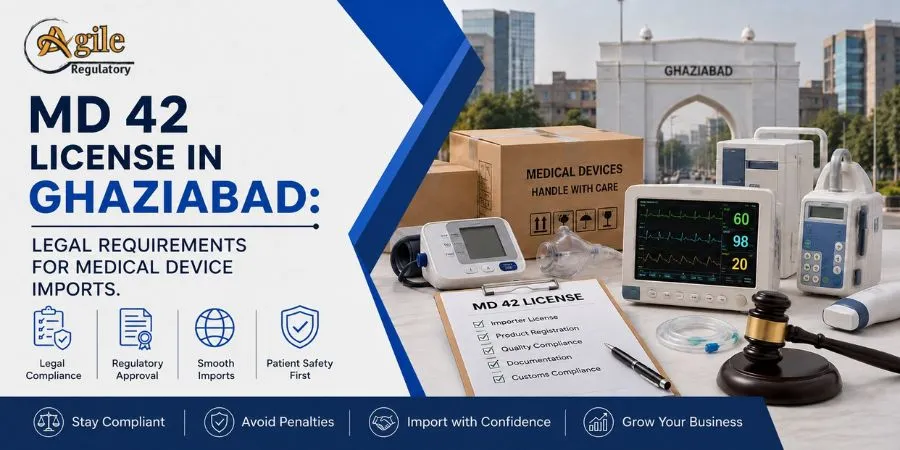
MD 42 License is a mandatory authorization for importing medical devices into India. Businesses in Ghaziabad involved in medical device imports must comply with CDSCO regulations and obtain the necessary approvals before importing products.
Nishi Chawla
11 May 2026
Looking for a reliable Drug License Consultant in Noida? Professional assistance can simplify the complex licensing process, ensure accurate documentation, and help businesses comply with all regulatory requirements. This blog explains why expert guidance
Nishi Chawla
07 May 2026
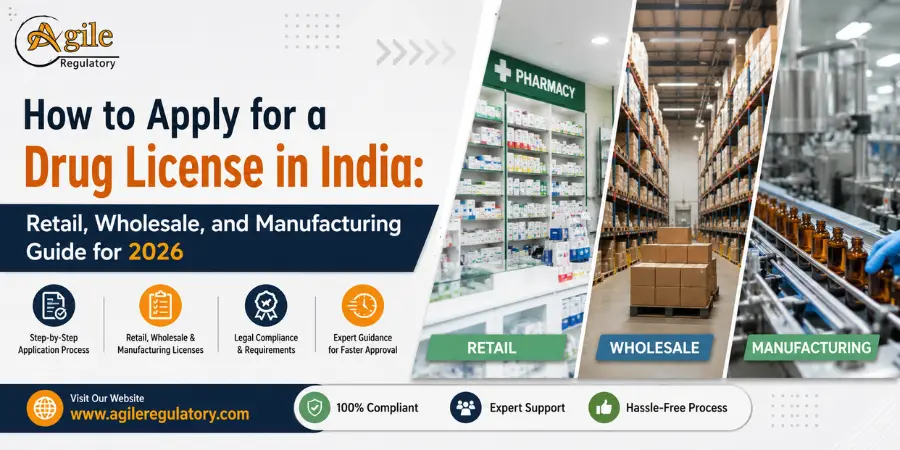
A Drug License in India is a mandatory authorization required for businesses involved in the sale, distribution, or manufacturing of pharmaceutical products. Whether you are starting a retail pharmacy, wholesale business, or drug manufacturing unit, obtai
Nishi Chawla
21 Apr 2026
Applying for a drug license online in India has become more streamlined with digital processes introduced by the government.
Nishi Chawla
17 Apr 2026
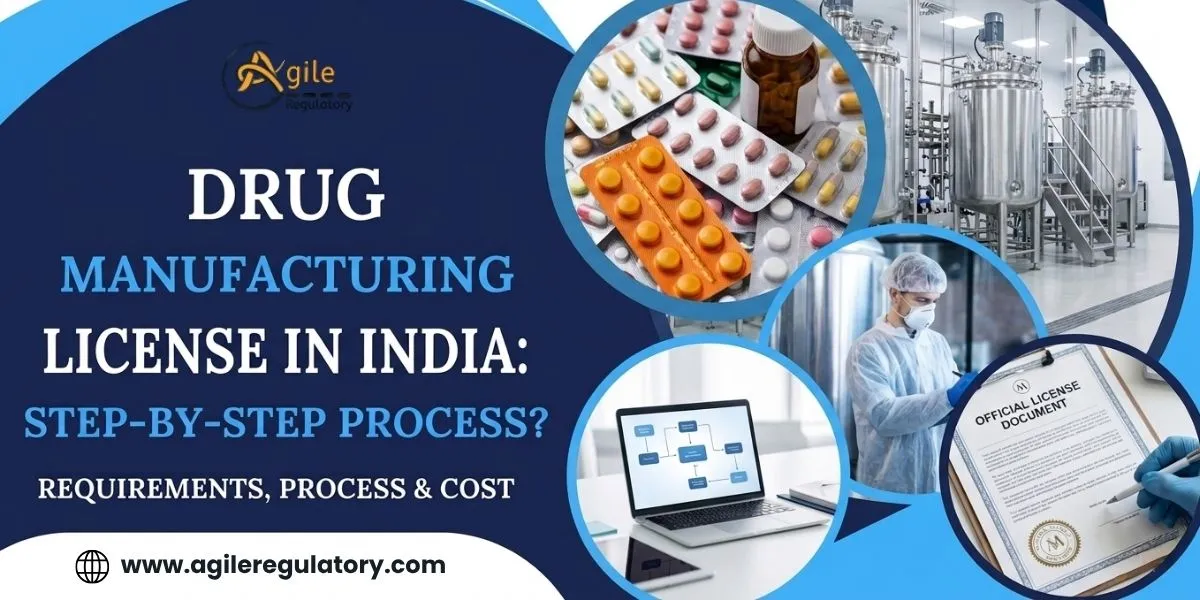
Obtaining a drug manufacturing licence in India involves a detailed approval process regulated by the Central Drugs Standard Control Organization. This guide explains the step-by-step procedure, including eligibility, documentation, inspection, and compli
Nishi Chawla
31 Mar 2026
Getting a drug license in Delhi requires strict compliance with legal regulations. Professional consultants simplify the application and approval process. Agile Regulatory provides expert guidance and end-to-end support. They handle documentation, fili
Nishi Chawla
31 Mar 2026
Obtain a drug license in Mumbai and Maharashtra by fulfilling eligibility, submitting documents, applying online, and complying with regulatory requirements.
Nishi Chawla
23 Mar 2026
Retail and wholesale drug license registration in Punjab requires application submission, document verification, regulatory approval, compliance with laws, and renewal.
Divya Saxena
02 Mar 2026
The 2026 update on CDSCO classification of medical devices clarifies risk-based categories, expands software and AI regulation, and strengthens compliance requirements.
We simplify compliance through a proven 4-step process: Consultation, Documentation, Submission, and certification. From understanding requirements to getting final approvals, we deliver a smooth, timely, and fully compliant journey for your business.


What our customer says about us
Lavkush Sharma
KTPL Instruments
Agile Regulatory handled my BIS Certification registration smoothly. Their expert team ensured quick approvals, transparent pricing, and a completely stress-free compliance experience.

Nitin Mukesh
Justrack IOT
We are grateful to Agile Regulatory for their excellent support. Their team showed patience, expertise, and professionalism throughout, providing clear guidance and making the entire process smooth and hassle-free.
Pradeep Varma
Coaire Compressor
Being an excellent BIS Certification Consultant provider, they help customers with all requirements such as BIS Certification, CDSCO services, Agile Regulatory support, legal issues, and lab testing with quick results.
Bharat Bachwani
Easy Polymer
With the help of Agile Regulatory, we have made significant progress in our business. Their service is fast, genuine, and reliable. We look forward to continued success together in the future.
Atul Jain
Tarus International
Many thanks to Agile Regulatory for all the support, guidance, and expert advice. Their professional approach and consistent assistance have made a significant difference.

Paramjeet Singh
Anchor Weighing
Top-tier consulting! offered strategic solutions that revolutionized our approach. Their deep expertise and personalized guidance made a significant impact on our success. Highly recommend their services.
Anshul Rathi
AM Capacitor
Agile Regulatory exceeded expectations! Their tailored solutions, expertise, and proactive approach led to remarkable results. Highly recommend for businesses seeking impactful and strategic guidance.

Shekhar Maurya
Imaxx Pro Aquistic
Outstanding service! delivered targeted solutions with professionalism and expertise. Their insights elevated our business strategies, resulting in noticeable growth. Highly recommended for exceptional consultation.
Trusted by over 1,00,000 + Global Brands in the past 15+ years



.webp)
(2).webp)


Leave a Reply
Your email address will not be published. Required fields are marked *