


Get Instant Solution By an Expert Advisor
(4.8)
Fast replies · No spam · Real experts
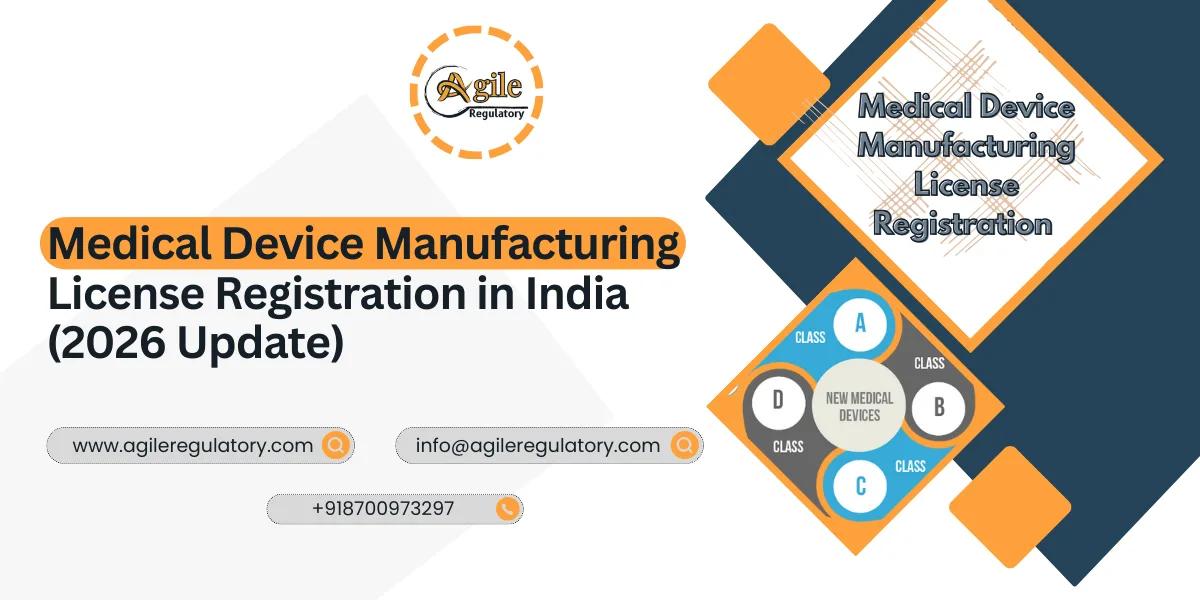
If you plan to manufacture medical devices in India in 2026 the regulatory path is no longer optional and it is definitely not casual. You are working inside a system that directly impacts patient safety, public health and national compliance priorities. That means one thing. You need a valid medical device manufacturing license, issued under Indian law before production or commercial supply can begin
This article walks you through what actually applies today, what has changed in recent years and what you should be prepared for as a manufacturer
The Drugs and Cosmetics Act of 1940 and the Medical Devices Rules of 2017 together control medical devices in India. In 2026 these rules will still be the main legal framework.
The Central Drugs Standard Control Organization (CDSCO) which is part of the Ministry of Health and Family Welfare is in charge of putting this into action. The Central Licensing Authority, which is headed by the Drugs Controller General of India makes decisions about devices that are more likely to cause harm
This matters because your license type, approval timeline and documentation load all flow from this structure
Medical Device Distributor License in India Registration Process
Before you think about forms or portals you need to know where your product stands. In India medical devices are classified based on risk
Your classification determines:
Misclassification is one of the most common reasons applications fail or get stuck in endless queries. You cannot treat this step lightly
For manufacturing within India:
Manufacturing license applications are submitted online. The government has been transitioning services toward the National Single Window System (NSWS) while CDSCO’s own portals continue to operate for medical device-specific workflows
You should always verify, at the time of application which portal your device category is mapped to. This is not static and assuming last year’s process still applies can delay things
Depending on whether you are applying as a manufacturer or under a loan license arrangement, and depending on device class you will encounter forms such as:
Higher-risk devices may trigger additional scrutiny and supporting submissions. The form itself is not the challenge. What you attach to it is
MD 15: CDSCO Medical Device Import License?
This is where regulators decide whether you are serious or not
You will be expected to submit:
One important point many people misunderstand. ISO 13485 certification is not legally mandatory for obtaining a manufacturing license under Indian law. However regulators do expect you to demonstrate quality management controls that align with the principles of good manufacturing practice
Depending on your device class and history, authorities may inspect your manufacturing site. This is not a box-ticking exercise. Inspectors look for consistency between what you declared and what actually exists on the ground
Facilities, documentation discipline, trained staff and traceability systems all matter.
If gaps are found approvals can be deferred, or corrective actions demanded before a license is issued.
There is no single timeline that fits every case
Delays usually happen due to incomplete submissions, poor classification logic or slow query responses.
A manufacturing license is not the end of compliance. You are expected to:
Regulators can inspect you even after approval. Compliance is ongoing, not one-time
Manufacturing medical devices in India in 2026 is absolutely achievable but only if you respect the regulatory structure you are entering. When you understand classification, prepare documentation properly and engage with the right authorities in the right way approvals become manageable instead of stressful
If you want to move forward with confidence and avoid costly missteps connecting with Agile Regulatory is a practical next step


You might also be interested in these articles.
Divya Saxena
20 Aug 2026
CDSCO registration for disposable medical devices in India is an important regulatory requirement for eligible manufacturers and importers. Learn about the CDSCO registration process, documents, fees, medical device classification, applicable forms, and c
Nishi Chawla
06 Jun 2026
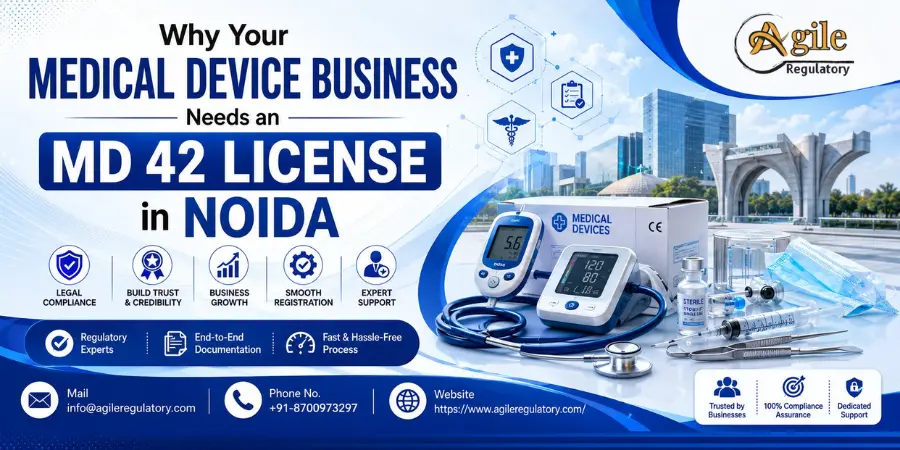
MD 42 License in Noida is essential for medical device manufacturers and importers to ensure legal compliance, build market credibility, avoid penalties, and expand business opportunities.
Nishi Chawla
05 Jun 2026
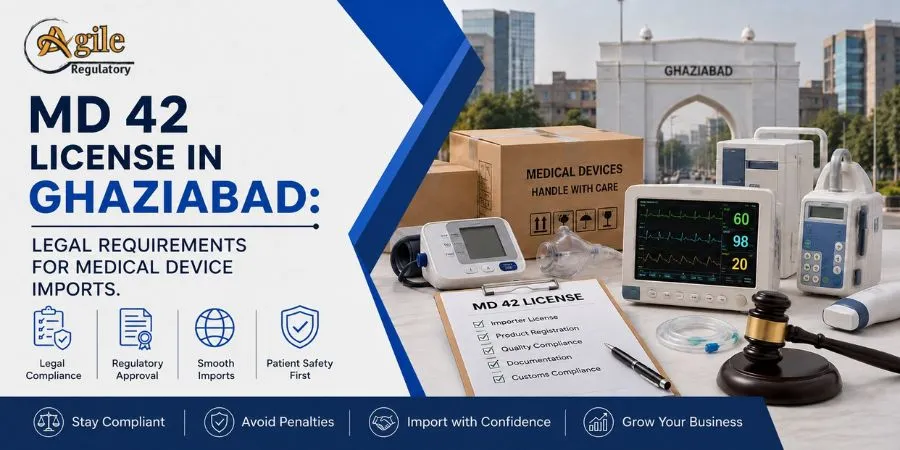
MD 42 License is a mandatory authorization for importing medical devices into India. Businesses in Ghaziabad involved in medical device imports must comply with CDSCO regulations and obtain the necessary approvals before importing products.
Nishi Chawla
06 Mar 2026
In 2026, medical devices in India must be registered and licensed under the Medical Devices Rules, 2017 regulated by the Central Drugs Standard Control Organization (CDSCO).
Divya Saxena
02 Mar 2026
The 2026 update on CDSCO classification of medical devices clarifies risk-based categories, expands software and AI regulation, and strengthens compliance requirements.
We simplify compliance through a proven 4-step process: Consultation, Documentation, Submission, and certification. From understanding requirements to getting final approvals, we deliver a smooth, timely, and fully compliant journey for your business.


What our customer says about us

Lavkush Sharma
KTPL Instruments
Agile Regulatory handled my BIS Certification registration smoothly. Their expert team ensured quick approvals, transparent pricing, and a completely stress-free compliance experience.

Nitin Mukesh
Justrack IOT
We are grateful to Agile Regulatory for their excellent support. Their team showed patience, expertise, and professionalism throughout, providing clear guidance and making the entire process smooth and hassle-free.
Pradeep Varma
Coaire Compressor
Being an excellent BIS Certification Consultant provider, they help customers with all requirements such as BIS Certification, CDSCO services, Agile Regulatory support, legal issues, and lab testing with quick results.
Bharat Bachwani
Easy Polymer
With the help of Agile Regulatory, we have made significant progress in our business. Their service is fast, genuine, and reliable. We look forward to continued success together in the future.
Atul Jain
Tarus International
Many thanks to Agile Regulatory for all the support, guidance, and expert advice. Their professional approach and consistent assistance have made a significant difference.

Paramjeet Singh
Anchor Weighing
Top-tier consulting! offered strategic solutions that revolutionized our approach. Their deep expertise and personalized guidance made a significant impact on our success. Highly recommend their services.
Anshul Rathi
AM Capacitor
Agile Regulatory exceeded expectations! Their tailored solutions, expertise, and proactive approach led to remarkable results. Highly recommend for businesses seeking impactful and strategic guidance.

Shekhar Maurya
Imaxx Pro Aquistic
Outstanding service! delivered targeted solutions with professionalism and expertise. Their insights elevated our business strategies, resulting in noticeable growth. Highly recommended for exceptional consultation.
Trusted by over 1,00,000 + Global Brands in the past 15+ years




.webp)


Leave a Reply
Your email address will not be published. Required fields are marked *