


Get Instant Solution By an Expert Advisor
(4.8)
Fast replies · No spam · Real experts
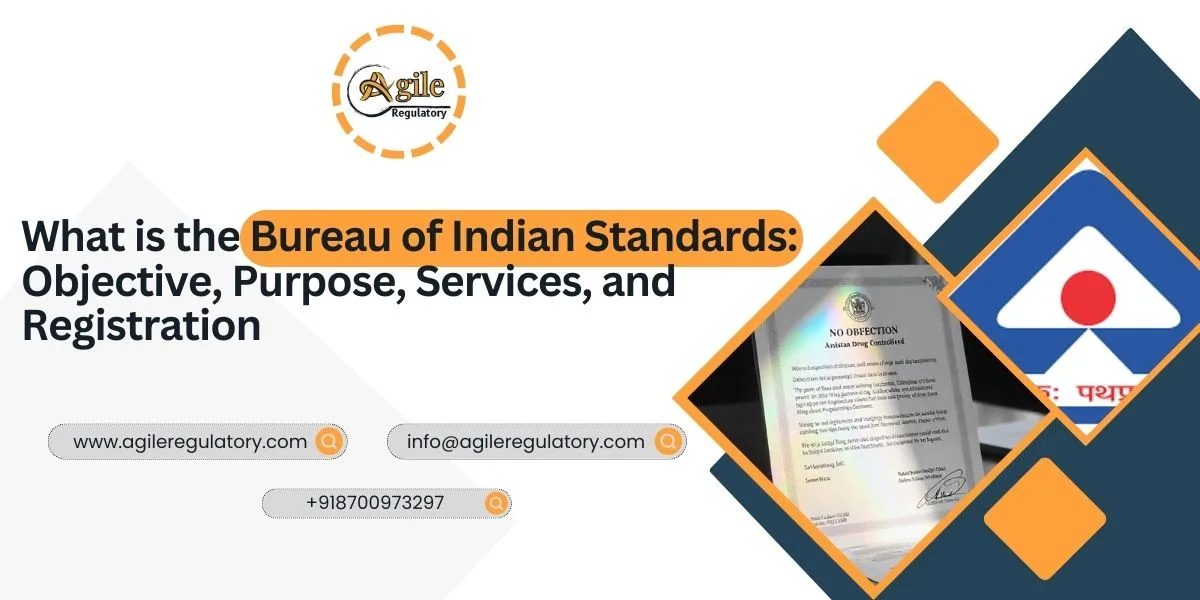
If you sell products in India, you don’t really get to ignore the Bureau of Indian Standards. Even if you try.
At some point, BIS shows up. Sometimes at customs. Sometimes through a government notification. Sometimes when a marketplace suddenly asks for compliance documents.
That’s usually when people start asking what BIS actually is and why it matters so much.
The Bureau of Indian Standards, commonly called BIS is India’s national authority for standardisation. It works under the Ministry of Consumer Affairs, Food and Public Distribution. Its legal backing comes from the Bureau of Indian Standards Act, 2016 which replaced the older ISI framework and expanded BIS powers significantly. This Act became operational in October 2017
In simple terms BIS decides how safe a product must be, how it should perform and how compliance is verified
Before BIS standards in India were fragmented. Different industries followed different rules. Consumers had little protection when products failed or caused harm. BIS was created to fix that gap.
Its primary objective is not paperwork. It is control.
When BIS issues a standard, it defines:
These standards apply to manufacturers, importers and sometimes even service providers
Most people associate BIS only with the ISI mark
BIS operates across multiple layers
BIS writes Indian Standards, known as IS codes. These are not written randomly. Committees are formed. Experts from industry, research institutions, government departments, and consumer groups participate. Draft standards are circulated. Feedback is collected. Revisions happen.
As of today BIS has published over 23,000 Indian Standards covering sectors like electrical goods, chemicals, cement, steel, medical devices, food items, textiles and gas appliances
Standards are reviewed periodically. Old ones are revised or withdrawn. New ones are introduced when technology changes or risks emerge
This is where the ISI mark comes in.
When a product is covered under a BIS certification scheme, the manufacturer must:
Only after this does BIS issue a licence to use the ISI mark.
Some products require certification by law. Others can opt for it voluntarily. The government decides this through Quality Control Orders (QCOs)
Electronics follow a different route.
Under CRS, products such as mobile phones, adapters, LED lights, laptops and power banks must be registered with BIS before being sold in India. Testing happens in BIS-recognised labs, but factory inspection is usually not part of this scheme.
Registration numbers are issued. Products must display the BIS CRS mark.
If registration is missing, customs clearance can be blocked immediately.
BIS also controls gold and silver hallmarking. Jewellers and assaying centres are registered. Purity is verified. Hallmarks indicate fineness, BIS logo and jeweller identification.
This protects buyers from under-purity jewellery and false claims.
BIS operates its own laboratories and recognises external labs. These labs conduct testing strictly as per Indian Standards. Reports from unrecognised labs are not accepted.
Testing is not a formality. Failed samples result in rejection, suspension, or cancellation of licences.
BIS runs training programmes for industry professionals and government officials. It also conducts consumer awareness campaigns so buyers understand what certification marks mean and how to check them
BIS Registration Process in India
If you are a manufacturer or importer, BIS registration is not a single step. It is a process.
First, you identify whether your product falls under mandatory certification or registration. This depends on government notifications and applicable standards
Next your product is tested in a BIS-recognised laboratory. Test parameters must match the Indian Standard exactly.
Then comes documentation. This includes:
In certification schemes, BIS officials inspect the manufacturing unit. They verify raw material controls, testing equipment, and consistency of production.
Only after BIS is satisfied does it grant a licence or registration number.
This approval is not permanent. It must be renewed. Surveillance testing continues. Non-compliance can lead to suspension or cancellation
Foreign manufacturers are not exempt. BIS runs a Foreign Manufacturers Certification Scheme (FMCS) for overseas factories exporting to India.
If you are selling products in India BIS is not optional where mandatory rules apply
Non-compliance can result in:
From a consumer perspective BIS certification reduces risk. It ensures products meet defined safety and quality standards
From a business perspective, it creates trust. Distributors prefer certified products. Government tenders demand compliance. Exporters need it for market access.
BIS is not about slowing business. It is about filtering out unsafe and substandard products
The Bureau of Indian Standards plays a central role in India’s quality and safety framework. It writes standards, certifies products, registers electronics, hallmarks jewellery and monitors compliance across industries. Whether you manufacture locally or import into India BIS requirements shape how your product enters the market.
Understanding BIS early saves time, cost and regulatory trouble later. If you want accurate guidance on BIS standards, product applicability, documentation and certification pathways Agile Regulatory can help you navigate the process efficiently and correctly


We simplify compliance through a proven 4-step process: Consultation, Documentation, Submission, and certification. From understanding requirements to getting final approvals, we deliver a smooth, timely, and fully compliant journey for your business.


What our customer says about us
Lavkush Sharma
KTPL Instruments
Agile Regulatory handled my BIS Certification registration smoothly. Their expert team ensured quick approvals, transparent pricing, and a completely stress-free compliance experience.

Nitin Mukesh
Justrack IOT
We are grateful to Agile Regulatory for their excellent support. Their team showed patience, expertise, and professionalism throughout, providing clear guidance and making the entire process smooth and hassle-free.
Pradeep Varma
Coaire Compressor
Being an excellent BIS Certification Consultant provider, they help customers with all requirements such as BIS Certification, CDSCO services, Agile Regulatory support, legal issues, and lab testing with quick results.

Bharat Bachwani
Easy Polymer
With the help of Agile Regulatory, we have made significant progress in our business. Their service is fast, genuine, and reliable. We look forward to continued success together in the future.

Atul Jain
Tarus International
Many thanks to Agile Regulatory for all the support, guidance, and expert advice. Their professional approach and consistent assistance have made a significant difference.

Paramjeet Singh
Anchor Weighing
Top-tier consulting! offered strategic solutions that revolutionized our approach. Their deep expertise and personalized guidance made a significant impact on our success. Highly recommend their services.

Anshul Rathi
AM Capacitor
Agile Regulatory exceeded expectations! Their tailored solutions, expertise, and proactive approach led to remarkable results. Highly recommend for businesses seeking impactful and strategic guidance.

Shekhar Maurya
Imaxx Pro Aquistic
Outstanding service! delivered targeted solutions with professionalism and expertise. Their insights elevated our business strategies, resulting in noticeable growth. Highly recommended for exceptional consultation.
Trusted by over 1,00,000 + Global Brands in the past 15+ years





Leave a Reply
Your email address will not be published. Required fields are marked *