

Get Instant Solution By an Expert Advisor
(4.8)

 Starting a masala business in India in 2026 is a promising venture due to increasing demand for packaged spices, changing food habits, and growing opportunities in online and export markets. With relatively low investment and easy availability of raw materials, entrepreneurs can enter the market through small-scale grinding, blending, or private-label manufacturing.
From home kitchens to five-star hotels, Indians use spices every day — masala is not just food; it’s essential. That means:
But the key to success isn’t just making spice blends — it’s doing it right from day one.
What is the Difference between Private Limited Company and Section 8 Company
Before anything else, ask yourself: What kind of masala business do I want to run?
Selling packaged masalas directly to customers in your city or through local stores.
Supplying spices in bulk to retailers, restaurants, or other businesses.
Processing raw spices, creating your own blends, and packaging for retail sale.
Selling via your website, Amazon, Flipkart, or social commerce channels.
Each has slightly different setup costs and compliance needs, but the core steps remain consistent.
Think of this as your roadmap — not an academic document, but a living plan:
✔ What masalas will you start with?
✔ Who are your customers — local, national, online?
✔ What’s your pricing strategy?
✔ How will you source raw spices?
✔ What’s your budget & revenue forecast?
This isn’t about perfection — it’s about clarity so you don’t get stuck halfway.
How to Open a Pharma Company in India?
To run ANY business in India, you need formal registration. Your choice depends on vision and size:
Choose what makes sense financially and strategically. You can use platforms like the MCA SPICE portal for online company registration.
Here’s where many beginners get stuck — but don’t worry, we’ll simplify it.
The most important one. Since spices are food products, you must register with the Food Safety and Standards Authority of India (FSSAI).
Types of FSSAI licenses:
Apply online at the FSSAI FoSCoS portal ,upload needed docs, and you’ll get your 14-digit number once approved (typically within weeks).
Required if your turnover is above ₹20 lakh (₹10 lakh in some special category states). GST allows you to sell across India legally and claim tax credits.
Issued by your local municipality — needed if you have a physical shop, office, or production unit.
Another local permit from municipal authorities — especially for food businesses.
Although optional, Udyam (MSME) registration helps with:
Protect your brand name & logo legally — this builds recognition and prevents misuse.
File on the Controller General of Patents, Designs & Trademarks portal
If you want to sell spices overseas, you need an IEC from DGFT — Directorate General of Foreign Trade.
Estimated Investment:
Sample Breakdown:
Total Estimated Investment: ₹1.5 lakh – ₹11 lakh
Profitability:
In today’s fast-changing food business environment, Agile regulatory means being alert, adaptable, and proactive with laws and compliance. For a masala business in 2026, regulations around food safety, labeling, digital filings, and taxation can change quickly. Businesses that understand rules early and respond fast stay ahead, avoid penalties, and grow with confidence.
Key Agile Regulatory Points:
Adopting an agile regulatory mindset helps your masala business remain compliant, competitive, and future-ready in India’s evolving food industry.
Post Views: 898


Nishi Chawla
27 Apr, 2026
Nishi Chawla
27 Apr, 2026
Nishi Chawla
25 Apr, 2026
Nishi Chawla
25 Apr, 2026
.webp)
Nishi Chawla
25 Apr, 2026
Get Instant Solution By an Expert Advisor
(4.8)
You might also be interested in these articles.
Nishi Chawla
27 Apr 2026
Coffee Board registration provides coffee growers and exporters with legal recognition, quality certification, and access to government support. It enables businesses to participate in international trade, ensures compliance with export regulations, and e
Nishi Chawla
25 Apr 2026
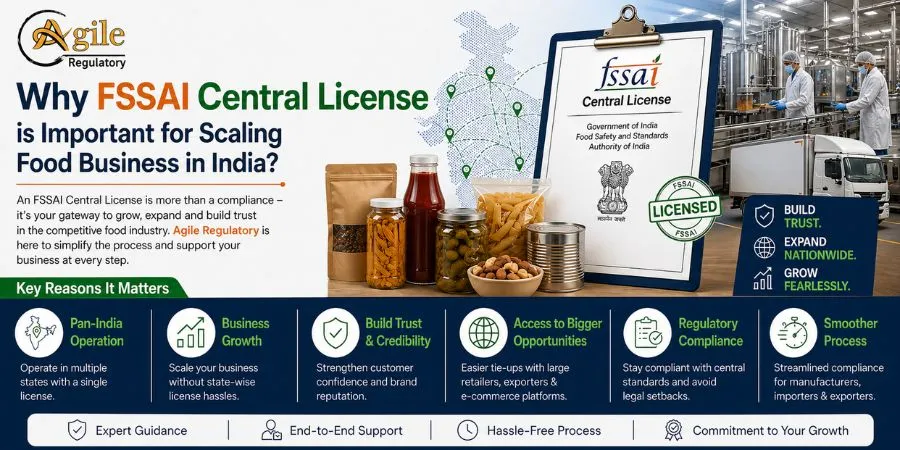
An FSSAI central license is essential for food businesses aiming to scale across India. It ensures legal compliance, builds consumer trust, and allows operations in multiple states and large-scale production.
Nishi Chawla
20 Apr 2026
Rubber Board Registration helps rubber businesses gain official recognition, access government benefits, improve market credibility, and expand trade opportunities. It ensures compliance with industry regulations and supports better pricing, exports, and
Nishi Chawla
14 Apr 2026
Choosing between a Private Limited Company and a Limited Liability Partnership (LLP) in India depends on factors like ownership structure, compliance requirements, taxation, and scalability. This guide compares both business structures to help entrepreneu
Nishi Chawla
02 Apr 2026
CTE (Consent to Establish) is a mandatory approval from pollution control authorities before starting a business. It ensures your operations comply with environmental laws and regulations. With stricter norms in 2026, obtaining CTE is essential for smoo
Nishi Chawla
02 Apr 2026
CTO (Consent to Operate) is legal approval for businesses, ensuring compliance, avoiding penalties, and enabling smooth operations in 2026.
Divya Saxena
20 Feb 2026
Starting a tea business in India in 2026 requires proper legal registration and compliance with food safety and tax regulations
Sanskriti
14 Feb 2026
The International Business Environment (IBE) includes the economic, political, legal, cultural, technological, and competitive factors that affect businesses operating across borders. Understanding these factors helps companies reduce risks, ensure compli
Vanshika Mathur
30 Jan 2026
Starting a mushroom cultivation business in India? You need an FSSAI license to legally grow, package, or sell mushrooms, ensuring food safety compliance. The process is simple and fully online through the FoSCoS portal.
Vanshika Mathur
28 Jan 2026
Looking to start a restaurant or food business in 2026? Getting your FSSAI license is mandatory. This guide walks you through the application process, required documents, and important tips to get your license quickly.
We simplify compliance through a proven 4-step process: Consultation, Documentation, Submission, and certification. From understanding requirements to getting final approvals, we deliver a smooth, timely, and fully compliant journey for your business.


What our customer says about us

Lavkush Sharma
KTPL Instruments
Fantastic support from the team. Their expertise transformed our approach, driving remarkable outcomes. A must-have partner for businesses seeking effective consulting solutions. Highly recommended.

Nitin Mukesh
Justrack IOT
Agile Regualtory delivers exceptional solutions. Their insightful guidance streamlined our processes and boosted profitability. Highly recommended for businesses seeking expert consulting services to thrive.
Pradeep Varma
Coaire Compressor
Impressed by Agile Regulatory's expertise. Their strategic insights and practical solutions have elevated our business operations. A reliable partner for effective consulting services. Highly recommended for growth-focused businesses.

Bharat Bachwani
Easy Polymer
Extraordinary consulting services. Their insightful solutions and dedicated team reshaped our business, driving remarkable improvements. Highly recommend it for transformative results.

Atul Jain
Tarus International
Incredible experience with Agile Regulatory. Their innovative strategies and expert advice revitalized our business model, resulting in impressive growth. Highly recommend their exceptional consulting services.

Paramjeet Singh
Anchor Weighing
Top-tier consulting! offered strategic solutions that revolutionized our approach. Their deep expertise and personalized guidance made a significant impact on our success. Highly recommend their services.

Anshul Rathi
AM Capacitor
Agile Regulatory exceeded expectations! Their tailored solutions, expertise, and proactive approach led to remarkable results. Highly recommend for businesses seeking impactful and strategic guidance.

Shekhar Maurya
Imaxx Pro Aquistic
Outstanding service! delivered targeted solutions with professionalism and expertise. Their insights elevated our business strategies, resulting in noticeable growth. Highly recommended for exceptional consultation.
Trusted by over 1,00,000 + Global Brands in the past 15+ years


(1).webp)




Leave a Reply
Your email address will not be published. Required fields are marked *