


Get Instant Solution By an Expert Advisor
(4.8)
Fast replies · No spam · Real experts
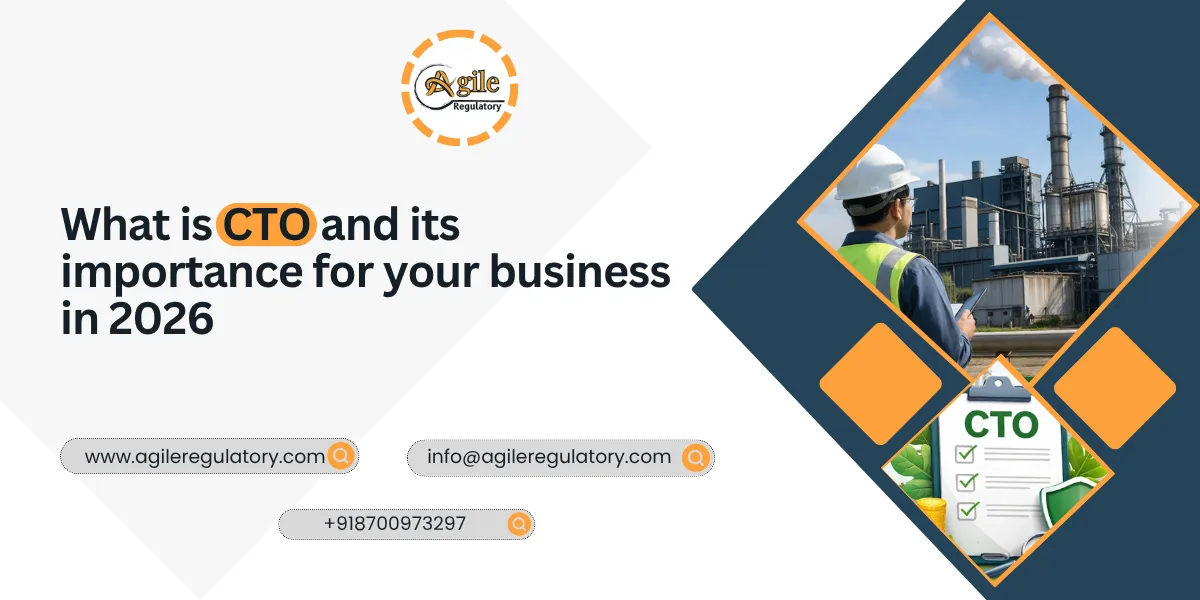
You can set up your factory, install machines, hire staff, and even get clients lined up, but you still can’t legally run your business until a CTO is in place.
Most business owners only hear about it when someone tells them, “You need pollution approval.” By then, they’ve already invested time and money. That’s where problems begin.
CTO isn’t just another certificate sitting in a file. It’s the point where the government decides whether your business is allowed to operate or not.
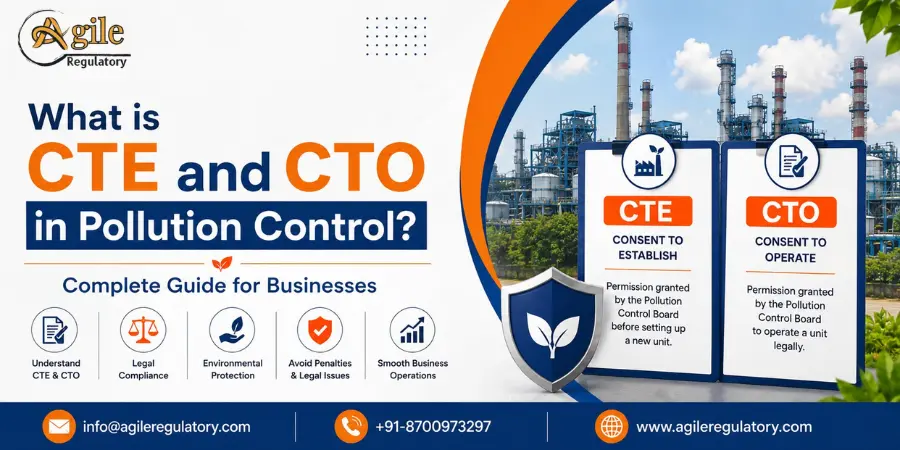
CTO stands for Consent to Operate.
The State Pollution Control Board issues it. And it does one very specific job: it gives you permission to start operations after your setup is complete.
That’s it. No CTO, no legal operations.
This approval comes after you’ve already taken Consent to Establish (CTE). CTE allows you to set up. CTO allows you to actually run the business.
CTE is a promise. CTO is proof.
How to Obtain CTE CTO Certificates from Pollution Control Board Lucknow?
If your business produces anything, goods, food, chemicals, or services involving machinery, it creates some form of output.
That output could be:
The government doesn’t assume you’ll manage this properly. It verifies it.
CTO exists to confirm the following:
Without that verification, operations aren’t allowed.
This isn’t a guideline. It’s law.
CTO is issued under:
These laws make it mandatory for any business that discharges pollutants to get approval before operating
If you skip CTO, you’re not “partially compliant.” You’re operating illegally.
There’s a sequence here, and it’s not optional.
You apply for CTO:
Only then does the board check your readiness.
CTO is not based on plans. It’s based on your actual setup.
That’s why inspections are often part of the process.
Earlier, many businesses treated environmental compliance like paperwork. That approach doesn’t work anymore.
Enforcement has become stricter.
There have been cases where:
At the same time, systems are getting faster. Some states have introduced automated approvals for low-risk categories to improve ease of doing business.
So the shift is clear:
You can’t ignore compliance anymore.
CTO is not just document verification. It’s not.
Authorities check things like:
If your setup doesn’t match your application, approval doesn’t come through.
Getting CTO is not permanent.
It comes with a validity period that depends on your industry category. For example:
You need to renew the CTO before it expires.
Miss that deadline, and your business technically goes back to being non-compliant.
What is CTE and its importance for your business in 2026
This isn’t just for factories.
You need a CTO if you’re running the following:
Basically, if your business interacts with the environment in any measurable way, the CTO applies.
There’s no grey area here.
Without CTO:
And once authorities step in, fixing things becomes harder than doing it right from the start.
Most people see it as a hurdle. It’s not.
It forces you to:
In the long run, it reduces risk.
And if you ever deal with investors, large clients, or government contracts, compliance becomes a basic requirement.
CTO is not just another license you tick off your list. It’s the point where your business becomes legally operational.
Everything before it—planning, setup, investment—means nothing if you don’t clear this stage.
The process itself is straightforward. What causes problems is delay, incorrect documentation, or ignoring compliance until the last minute.
If you want to avoid that, working with professionals like Agile Regulatory can help you get it done correctly without repeated delays or back-and-forth.


You might also be interested in these articles.
Nishi Chawla
07 May 2026
CTE (Consent to Establish) and CTO (Consent to Operate) are mandatory pollution control approvals required for industries before starting and operating a business. This guide explains their importance, process, and compliance requirements for businesses i
Nishi Chawla
21 Apr 2026
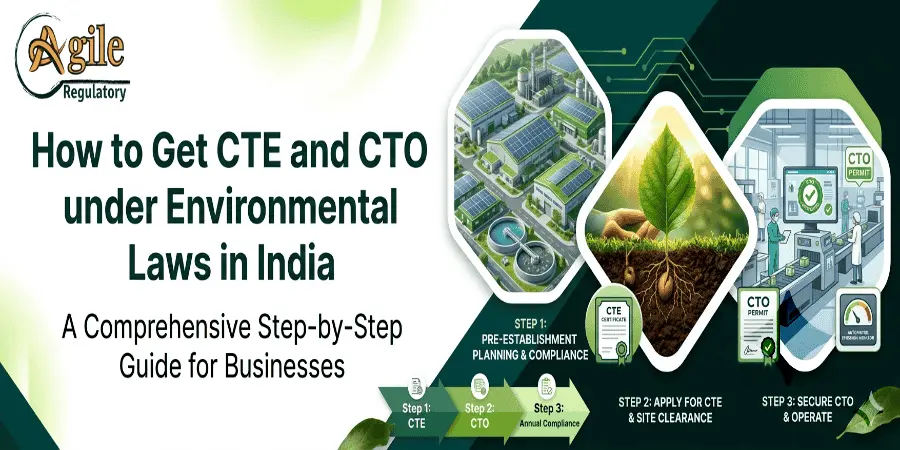
Getting Consent to Establish (CTE) and Consent to Operate (CTO) under environmental laws in India is a mandatory step for industries before starting and running operations. Issued by the State Pollution Control Board, these approvals ensure that businesse
We simplify compliance through a proven 4-step process: Consultation, Documentation, Submission, and certification. From understanding requirements to getting final approvals, we deliver a smooth, timely, and fully compliant journey for your business.


What our customer says about us
Lavkush Sharma
KTPL Instruments
Agile Regulatory handled my BIS Certification registration smoothly. Their expert team ensured quick approvals, transparent pricing, and a completely stress-free compliance experience.
Nitin Mukesh
Justrack IOT
We are grateful to Agile Regulatory for their excellent support. Their team showed patience, expertise, and professionalism throughout, providing clear guidance and making the entire process smooth and hassle-free.
Pradeep Varma
Coaire Compressor
Being an excellent BIS Certification Consultant provider, they help customers with all requirements such as BIS Certification, CDSCO services, Agile Regulatory support, legal issues, and lab testing with quick results.

Bharat Bachwani
Easy Polymer
With the help of Agile Regulatory, we have made significant progress in our business. Their service is fast, genuine, and reliable. We look forward to continued success together in the future.
Atul Jain
Tarus International
Many thanks to Agile Regulatory for all the support, guidance, and expert advice. Their professional approach and consistent assistance have made a significant difference.

Paramjeet Singh
Anchor Weighing
Top-tier consulting! offered strategic solutions that revolutionized our approach. Their deep expertise and personalized guidance made a significant impact on our success. Highly recommend their services.
Anshul Rathi
AM Capacitor
Agile Regulatory exceeded expectations! Their tailored solutions, expertise, and proactive approach led to remarkable results. Highly recommend for businesses seeking impactful and strategic guidance.

Shekhar Maurya
Imaxx Pro Aquistic
Outstanding service! delivered targeted solutions with professionalism and expertise. Their insights elevated our business strategies, resulting in noticeable growth. Highly recommended for exceptional consultation.
Trusted by over 1,00,000 + Global Brands in the past 15+ years





Leave a Reply
Your email address will not be published. Required fields are marked *