


Get Instant Solution By an Expert Advisor
(4.8)
Fast replies · No spam · Real experts
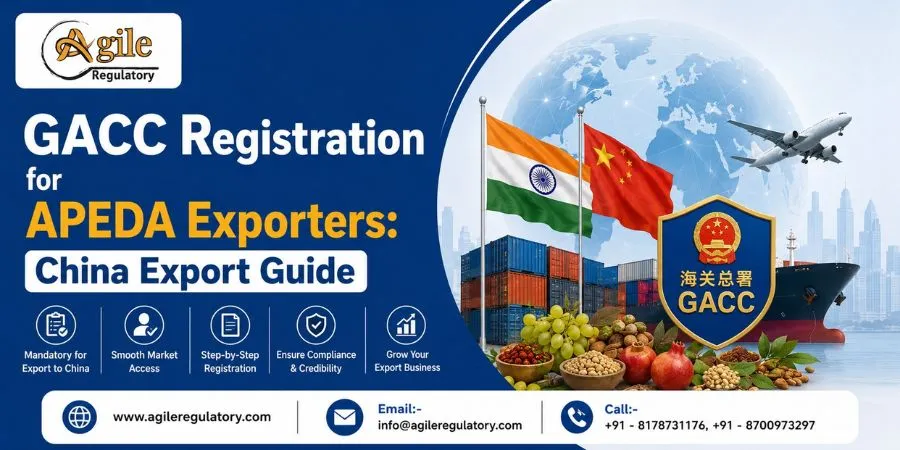
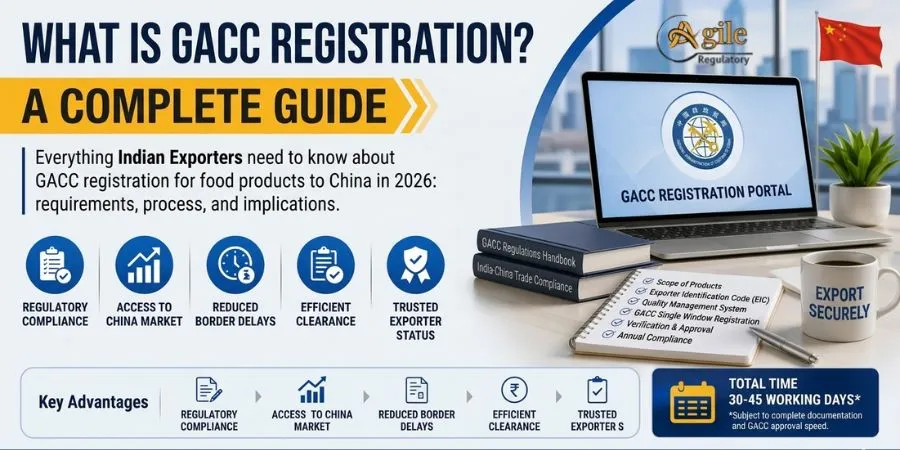
GACC Registration is an important compliance requirement for overseas food manufacturers and certain food-related establishments that want to export products to China. For Indian exporters, especially businesses working with agricultural and processed food products, understanding the relationship between APEDA and GACC is essential before shipping goods to the Chinese market.
GACC stands for the General Administration of Customs of China, which manages the registration of overseas food establishments exporting food to China. Under China's current framework, overseas food production, processing and storage establishments covered by the regulations must obtain registration with GACC before exporting applicable food products to China.
For Indian exporters, APEDA may play an important role where the applicable product category requires recommendation or verification by the competent authority. The exact route depends on the food category and the applicable Chinese registration requirements.
GACC registration is the registration of an overseas food establishment with China's General Administration of Customs. It is intended to help Chinese authorities identify and monitor overseas establishments supplying food to the Chinese market.
The registration framework applies to overseas establishments involved in the production, processing and storage of food for export to China, subject to the applicable rules. GACC uses a risk-based approach to determine registration methods, documentation and review requirements.
Once registered, an establishment receives an in-China registration number, and registered enterprises are included in China's public registration database. The official database allows users to search registered establishments by country, category, registration number and enterprise name.
China is a major destination for several agricultural and processed food products. However, meeting Indian export requirements alone does not automatically mean that a product can enter the Chinese market.
An exporter may need to satisfy both Indian and Chinese regulatory requirements. Depending on the product, this can involve:
Therefore, exporters should identify the applicable requirements before accepting an export order or arranging shipment.
APEDA and GACC serve different regulatory purposes. APEDA is an Indian authority responsible for promoting and regulating the export of specified agricultural and processed food products, while GACC is the Chinese customs authority responsible for, among other functions, the registration and supervision of overseas food establishments exporting food to China.
For certain food categories, the Indian competent authority may inspect or assess the establishment and recommend it for registration with GACC. India's APEDA guidance has historically specified a process involving exporter sign-up, APEDA verification/scrutiny, GACC review and allocation of a registration number.
However, China's rules have changed. GACC Decree No. 280 came into force on June 1, 2026, replacing the earlier Decree No. 248 framework. Under the new rules, overseas establishments may follow either competent-authority recommendation or enterprise application routes, depending on the applicable category and requirements.
This makes it important to check the current product-specific route rather than relying on older registration procedures.
GACC Certification for Exporters: Complete 2026 Guide to China Food Export Registration
The requirement generally concerns overseas establishments involved in food production, processing, and storage for export to China.
The applicable registration route depends on factors such as:
China's official product database identifies food categories and indicates whether official recommendation is required for particular products.
For an Indian exporter, it is therefore advisable to first identify the exact product category and HS code before starting an application.
Certain food categories require recommendation from the competent authority in the exporting country.
For such establishments, the competent authority may conduct an inspection or assessment and, where the establishment meets the requirements, submit the relevant recommendation and supporting documents to GACC. China's current rules specifically require a recommendation for establishments producing food included in the applicable designated list. For Indian businesses, the relevant authority may vary according to the product.
For categories where direct application is permitted, the overseas establishment may apply to GACC itself or through an authorised agent.
The application is submitted through the relevant registration system, along with the required enterprise information, identification documents and compliance declaration.
Understanding the GACC registration process can help exporters avoid documentation errors and unnecessary delays.
The first step is to identify exactly what you intend to export to China.
Check:
This step is important because the registration route can differ according to the product.
The manufacturing, processing or storage facility should be legally established and operate under the applicable food safety and hygiene controls.
China's rules require overseas establishments to have effective food safety, hygiene and protection systems and to comply with relevant Chinese food safety requirements for products exported to China.
The application generally includes information such as:
Additional information relating to food safety systems, production type or production capacity may be requested where necessary.
The establishment follows the applicable application route. Where competent-authority recommendation is required, the relevant Indian authority reviews the establishment and submits the recommendation through the prescribed system.
Where enterprise application is permitted, the establishment may submit the application directly or through an authorised representative.
GACC reviews the submitted information and may conduct an assessment through:
The level of assessment depends on food safety risks and regulatory requirements.
If the establishment satisfies the requirements, GACC grants registration and issues an in-China registration number. The registration details can then be reflected in the official database maintained by China's customs authorities. The registration number may also need to be displayed on food packaging as required under the applicable rules.
The exact documents depend on the product and application route. Commonly required information may include:
China's current regulations specifically identify enterprise registration information, identity documents and a compliance declaration as core application materials. Additional food safety, hygiene, protection-system, production-type and production-capacity information may be requested when necessary.
The term GACC certificate is commonly used by exporters and consultants to describe evidence of GACC registration. However, exporters should distinguish between the registration itself, the registration number, and any documents or database records showing the registered status. After successful registration, GACC provides an in-China registration number and publishes registered establishment information through its official system.
The GACC registration number is the number assigned to an overseas food establishment after successful registration with China's customs authority. It is important because Chinese customs and other stakeholders can use the registration information to identify the approved overseas establishment. Before shipping products, exporters should ensure that the establishment information, product category, and registration status are correctly reflected in the official GACC database.
Applications for overseas food establishment registration are handled through China's relevant registration system, commonly referred to as the CIFER system. The Chinese Customs online service identifies the overseas food establishment registration system as the platform for submitting applications and related registration activities. Exporters should use the official portal and verify that they are applying under the correct product category and registration route.
The term GACC license is frequently searched online, but GACC registration should not be confused with a conventional business licence issued in India.
For overseas food establishments, the central requirement is registration with China's customs authority. Successful registration results in an in-China registration number and inclusion in the relevant registered-establishment records.
Therefore, exporters should generally think of GACC compliance as food establishment registration for access to the Chinese market, rather than simply obtaining a generic business licence.
How to Get GACC Registration in Delhi for Exporting Food Products to China
A GACC certificate of origin is not the same thing as GACC establishment registration.
A certificate of origin is a trade document used to establish where goods originate. GACC registration, on the other hand, concerns the registration of the overseas food establishment.
Chinese import procedures can require origin-related documentation depending on the product and applicable rules. China's food safety guidance also refers to official quarantine/health certificates and certificates of origin where required by laws, regulations, bilateral agreements or GACC announcements.
So, exporters should not treat a certificate of origin as a replacement for GACC registration.
Before applying for GACC food registration, an Indian exporter should review the complete export chain.
Confirm the exact food category, HS code, and whether the category requires official recommendation.
Check whether the manufacturing, processing or storage establishment meets applicable food safety and hygiene requirements.
Maintain relevant Indian registrations, licences and competent-authority approvals applicable to the product.
Review Chinese food safety standards, inspection requirements, labelling rules and import conditions.
After approval, verify that the establishment's information and registration number appear correctly in the official GACC database.
One common question from exporters is about GACC registration fees. GACC's official online service currently states that the government registration procedure itself is free of charge.
However, an exporter may still incur professional or business-related costs for:
Therefore, the government registration fee should be distinguished from the overall cost of preparing and managing a GACC application.
Under the current Decree No. 280 framework, the registration validity period is five years. The rules also provide for automatic continuation in specified circumstances, while certain food categories may be subject to separate continuation requirements. Businesses should therefore monitor their registration status and applicable renewal/continuation conditions instead of assuming that every registration will automatically continue.
Applications can face delays when the information submitted is inconsistent or incomplete.
Common issues include:
A careful document review before submission can reduce the chances of queries or rejection.
|
Particular |
APEDA Registration |
GACC Registration |
|---|---|---|
|
Country |
India |
China |
|
Main purpose |
Indian agricultural and processed food export ecosystem |
Registration of overseas food establishments exporting to China |
|
Authority |
APEDA / relevant Indian authorities |
General Administration of Customs of China |
|
Application |
Depends on APEDA requirements |
CIFER/Chinese Customs registration system |
|
Registration number |
APEDA-related registration/RCMC details |
In-China GACC registration number |
|
Market relevance |
Indian export compliance |
China food import compliance |
Both registrations may be relevant to an Indian exporter, but they serve different regulatory purposes.
Applying for Chinese food registration can involve more than simply filling out an online application. The exporter first needs to determine the correct product category, understand whether a competent-authority recommendation is required, prepare accurate facility information, and ensure that the supporting documents are consistent.
Agile Regulatory provides regulatory compliance support to businesses involved in international trade and product registrations. Our team can assist exporters in understanding the applicable GACC requirements, preparing documentation, reviewing application information, and coordinating the registration process.
For businesses planning GACC for food export, taking professional guidance before submission can help identify documentation gaps and reduce avoidable compliance issues.
GACC registration is an important consideration for Indian food manufacturers and exporters planning to enter the Chinese market. APEDA registration and other Indian approvals may form part of the export compliance framework, but they do not replace China's own requirements.
The current Chinese framework under Decree No. 280, effective from June 1, 2026, follows a risk-based approach and provides different registration routes depending on the establishment and food category.
Before exporting, businesses should verify their product category, registration route, documentation, facility compliance, and registration status. With the right preparation, exporters can make the process more organised and reduce the risk of compliance-related shipment delays.
Agile Regulatory can assist Indian exporters with the regulatory documentation and registration requirements involved in expanding their food business into international markets.
Overseas food establishments covered by China's registration requirements must obtain GACC registration before exporting applicable food products to China. The exact requirements depend on the product and establishment category.
It is the registration number assigned by China's customs authority to a registered overseas food establishment. The registration can be verified through China's official database.
No. APEDA and GACC serve different purposes. An exporter must meet the applicable Indian export requirements as well as Chinese import and GACC registration requirements.
China's official online service currently states that the GACC registration procedure itself is free. However, exporters may have additional costs for documentation, professional support, inspections, translations or other regulatory requirements.
Under the current Decree No. 280 framework, GACC registration is valid for five years, subject to the applicable continuation and regulatory conditions.


You might also be interested in these articles.
Nishi Chawla
31 Jul 2026
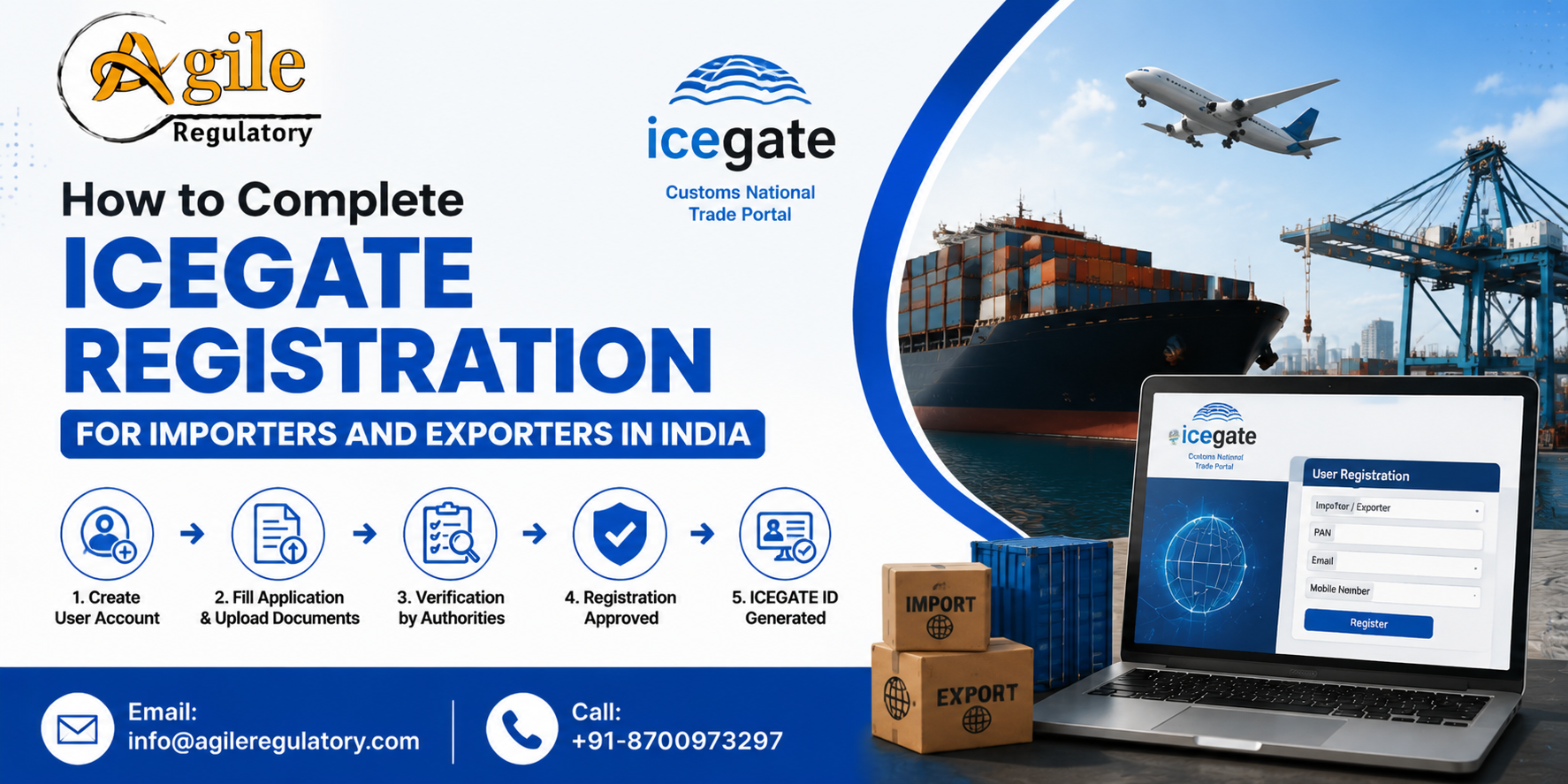
ICEGATE Registration is a mandatory process for importers and exporters in India to access online customs services provided by Indian Customs. This guide explains the complete ICEGATE registration process, eligibility, required documents, step-by-step reg
Nishi Chawla
02 Jul 2026
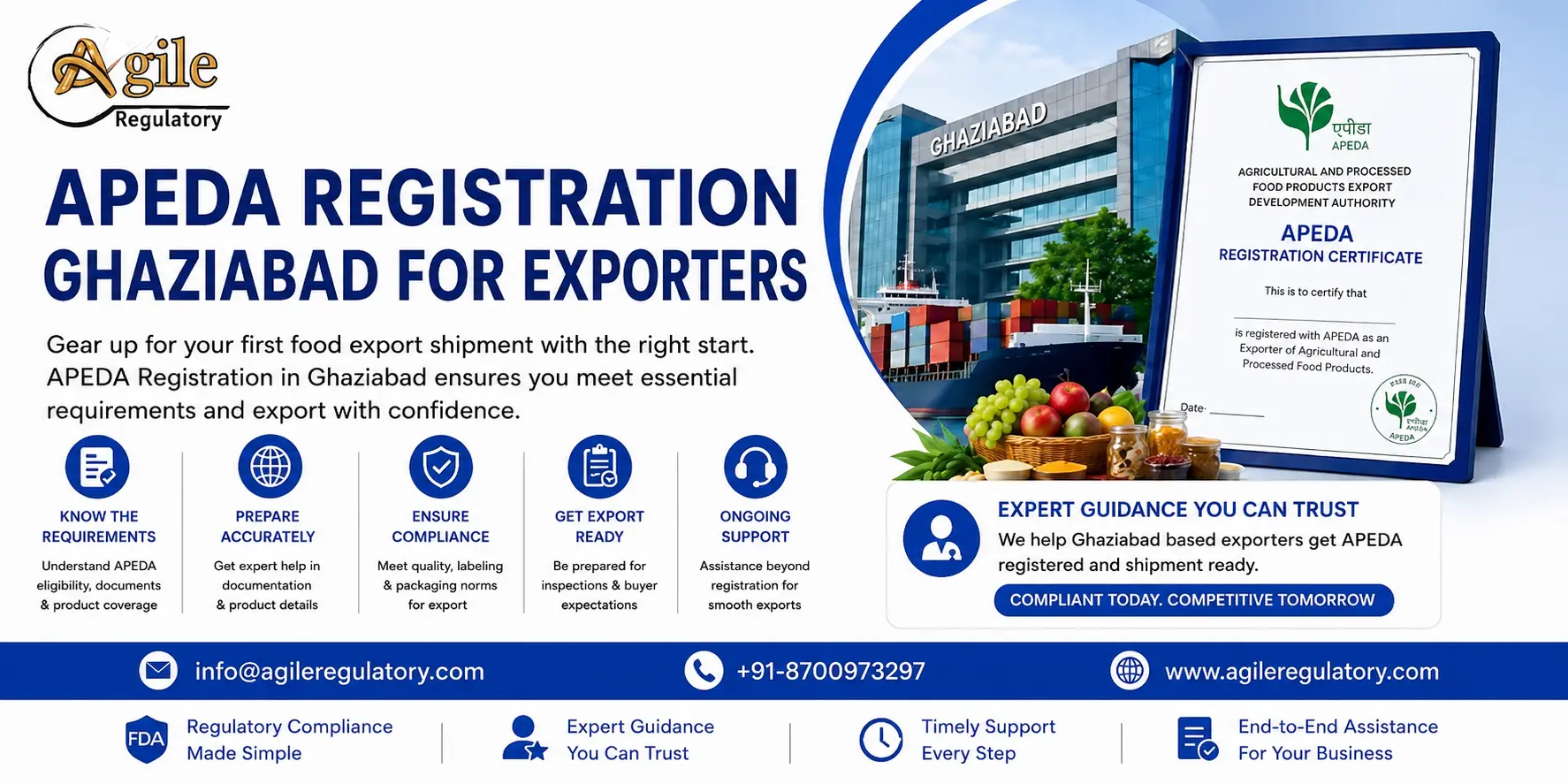
Planning to export food products from Ghaziabad? Before your first international shipment, understanding APEDA registration is essential. This guide explains the registration process, eligibility, required documents, benefits, and key compliance requireme
Nishi Chawla
22 Jun 2026
Discover how Tea Board Registration in Delhi helps tea exporters access global markets, enhance credibility, and streamline export compliance for business growth.
Nishi Chawla
22 Jun 2026
Tea Board Registration in Noida helps tea businesses gain legal recognition, access export opportunities, build buyer trust, and expand into domestic and international markets with ease.
Nishi Chawla
18 Jun 2026
APEDA Registration in Noida plays a crucial role in helping exporters establish a credible and recognized presence in international markets.
Nishi Chawla
15 Jun 2026
Get complete guidance on GACC Certification and Registration in Ghaziabad for 2026. Learn the registration process, eligibility, documents, and compliance requirements for exporting food products to China.
Nishi Chawla
11 Jun 2026
GACC Certification for Exporters in Noida is mandatory for food exporters to China. It ensures compliance with Chinese customs regulations, product safety, and smooth export approvals, helping businesses expand internationally in 2026 market growth sector
Nishi Chawla
03 Jun 2026
GJEPC Certificate Registration in Noida helps jewellery exporters obtain RCMC certification, ensuring export compliance, industry recognition, government benefits, and seamless access to global jewellery markets.
Nishi Chawla
30 May 2026
RCMC Registration is an important requirement for exporters in Ghaziabad who want to access export benefits and government schemes. This guide explains the complete application process, eligibility criteria, required documents, and registration procedure
Nishi Chawla
26 May 2026
GACC Registration in Delhi is essential for businesses exporting food products to China. The registration helps food manufacturers and exporters comply with Chinese import regulations and ensures smooth international trade operations.
Nishi Chawla
19 May 2026
ICEGATE registration is an essential process for import-export businesses in India. It allows importers, exporters, customs brokers, and logistics companies to access online customs services through the Indian Customs Electronic Gateway (ICEGATE). With re
Nishi Chawla
19 May 2026
Discover the key benefits of GJEPC Membership for jewellery exporters, including export promotion support, international market access, trade fair participation, policy updates, and business growth opportunities.
Nishi Chawla
09 May 2026
APEDA Registration is essential for businesses involved in the export of agricultural and processed food products from India. This complete guide for 2026 explains the APEDA registration process, required documents, eligibility, benefits, and compliance r
Nishi Chawla
29 Apr 2026
Tea Board Registration provides significant advantages to tea manufacturers and exporters in India, including official recognition, export support, and access to global markets. Registered businesses under the Tea Board of India gain credibility, regulato
Nishi Chawla
27 Apr 2026
Coffee Board registration provides coffee growers and exporters with legal recognition, quality certification, and access to government support. It enables businesses to participate in international trade, ensures compliance with export regulations, and e
Nishi Chawla
25 Apr 2026
GACC Registration is a mandatory requirement for Indian exporters dealing with food products and certain related categories when exporting to China. Governed by the General Administration of Customs of China (GACC), this registration ensures that foreign
Nishi Chawla
25 Apr 2026
Spices Board India Registration is essential for exporters involved in spice exports from India. It ensures legal compliance, improves export credibility, and helps businesses access global trade opportunities smoothly.
Nishi Chawla
23 Apr 2026
CAPEXIL certification is an important requirement for Indian exporters dealing in chemical and allied products. It is issued by the CAPEXIL to promote exports and ensure compliance with trade regulations. This complete guide explains its benefits, eligibi
Nishi Chawla
23 Apr 2026
CHEMEXCIL Registration is essential for exporters dealing in chemicals, pharmaceuticals, cosmetics, and related products in India. Issued by the Basic Chemicals, Cosmetics & Dyes Export Promotion Council (CHEMEXCIL), this registration helps businesses
Nishi Chawla
08 Apr 2026
Agile Regulatory provides complete support for GACC registration in Gujarat. We assist with documentation, compliance, and smooth application filing. Get quick approval and expand your export business to China with ease.
Nishi Chawla
07 Apr 2026
Agile Regulatory stands as a trusted export consultancy in Himachal Pradesh, delivering efficient solutions for documentation, approvals, and global trade success.
Nishi Chawla
02 Apr 2026
GACC stands for the General Administration of Customs of the People's Republic of China. This is the authority that controls everything entering China from inspection to clearance.
Nishi Chawla
13 Mar 2026
Import and export consultants help businesses manage international trade compliance smoothly. From IEC registration to DGFT documentation, expert guidance ensures hassle-free global trading. Discover reliable import and export consulting services in Del
Nishi Chawla
13 Mar 2026
Noida and Uttar Pradesh import-export consultants provide compliance support, market insights, customs clearance, and strategies for efficient international trade.
We simplify compliance through a proven 4-step process: Consultation, Documentation, Submission, and certification. From understanding requirements to getting final approvals, we deliver a smooth, timely, and fully compliant journey for your business.


What our customer says about us

Lavkush Sharma
KTPL Instruments
Agile Regulatory handled my BIS Certification registration smoothly. Their expert team ensured quick approvals, transparent pricing, and a completely stress-free compliance experience.

Nitin Mukesh
Justrack IOT
We are grateful to Agile Regulatory for their excellent support. Their team showed patience, expertise, and professionalism throughout, providing clear guidance and making the entire process smooth and hassle-free.
Pradeep Varma
Coaire Compressor
Being an excellent BIS Certification Consultant provider, they help customers with all requirements such as BIS Certification, CDSCO services, Agile Regulatory support, legal issues, and lab testing with quick results.

Bharat Bachwani
Easy Polymer
With the help of Agile Regulatory, we have made significant progress in our business. Their service is fast, genuine, and reliable. We look forward to continued success together in the future.

Atul Jain
Tarus International
Many thanks to Agile Regulatory for all the support, guidance, and expert advice. Their professional approach and consistent assistance have made a significant difference.

Paramjeet Singh
Anchor Weighing
Top-tier consulting! offered strategic solutions that revolutionized our approach. Their deep expertise and personalized guidance made a significant impact on our success. Highly recommend their services.

Anshul Rathi
AM Capacitor
Agile Regulatory exceeded expectations! Their tailored solutions, expertise, and proactive approach led to remarkable results. Highly recommend for businesses seeking impactful and strategic guidance.

Shekhar Maurya
Imaxx Pro Aquistic
Outstanding service! delivered targeted solutions with professionalism and expertise. Their insights elevated our business strategies, resulting in noticeable growth. Highly recommended for exceptional consultation.
Trusted by over 1,00,000 + Global Brands in the past 15+ years




.webp)
.webp)
.webp)
(1).webp)
.webp)
.png)


.webp)

.webp)
.webp)



Leave a Reply
Your email address will not be published. Required fields are marked *