


Get Instant Solution By an Expert Advisor
(4.8)
Fast replies · No spam · Real experts
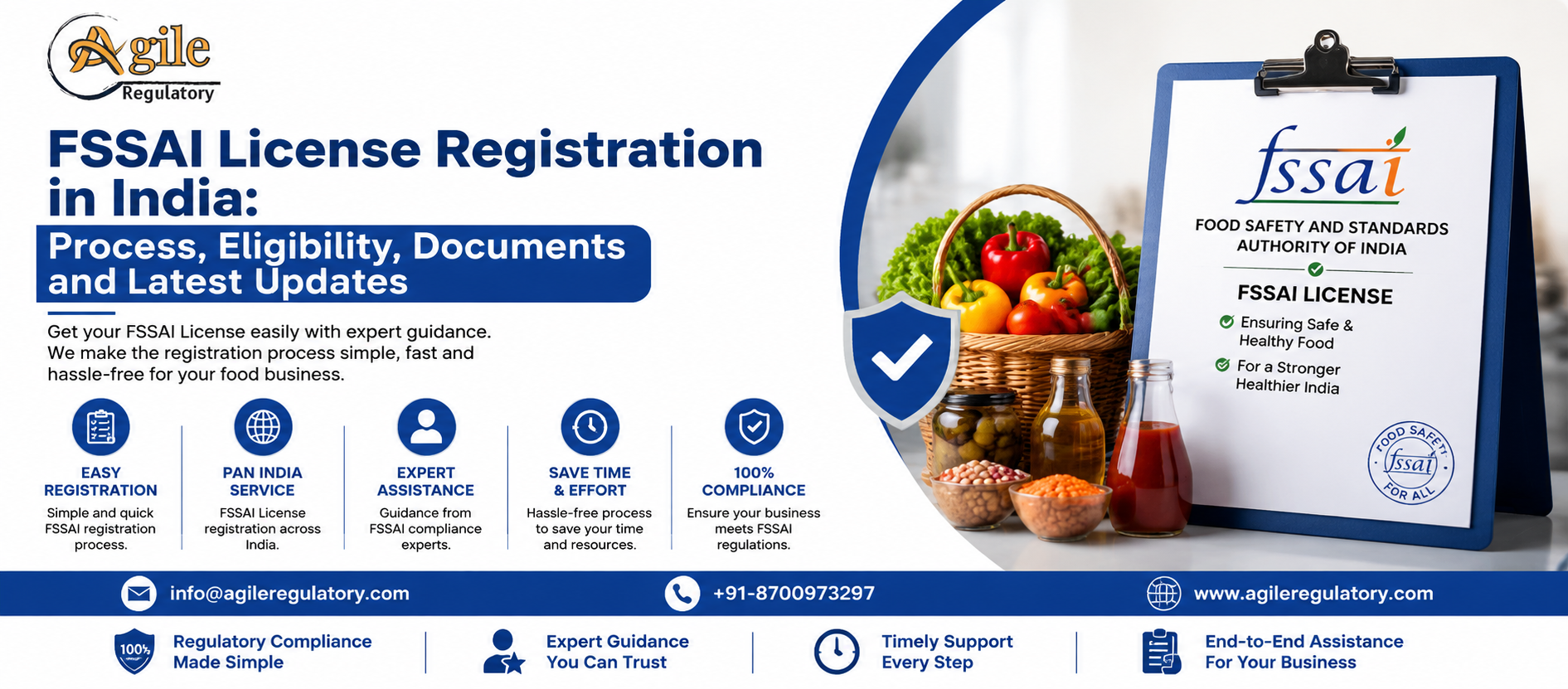
Food businesses in India must follow food safety and hygiene requirements before starting commercial operations. The Food Safety and Standards Authority of India (FSSAI) regulates food businesses under the Food Safety and Standards Act, 2006. According to FSSAI, every Food Business Operator (FBO) is required to obtain the appropriate license or registration depending on the nature and scale of the business.
Whether you operate a restaurant, cloud kitchen, food manufacturing unit, bakery, catering business, food retailer, wholesaler, importer, or online food business, obtaining the appropriate approval is an important compliance requirement. The application and compliance process is managed through the Food Safety Compliance System, commonly known as FoSCoS.
FSSAI registration is the basic food safety approval required for eligible small food businesses. It provides recognition to the food business and establishes that the operator is covered under the food safety regulatory framework.
Depending on the business activity, turnover, production capacity, location, and other applicable criteria, an FBO may need basic registration, a state license, or a central license.
The approval is generally linked to the specific food business activity and premises. Therefore, businesses should identify the correct category before submitting their application.
Food safety compliance is important for both consumers and businesses. An appropriate FSSAI approval helps a food business demonstrate regulatory compliance and can be required for operating legally in the food sector.
A valid license or registration can also be important when dealing with marketplaces, distributors, institutional buyers, retailers, banks, or other commercial partners.
Food businesses are also expected to comply with applicable food safety, hygiene, labelling, packaging, and product-specific requirements. FSSAI maintains separate regulations covering areas such as food standards, contaminants, packaging and labelling, organic foods, and other categories.
FSSAI approvals are broadly divided into three categories.
Basic registration is generally intended for smaller food businesses that fall within the prescribed eligibility criteria. Small retailers, petty food manufacturers, small storage operators, transporters, and certain other small-scale food businesses may fall under this category.
A state license is applicable to food businesses that exceed the basic registration criteria but operate within the relevant state-level licensing framework. Restaurants, food manufacturers, storage units, distributors, retailers, and other businesses may require this category depending on their activity and eligibility.
Businesses searching for a state license fssai should first determine their exact business activity, turnover and operational details before selecting the license category.
Central licensing applies to businesses falling under specified central licensing criteria. This can include certain large manufacturers, importers, exporters, businesses operating in multiple states, and other food businesses covered under central licensing requirements.
The correct category should always be determined based on the latest applicable FSSAI rules rather than choosing a license only on the basis of turnover.
Almost every business involved in the manufacture, processing, storage, distribution, transportation, sale or import of food products may need an appropriate FSSAI approval.
Some common examples include:
FSSAI also provides specific regulatory requirements for different food categories. For example, organic food products are governed by the Food Safety and Standards (Organic Foods) Regulations, 2017.
The documents required depend on the type of business and license being applied for. Common documents may include:
Additional documents may be required depending on the nature of the food business and the licensing category.
What Documents are Required for FSSAI License Renewal
The FSSAI license registration process is completed through the designated online food safety compliance system.
First, the applicant needs to identify the correct food business category and determine whether basic registration, state licensing or central licensing applies.
The applicant then provides the required business and food activity details and submits the applicable documents. The application is reviewed by the concerned authority. Depending on the application and business category, additional information, clarification, inspection, or supporting documents may be required.
After successful scrutiny and completion of applicable requirements, the FSSAI approval is issued.
Businesses can use the official FoSCoS platform for new applications, renewals, modifications, and application tracking.
Businesses can fssai certificate apply through the FoSCoS portal. Before submitting an application, it is important to verify the business details, food product category, premises information, and supporting documents.
Incorrect selection of business activity or incomplete information can result in queries or delays. Therefore, applicants should carefully review the application before submission.
Once approved, the fssai certificate should be retained and displayed wherever required under the applicable regulations.
Food businesses operating in Uttar Pradesh must comply with the applicable FSSAI framework and obtain the appropriate approval for their activities. Businesses searching for fssai uttar pradesh services should ensure that the application reflects the actual business premises, activities and food products.
For businesses operating in Noida, Ghaziabad, Lucknow, Kanpur, Agra, Meerut and other parts of Uttar Pradesh, the applicable license category should be determined according to the business structure and regulatory requirements.
For businesses specifically looking for fssai certificate Noida, professional assistance can help in identifying the applicable category, preparing documentation and managing application-related requirements.
FSSAI approval and municipal trade licensing are separate regulatory requirements. An FSSAI approval relates specifically to food safety and food business operations under the FSSAI framework.
A municipal trade license or other local approval may be required separately depending on the location and nature of the business.
Therefore, businesses should not assume that obtaining one approval automatically satisfies all other local or regulatory requirements.
How to Apply for FSSAI License for Exporters?
FSSAI continues to update its regulatory framework to improve food safety compliance and ease of doing business. In 2026, FSSAI notified amendments to the Food Safety and Standards (Licensing and Registration of Food Businesses) Regulations. FSSAI has also published FAQs and advisories relating to the 2026 amendments and revised turnover thresholds.
Businesses should therefore verify the current eligibility criteria and applicable requirements before applying for or renewing a license.
FSSAI also regulates specific claims and food categories. Its regulatory framework includes dedicated requirements for organic food, while FSSAI's resources also provide FAQs concerning advertising and claims on food products.
Although the online application is available through FoSCoS, selecting the correct category and preparing accurate documents can sometimes be challenging for new business owners.
A professional consultant can assist with identifying the appropriate license category, reviewing documents, preparing application details, responding to queries and tracking the application status.
This can help reduce avoidable errors and make the overall FSSAI certification India process more organised.
Obtaining an appropriate FSSAI License is an important compliance step for food businesses operating in India. From small food operators to manufacturers, restaurants, distributors and other FBOs, businesses should identify the correct category and maintain compliance with applicable food safety requirements.
The regulatory framework is also evolving, with FSSAI issuing amendments and advisories during 2026. Therefore, businesses should check the latest requirements before submitting a new application or renewing an existing approval.
Agile Regulatory provides professional regulatory compliance assistance for businesses seeking FSSAI registration and licensing support. From determining the applicable category and preparing documentation to assisting with the application process, Agile Regulatory can help businesses manage their food compliance requirements in a structured manner.
FSSAI registration is an approval for eligible food businesses under India's food safety regulatory framework. The applicable category depends on the nature and scale of the food business.
Yes. FSSAI states that Food Business Operators are required to obtain the appropriate license or registration under the applicable food safety framework.
Yes. Applications for FSSAI registration and licensing can be submitted through the FoSCoS platform, which also provides facilities for renewal, modification and application tracking.
Basic registration is intended for eligible small food businesses, while a state license applies to businesses that fall within the applicable state licensing criteria. The correct category depends on the business activity and applicable regulatory requirements.
Businesses operating in Noida can apply through the FSSAI FoSCoS system after determining the appropriate category and preparing the required documents. Professional assistance from a regulatory consultant can help with application preparation and compliance requirements.


You might also be interested in these articles.
Nishi Chawla
25 Apr 2026
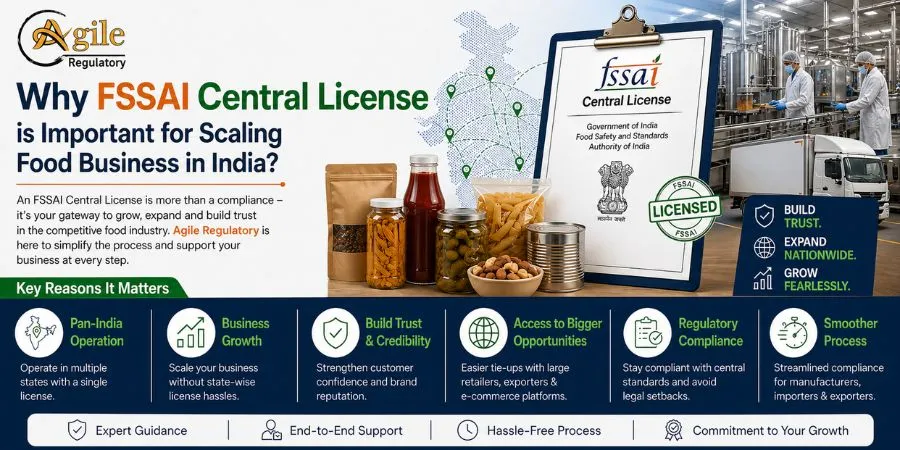
An FSSAI central license is essential for food businesses aiming to scale across India. It ensures legal compliance, builds consumer trust, and allows operations in multiple states and large-scale production.
Nishi Chawla
23 Mar 2026
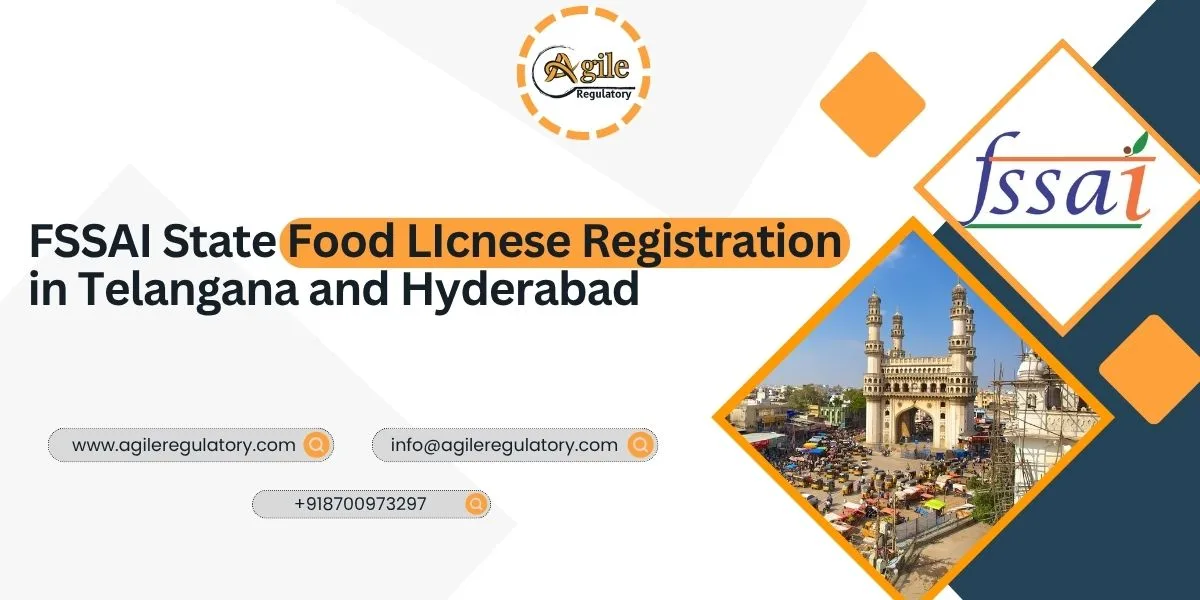
FSSAI State Food License in Telangana and Hyderabad is mandatory for food businesses with turnover between ₹12 lakh and ₹20 crore. It ensures compliance with food safety, hygiene, and quality standards under the Food Safety Act. The process includes onlin
Nishi Chawla
09 Mar 2026
This 2026 update explains how businesses can apply for FSSAI trade license registration in India, required documents, eligibility, and benefits.
Divya Saxena
06 Mar 2026
Getting an FSSAI Food License in Maharashtra and Mumbai is mandatory for anyone running a food-related business such as restaurants, food manufacturing, packaging, or distribution
Vanshika Mathur
23 Feb 2026
FSSAI registration in India for 2026 is done online through the Food Safety Compliance System (FoSCoS) portal, required for all food business operators (FBOs). Small businesses (turnover ₹12 lakh) apply via Form‑A, upload documents, pay fees, and receive
We simplify compliance through a proven 4-step process: Consultation, Documentation, Submission, and certification. From understanding requirements to getting final approvals, we deliver a smooth, timely, and fully compliant journey for your business.


What our customer says about us

Lavkush Sharma
KTPL Instruments
Agile Regulatory handled my BIS Certification registration smoothly. Their expert team ensured quick approvals, transparent pricing, and a completely stress-free compliance experience.

Nitin Mukesh
Justrack IOT
We are grateful to Agile Regulatory for their excellent support. Their team showed patience, expertise, and professionalism throughout, providing clear guidance and making the entire process smooth and hassle-free.
Pradeep Varma
Coaire Compressor
Being an excellent BIS Certification Consultant provider, they help customers with all requirements such as BIS Certification, CDSCO services, Agile Regulatory support, legal issues, and lab testing with quick results.

Bharat Bachwani
Easy Polymer
With the help of Agile Regulatory, we have made significant progress in our business. Their service is fast, genuine, and reliable. We look forward to continued success together in the future.

Atul Jain
Tarus International
Many thanks to Agile Regulatory for all the support, guidance, and expert advice. Their professional approach and consistent assistance have made a significant difference.

Paramjeet Singh
Anchor Weighing
Top-tier consulting! offered strategic solutions that revolutionized our approach. Their deep expertise and personalized guidance made a significant impact on our success. Highly recommend their services.

Anshul Rathi
AM Capacitor
Agile Regulatory exceeded expectations! Their tailored solutions, expertise, and proactive approach led to remarkable results. Highly recommend for businesses seeking impactful and strategic guidance.

Shekhar Maurya
Imaxx Pro Aquistic
Outstanding service! delivered targeted solutions with professionalism and expertise. Their insights elevated our business strategies, resulting in noticeable growth. Highly recommended for exceptional consultation.
Trusted by over 1,00,000 + Global Brands in the past 15+ years







Leave a Reply
Your email address will not be published. Required fields are marked *