


Get Instant Solution By an Expert Advisor
(4.8)
Fast replies · No spam · Real experts
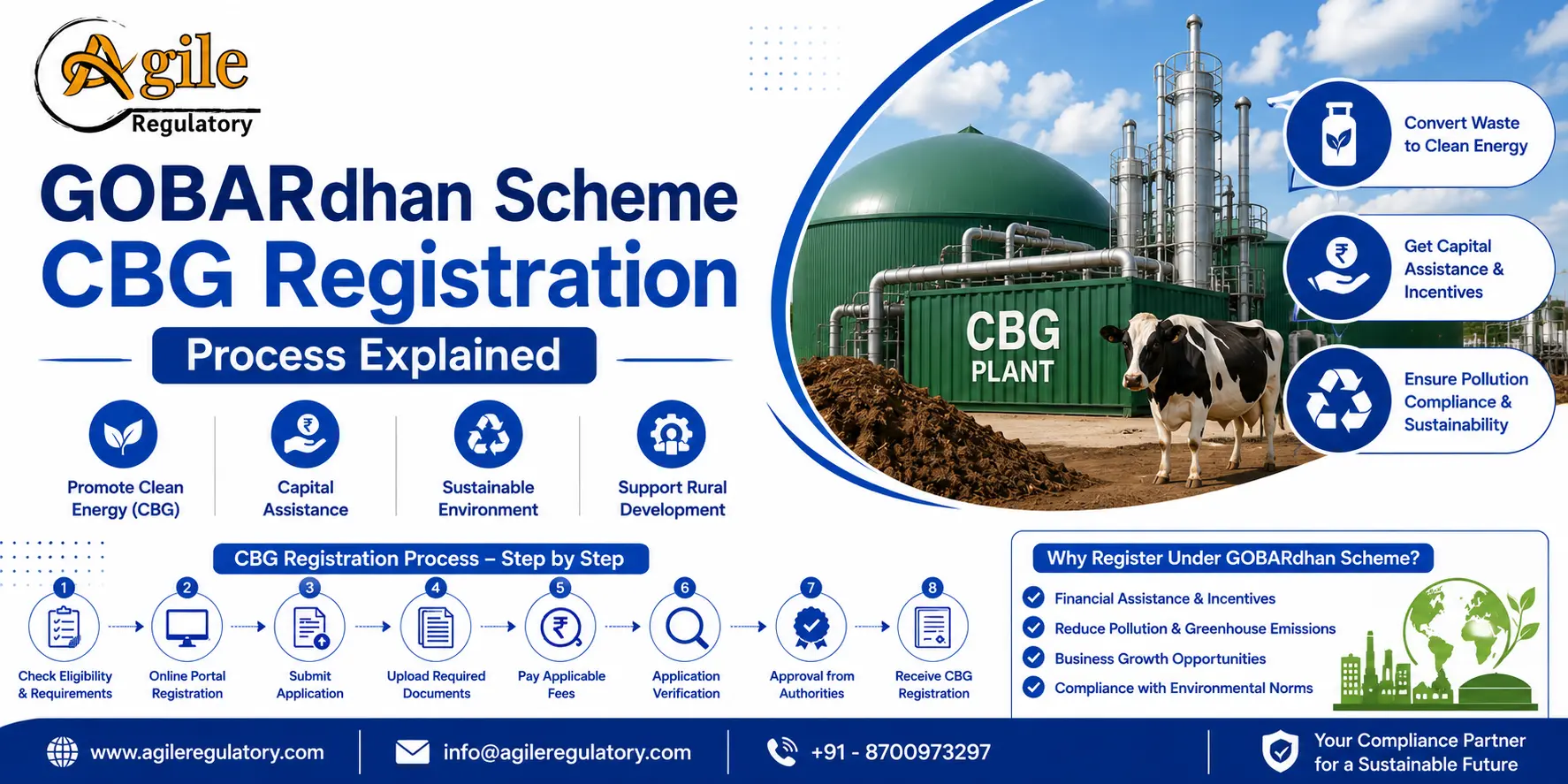
The Galvanizing Organic Bio-Agro Resources Dhan, commonly known as GOBARdhan, was originally launched in 2018 under the Swachh Bharat Mission (Grameen). Its objective is to convert biodegradable waste such as cattle dung, crop residue, kitchen waste and other organic materials into biogas and bio-slurry. Over time, the initiative has developed into a broader ecosystem supporting biogas, CBG and Bio-CNG projects.
The latest Gobardhan scheme 2026 registration framework gives greater importance to the development of CBG infrastructure and the creation of a circular bioenergy economy. The 2026 National Circular Bioenergy Scheme has been approved with an outlay of ₹23,731 crore and is intended to significantly increase India's domestic CBG production.
GOBARdhan is designed to turn organic waste into commercially useful resources. Instead of allowing cattle dung, crop residue and food waste to be dumped or burned, these materials can be processed through anaerobic digestion and related technologies to produce biogas.
Biogas can further be purified and compressed to produce Compressed Biogas, which has properties similar to conventional natural gas and can be used in suitable applications. The process also generates bio-slurry and organic manure that can support agricultural activities.
The government has adopted a multi-ministry approach for developing the CBG ecosystem. The existing GOBARdhan initiative is coordinated by the Department of Drinking Water and Sanitation under the Ministry of Jal Shakti, while the newly approved National Circular Bioenergy Scheme is focused on the larger CBG ecosystem.
The scheme focuses on several important objectives.
First, it aims to increase the production and use of renewable gas in India. Converting agricultural and animal waste into CBG can provide an alternative source of clean fuel.
Second, it supports better waste management. Organic waste that could otherwise contribute to landfill pollution or open burning can be used as feedstock for bioenergy projects.
Third, the scheme can create additional economic opportunities for farmers and rural communities by creating demand for agricultural residue and cattle dung.
Finally, the development of CBG plants can support employment, organic manure production and rural infrastructure. Government data has already highlighted the contribution of GOBARdhan projects to employment generation, farmers' income and rural development.
What is Consent to Establishment (CTE)
The government has developed the Unified GOBARdhan Portal for registration and information related to biogas, CBG and Bio-CNG plants. The portal functions as an important platform for bringing different GOBARdhan-related activities together.
Project proponents planning a biogas or CBG plant should ensure that project information, plant location, feedstock details, capacity and other required information are correctly prepared before registration.
The exact approvals and registrations required can vary according to the project type, capacity, location and applicable state regulations. Therefore, registration on the GOBARdhan platform should not be treated as a substitute for other statutory permissions.
One of the major attractions of the 2026 initiative is its focus on supporting the development of the CBG ecosystem.
The new framework is intended to support areas such as CBG plant development, feedstock aggregation, infrastructure and market connectivity. The broader policy approach also focuses on making CBG projects financially and commercially viable.
Earlier government support mechanisms have included financial assistance for CBG projects and biomass aggregation machinery. For example, a separate government scheme provides financial assistance to CBG producers for procurement of biomass aggregation machinery, with a total outlay of ₹564.75 crore for FY 2023-24 to FY 2026-27.
Under the GOBARdhan initiative, community and cluster-based biogas plants can also receive financial assistance of up to ₹50 lakh per district under the operational guidelines of SBM(G) Phase II, subject to the applicable conditions and availability of funds.
Applicants should therefore verify the particular financial assistance mechanism applicable to their project instead of assuming that every CBG plant automatically receives the same subsidy.
The GOBARdhan ecosystem can be relevant for several categories of stakeholders, including:
Eligibility and financial assistance requirements depend on the specific component, project structure and applicable government guidelines.
The SATAT initiative is closely associated with India's CBG development strategy. SATAT was introduced to encourage entrepreneurs to establish CBG plants and supply the produced gas to oil marketing companies.
GOBARdhan, on the other hand, has a broader waste-to-resource approach covering organic waste conversion into biogas, CBG, Bio-CNG and organic manure.
The two initiatives can therefore complement each other. A CBG developer may need to understand both the applicable GOBARdhan registration framework and the commercial/offtake arrangements relevant to the project.
Setting up a CBG or biogas plant is not limited to obtaining registration under a central government scheme. Environmental and pollution-control requirements may also apply depending on the project's activities, capacity, waste handling process and location.
A project may need approvals such as Consent to Establish, followed by Consent to Operate, from the relevant State Pollution Control Board. These permissions help establish that the proposed project complies with applicable environmental requirements.
For projects located in Uttar Pradesh, applicants may need to deal with the UP Pollution Control Board for the applicable environmental permissions.
Common regulatory requirements may include:
The exact requirement depends on the nature and scale of the project. Businesses should therefore assess environmental compliance before beginning plant construction.
The documentation for GOBARdhan-related registration and regulatory approvals can vary depending on the project. Commonly required information may include the applicant's identity and organisation details, land documents, project address, plant capacity, feedstock details, technology information, project report, ownership documents and other supporting records.
For pollution-control applications, additional information relating to manufacturing or processing activities, water consumption, wastewater generation, air emissions, waste management and pollution-control measures may be required.
Preparing these details correctly can reduce the possibility of queries or delays during the approval process.
State Pollution Control Board (SPCB) Role in India
The scheme offers benefits beyond clean energy production.
It promotes scientific utilisation of cattle dung and agricultural residue, reduces uncontrolled organic waste disposal and supports the production of renewable fuel. CBG projects can also generate organic manure, creating another potential revenue stream.
For rural areas, these projects can create employment and establish organised feedstock collection systems. Government information has reported that functional GOBARdhan projects are already contributing to rural employment, farmers' income and manure supply chains.
The government has also introduced support for organic fertilisers produced from GOBARdhan and CBG plants. Under the Market Development Assistance mechanism, ₹1,500 per metric tonne is provided for eligible FOM, LFOM and PROM products, subject to the applicable conditions.
Setting up a CBG or biogas project involves more than registering on a government portal. Entrepreneurs may need to manage environmental approvals, state-level permissions, waste-management requirements and other regulatory compliances.
Agile Regulatory provides regulatory compliance support to businesses for environmental permissions and related approvals. Our team can assist project owners in understanding applicable requirements, preparing documentation and managing the compliance process.
For a CBG, biogas or Bio-CNG project, obtaining the correct pollution control board license, Consent to Establish and Consent to Operate at the appropriate stage can help maintain regulatory compliance and avoid unnec
essary delays.
The Gobardhan scheme 2026 registration framework represents a major step towards building India's circular bioenergy economy. By converting cattle dung, agricultural residue and organic waste into CBG, biogas and organic manure, the initiative addresses waste management, clean energy and rural economic development together.
For businesses planning a Compressed Biogas plant in India, understanding GOBARdhan registration is only one part of the compliance process. Project developers should also evaluate environmental permissions, pollution-control requirements, waste management and applicable state-level approvals before starting operations.
Agile Regulatory can help businesses understand these regulatory requirements and work towards completing the necessary compliance formalities in a structured manner.
The GOBARdhan Scheme 2026 is the government's expanded national circular bioenergy initiative focused on converting organic waste into biogas, CBG, Bio-CNG and organic manure. The National Circular Bioenergy Scheme was approved with an outlay of ₹23,731 crore.
GOBARdhan registration refers to registering eligible biogas, CBG or Bio-CNG plant-related information through the government's Unified GOBARdhan Portal. Additional statutory approvals may also be required depending on the project.
Depending on the project and applicable state regulations, a CBG plant may require Consent to Establish, Consent to Operate and other environmental permissions from the relevant State Pollution Control Board.
GOBARdhan has a broader waste-to-resource focus covering organic waste conversion into biogas, CBG, Bio-CNG and manure. SATAT focuses on encouraging CBG production and its commercial offtake.
Yes. Agile Regulatory can assist businesses with applicable pollution-control approvals, environmental compliance, documentation and other regulatory requirements connected with setting up and operating eligible projects.


You might also be interested in these articles.
Sonal Sharma
18 Sep 2026
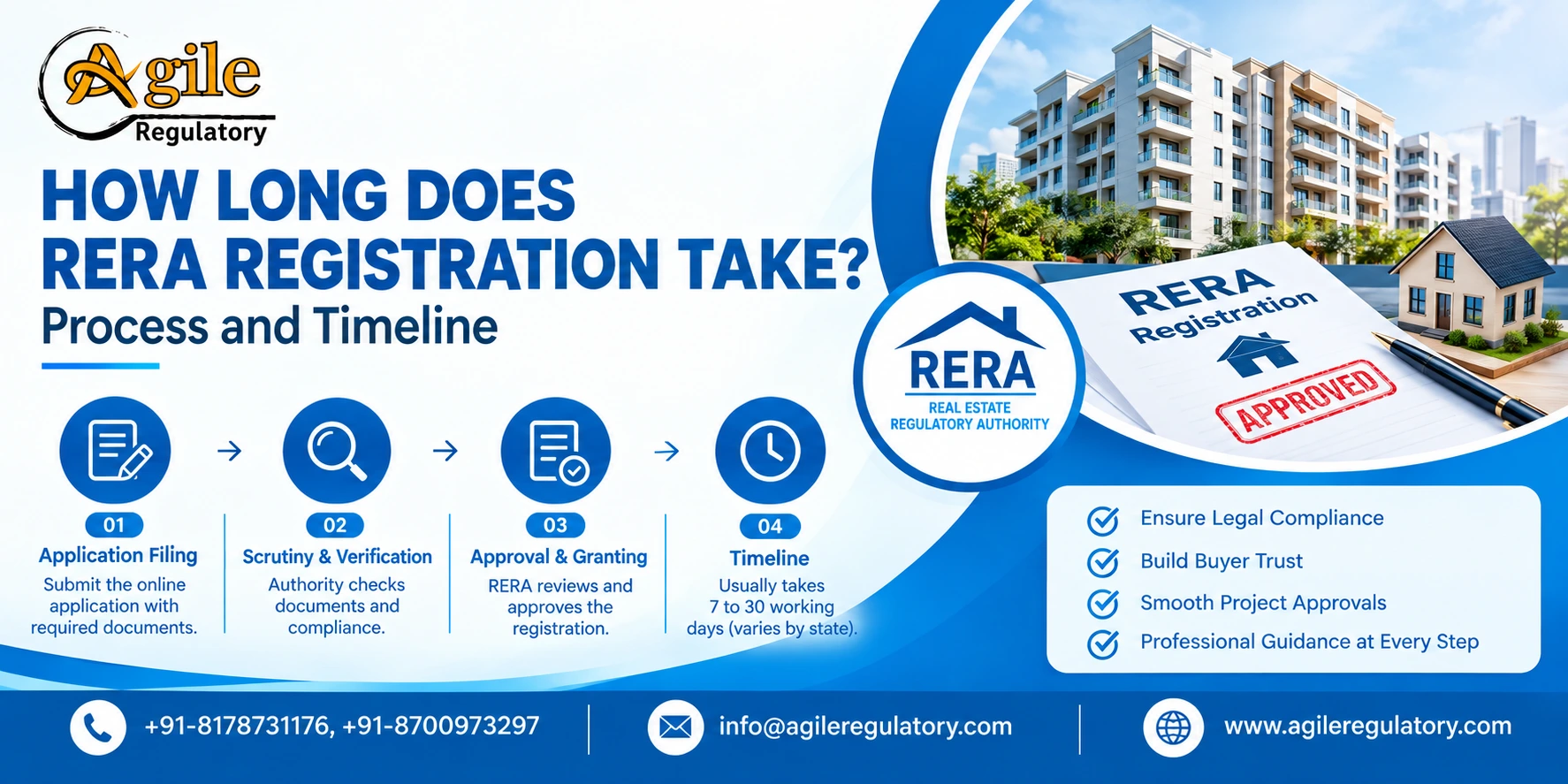
RERA registration is an important compliance step for eligible real estate projects. The process typically includes preparing documents, submitting the application online, paying applicable fees, and responding to queries raised by the concerned RERA auth
Nishi Chawla
19 May 2026
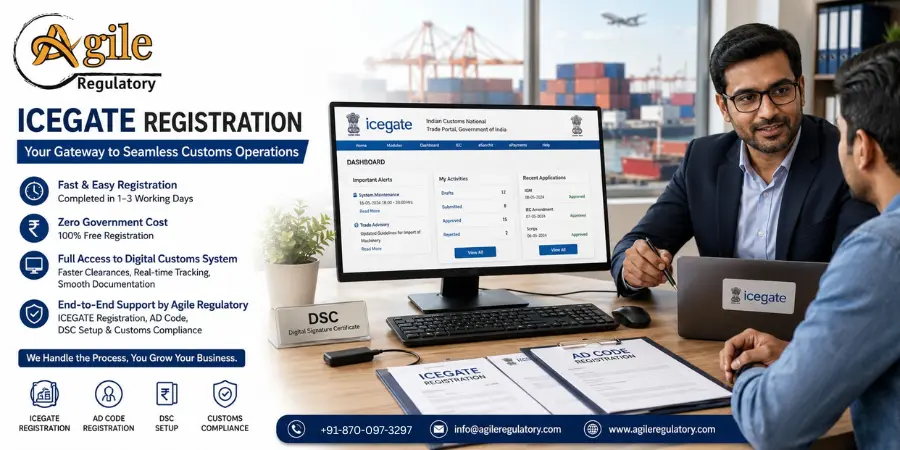
ICEGATE registration is an essential process for import-export businesses in India. It allows importers, exporters, customs brokers, and logistics companies to access online customs services through the Indian Customs Electronic Gateway (ICEGATE). With re
Nishi Chawla
21 Apr 2026
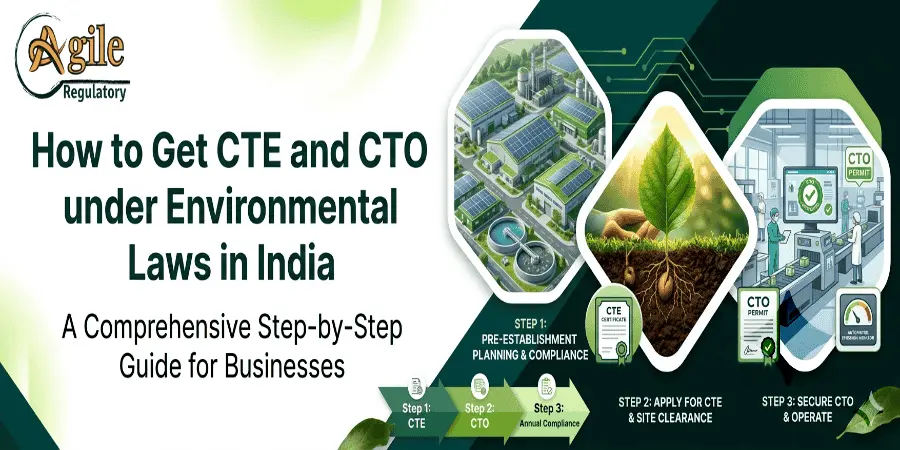
Getting Consent to Establish (CTE) and Consent to Operate (CTO) under environmental laws in India is a mandatory step for industries before starting and running operations. Issued by the State Pollution Control Board, these approvals ensure that businesse
Nishi Chawla
11 Apr 2026
The WPC Certificate Registration Process in Delhi is essential for businesses dealing with wireless and RF-enabled devices in India. This 2026 guide outlines the step-by-step procedure, required documents, eligibility criteria, and compliance requirements
Nishi Chawla
09 Apr 2026
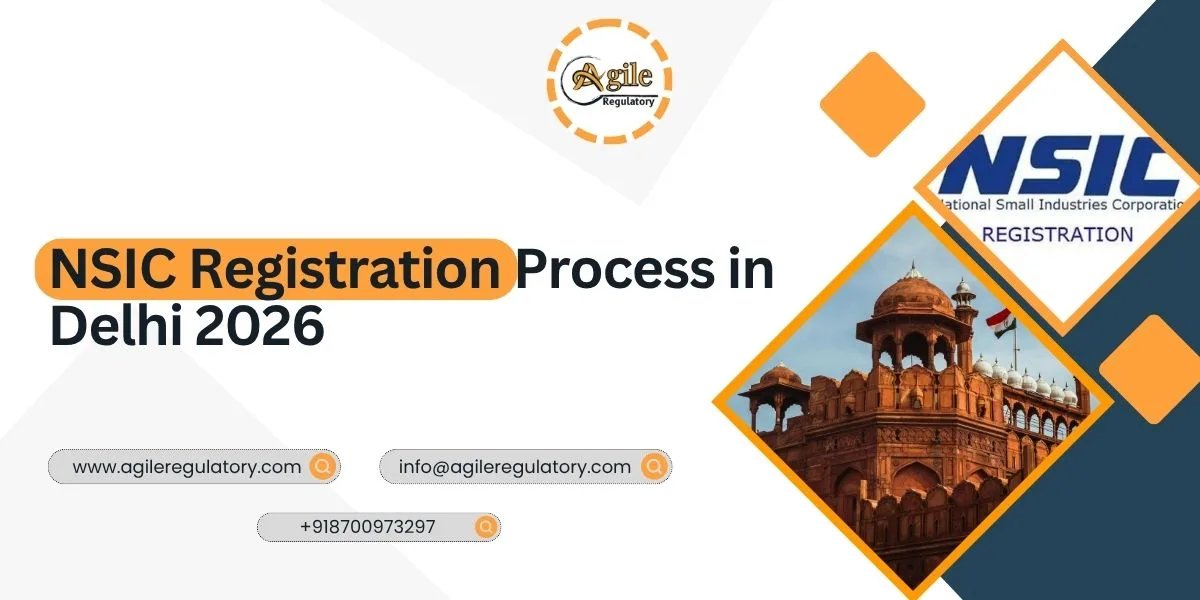
This guide explains the NSIC registration process in Delhi for 2026, covering eligibility criteria, required documents, and application steps. It helps MSMEs understand how to apply and benefit from NSIC schemes efficiently.
Nishi Chawla
08 Apr 2026
Agile Regulatory provides complete support for GACC registration in Gujarat. We assist with documentation, compliance, and smooth application filing. Get quick approval and expand your export business to China with ease.
Nishi Chawla
27 Mar 2026
BIS registration under IS 302 (Part 2/Sec 80): 2017 is mandatory for electric fans to ensure safety and compliance with Indian standards. Our service provides end-to-end support including documentation, product testing, and certification, ensuring a smoot
Vanshika Mathur
25 Mar 2026
The CDSCO registration process in Ahmedabad (2026) is conducted entirely online through the SUGAM portal of the Central Drugs Standard Control Organization. Businesses must first create an account, submit applicant and company details, upload required doc
Nishi Chawla
25 Mar 2026
DGFT registration in Madhya Pradesh and Indore involves online IEC application, document submission, verification, and approval for legal import-export business operations.
Nishi Chawla
25 Mar 2026
The registration process for food delivery platforms like Zomato and Swiggy in Tamil Nadu involves submitting basic business details, FSSAI license, GST information (if applicable), and bank details. After verification, restaurants can onboard their menu,
Nishi Chawla
18 Mar 2026
Direct and Associates offers reliable assistance in obtaining a Private Security Agency License under PSARA. They streamline documentation, compliance, and approval processes for security businesses. Their expertise ensures quick, hassle-free licensing
Nishi Chawla
10 Mar 2026
BIS Registration for Asbestos Cement Pressure Pipes and Joints ensures compliance with IS 1592:2003 standards in India. Manufacturers must obtain BIS certification to use the ISI mark and sell products in the Indian market. Our experts assist with docum
Vanshika Mathur
06 Mar 2026
AGMARK registration in Mumbai helps businesses certify the quality of agricultural products under government standards. The process involves submitting an application to the Directorate of Marketing and Inspection (DMI), providing documents, and product t
Nishi Chawla
27 Feb 2026
BIS Registration for Silica-Asbestos-Cement Flat Sheets under IS 13000:1990 is mandatory to ensure product quality and safety compliance in India. Manufacturers must meet the standards set by the Bureau of Indian Standards before selling in the Indian mar
Divya Saxena
26 Feb 2026
SASO certification is mandatory for many products imported into Saudi Arabia to ensure they meet safety and quality standards.
Divya Saxena
24 Feb 2026
12A and 80G registrations grant NGOs tax exemptions and donor benefits in India, with updated 2026 online compliance procedures.
Vanshika Mathur
23 Feb 2026
FSSAI registration in India for 2026 is done online through the Food Safety Compliance System (FoSCoS) portal, required for all food business operators (FBOs). Small businesses (turnover ₹12 lakh) apply via Form‑A, upload documents, pay fees, and receive
We simplify compliance through a proven 4-step process: Consultation, Documentation, Submission, and certification. From understanding requirements to getting final approvals, we deliver a smooth, timely, and fully compliant journey for your business.


What our customer says about us
Lavkush Sharma
KTPL Instruments
Agile Regulatory handled my BIS Certification registration smoothly. Their expert team ensured quick approvals, transparent pricing, and a completely stress-free compliance experience.

Nitin Mukesh
Justrack IOT
We are grateful to Agile Regulatory for their excellent support. Their team showed patience, expertise, and professionalism throughout, providing clear guidance and making the entire process smooth and hassle-free.
Pradeep Varma
Coaire Compressor
Being an excellent BIS Certification Consultant provider, they help customers with all requirements such as BIS Certification, CDSCO services, Agile Regulatory support, legal issues, and lab testing with quick results.

Bharat Bachwani
Easy Polymer
With the help of Agile Regulatory, we have made significant progress in our business. Their service is fast, genuine, and reliable. We look forward to continued success together in the future.

Atul Jain
Tarus International
Many thanks to Agile Regulatory for all the support, guidance, and expert advice. Their professional approach and consistent assistance have made a significant difference.

Paramjeet Singh
Anchor Weighing
Top-tier consulting! offered strategic solutions that revolutionized our approach. Their deep expertise and personalized guidance made a significant impact on our success. Highly recommend their services.
Anshul Rathi
AM Capacitor
Agile Regulatory exceeded expectations! Their tailored solutions, expertise, and proactive approach led to remarkable results. Highly recommend for businesses seeking impactful and strategic guidance.

Shekhar Maurya
Imaxx Pro Aquistic
Outstanding service! delivered targeted solutions with professionalism and expertise. Their insights elevated our business strategies, resulting in noticeable growth. Highly recommended for exceptional consultation.
Trusted by over 1,00,000 + Global Brands in the past 15+ years




.webp)



Leave a Reply
Your email address will not be published. Required fields are marked *