


Get Instant Solution By an Expert Advisor
(4.8)
Fast replies · No spam · Real experts
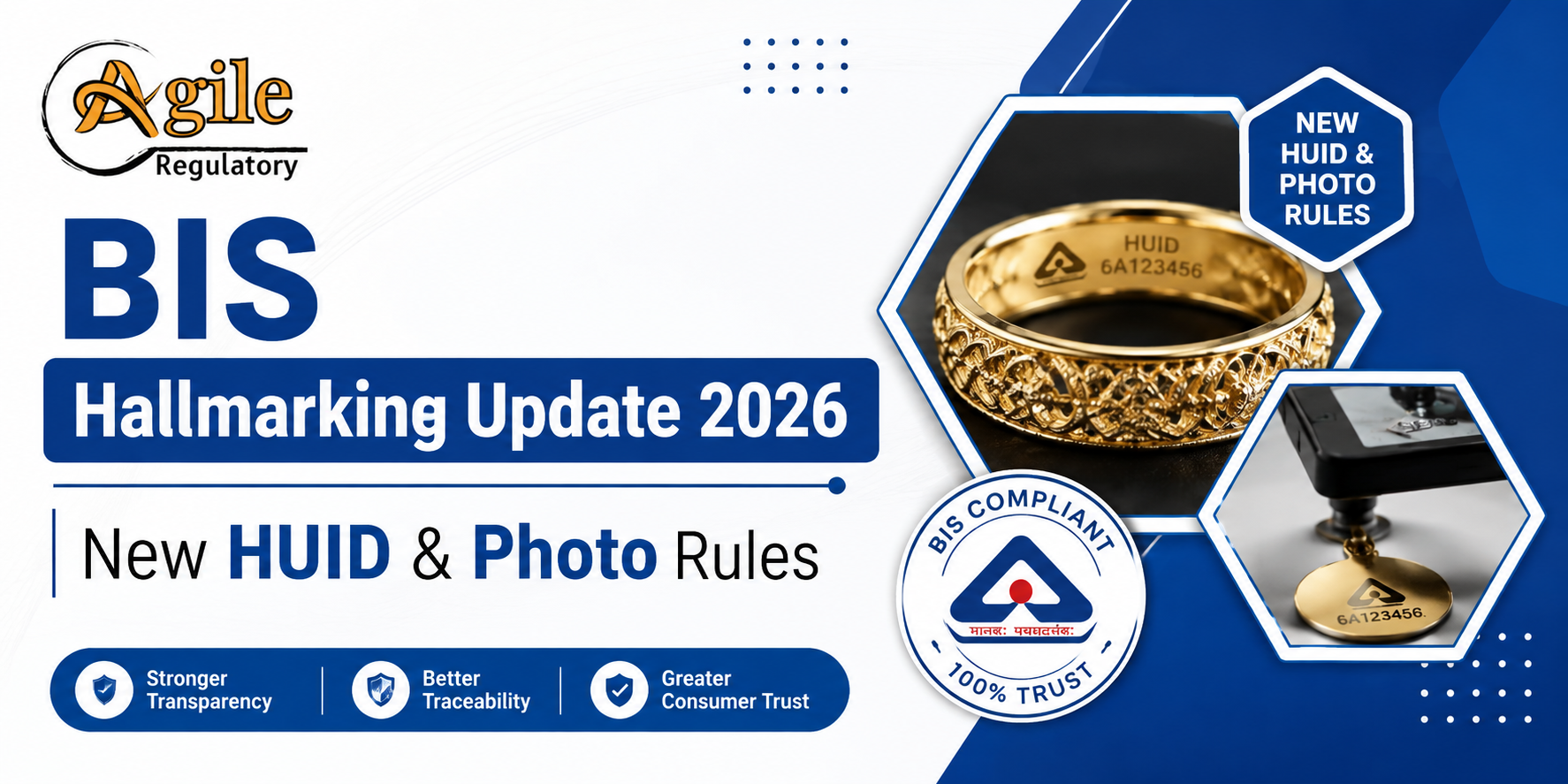
The Bureau of Indian Standards has tightened its hallmarking process for gold and silver jewellery, and the change is bigger than a single regional briefing suggests. A revised circular from BIS's Hallmarking Department, dated July 2026, now requires Assaying and Hallmarking Centres (AHCs) to capture and verify photographs of each article along with its hallmark, including the HUID and to record the article's weight as part of the certification process.
This is one of the hallmarking new rules. BIS held an awareness session in Tadepalligudem, Andhra Pradesh, where officials briefed jewellers on the update, but the actual authority behind it is a formal revision to the Guidelines for AHCs, applicable wherever hallmarking happens in India.
The July 2026 revision to the AHC hallmarking guidelines brings four specific updates:
Photograph verification: AHCs must now capture and verify photographs of the article itself and of the hallmark on the article, including its HUID (Hallmark Unique Identification number), and upload these to Manak BIS hallmark online system.
Revised failure thresholds: The permissible failure threshold for testing has moved from 5 parts per thousand to 10 parts per thousand aligning with existing AHC guideline standards.
Sampling weight limits: BIS has set a floor on which articles can be sampled for testing articles below 2 grams in gold and below 20 grams in silver are now covered under a specific sampling provision.
HUID transfer and status updates: A formal provision now exists for transferring or updating HUID status on an article, addressing a gap jewellers previously had to work around informally.
Every hallmarked item already carries an HUID, a six-digit alphanumeric code unique to that piece, verifiable by any consumer through the BIS Care app. What was missing until now was a photographic and weight record tied to that code at the point of certification. Pairing the HUID with an actual image and recorded weight closes a gap that made certain disputes over whether an item matched its certified weight or was swapped after hallmarking harder to resolve.
BIS officials at the Vijayawada briefing also noted increased monitoring against misuse of the BIS hallmark, with legal action being pursued against non-compliant entities under the BIS Act, 2016. Jewellers operating outside these updated procedures aren't just risking a compliance note; they're risking certification action.
BIS Hallmark for Silver: A Complete Guide for Buyers in 2025
If you're a BIS-registered jeweller or run an assaying and hallmarking centre, this shifts a few things in daily practice:
Every article going through hallmarking now needs to be photographed and matched against its hallmark and HUID before certification is finalized.
Weight recording at the point of testing becomes a formal, uploaded part of the record not just something noted on a physical receipt.
Centres handling both gold and silver need to apply the correct sampling weight threshold 2 grams for gold, 20 grams for silver when selecting articles for testing.
This builds on the broader HUID rollout: mandatory hallmarking has applied to 14, 18 and 22 karat gold jewellery since June 2021. It is extended to 9 karat gold from July 2025 and to silver jewellery and artefacts from September 2025.
Staying compliant with BIS Registration hallmarking updates takes more than reading the circular it means adjusting your centre's actual workflow before an audit catches the gap. Agile Regulatory tracks BIS regulatory changes as they're issued and helps registered jewellers and AHCs stay current book a free consultation if you need help reviewing where your process stands.
Why BIS Hallmark Registration is Essential
HUID stands for Hallmark Unique Identification a six-digit alphanumeric number assigned to each hallmarked piece. It is verifiable through the BIS Care app. The new photography and weight requirements attach a visual and physical record directly to that HUID.
It's nationwide. The Andhra Pradesh coverage reflects a regional awareness session BIS ran to brief local jewellers, but the actual authority is a revision to BIS's national Guidelines for AHCs.
Articles weighing below 2 grams in gold and below 20 grams in silver fall under a specific sampling provision introduced in this revision.
Yes. It's moved from 5 parts per thousand to 10 parts per thousand under the revised guidelines.
Indirectly, yes, the added photographic and weight verification is meant to reduce disputes over whether a piece matches its certified details. It strengthens the protection consumers already get from HUID-based hallmarking.
BIS has stated it's increasing monitoring for misuse of hallmarks and pursuing legal action against non-compliant entities under the BIS Act, 2016.


Proven 4-step Process: Consultation, Documentation, Submission, and Certification


What our customer says about us

Lavkush Sharma
KTPL Instruments
Agile Regulatory handled my BIS Certification registration smoothly. Their expert team ensured quick approvals, transparent pricing, and a completely stress-free compliance experience.

Nitin Mukesh
Justrack IOT
We are grateful to Agile Regulatory for their excellent support. Their team showed patience, expertise, and professionalism throughout, providing clear guidance and making the entire process smooth and hassle-free.

Pradeep Varma
Coaire Compressor
Being an excellent BIS Certification Consultant provider, they help customers with all requirements such as BIS Certification, CDSCO services, Agile Regulatory support, legal issues, and lab testing with quick results.

Bharat Bachwani
Easy Polymer
With the help of Agile Regulatory, we have made significant progress in our business. Their service is fast, genuine, and reliable. We look forward to continued success together in the future.

Atul Jain
Tarus International
Many thanks to Agile Regulatory for all the support, guidance, and expert advice. Their professional approach and consistent assistance have made a significant difference.

Paramjeet Singh
Anchor Weighing
Top-tier consulting! offered strategic solutions that revolutionized our approach. Their deep expertise and personalized guidance made a significant impact on our success. Highly recommend their services.

Anshul Rathi
AM Capacitor
Agile Regulatory exceeded expectations! Their tailored solutions, expertise, and proactive approach led to remarkable results. Highly recommend for businesses seeking impactful and strategic guidance.

Shekhar Maurya
Imaxx Pro Aquistic
Outstanding service! delivered targeted solutions with professionalism and expertise. Their insights elevated our business strategies, resulting in noticeable growth. Highly recommended for exceptional consultation.
Trusted by over 1,00,000 + Global Brands in the past 12 years





Leave a Reply
Your email address will not be published. Required fields are marked *