

Get Instant Solution By an Expert Advisor
(4.8)
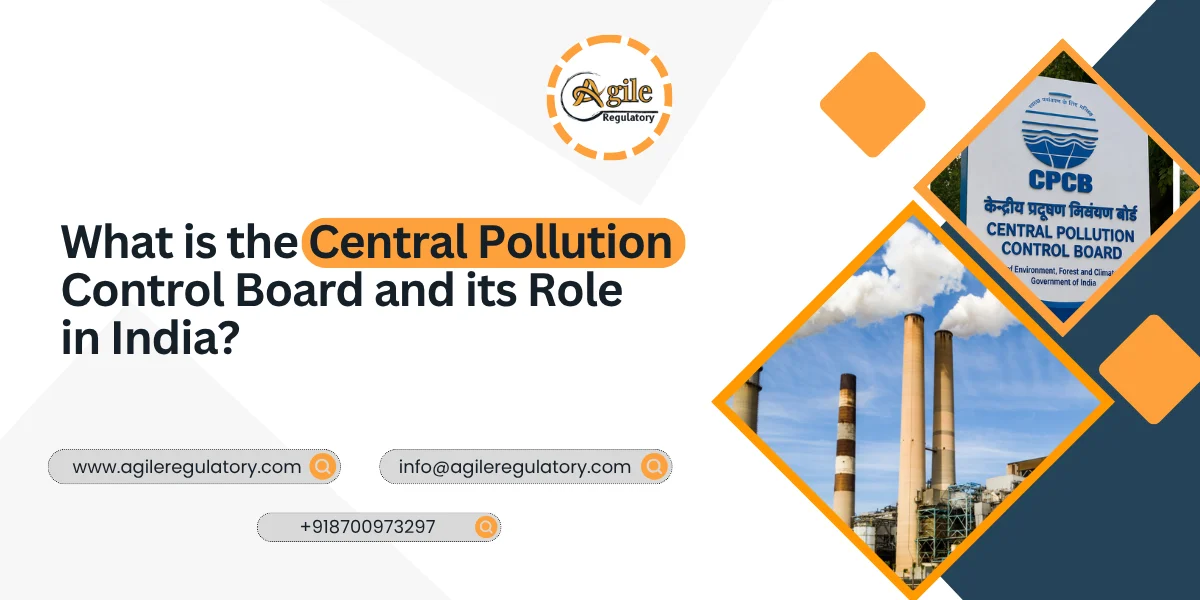

You’ve probably heard of the Central Pollution Control Board at some point, maybe while looking into licenses, maybe during compliance work or maybe just in passing
Most people don’t go beyond the name.
They assume it’s some government body that “handles pollution.” That’s technically true but it doesn’t tell you anything useful
If you’re running a business or planning to, you’re already operating inside a system shaped by this board. Whether you notice it or not
So instead of treating it like a background authority, it’s worth understanding what role it actually plays
The Central Pollution Control Board wasn’t created randomly. It came in through law.
It was set up under the Water Act of 1974 and later got additional powers under the Air Act of 1981. That’s what gives it authority.
So this isn’t an advisory body. It doesn’t just “suggest” things. Its framework carries legal weight.
Its job, broadly, is to deal with air, water, and environmental quality pollution across the country.
But the way it does that is where things get interesting
CPCB is not the office you usually deal with.
You don’t go to CPCB to get your Consent to Establish or Consent to Operate. That happens at the state level through your State Pollution Control Board.
So naturally, people assume CPCB isn’t that important for them.
That’s wrong.
Because the state boards are not working independently. They follow a structure and that structure is largely defined by CPCB
If every state made its own environmental rules from scratch, things would be chaotic
Different limits, different processes, different enforcement standards.
CPCB exists to prevent that.
It sets the baseline.
So when your state board tells you the following:
Chances are, those guidelines trace back to CPCB.
You may not see it directly, but it’s there in the background.
Instead of listing technical functions it’s easier to look at what CPCB actually handles in practice
First it defines limits: how much pollution is acceptable and where
Second, it guides state boards. Not just broadly but technically how to measure, how to monitor, how to enforce
Third, it collects data. Air quality, water quality, and pollution levels. That data is used everywhere from policy decisions to court cases
And then there’s enforcement. CPCB can step in especially when things cross state boundaries or become serious enough
So it’s not just sitting above the system. It actively shapes it
Every time you look up air quality, whether it’s “good,” “poor,” or "severe," you’re looking at a system developed under CPCB.
The Air Quality Index isn’t just a number. It’s part of a larger monitoring framework.
That alone should tell you how deeply CPCB is involved in day-to-day environmental tracking.
Earlier, environmental compliance was something businesses often treated lightly
That’s changed.
You’re now dealing with:
CPCB has been pushing a lot of this shift, standardizing systems, improving tracking, and tightening norms.
You can see it in how quickly violations are picked up now compared to a few years ago.
What is the State Pollution Control Board and its Role in India?
Even if you never interact with CPCB, its rules still define your limits.
When you apply for approvals:
So whether you’re aware of it or not, you’re operating within that framework.
This part is simple but important.
They’re connected. One sets the direction; the other implements it.
India doesn’t have a small or simple environmental landscape.
You’re dealing with multiple industries, different states, varying pollution levels, and shared resources like rivers and air.
Handling all of that at just a local level wouldn’t work.
CPCB keeps things aligned.
This isn’t theoretical anymore.
There have been repeated cases where
And a lot of that ties back to non-compliance with standards that originate from CPCB.
You don't deal with the Central Pollution Control Board every day but it's behind almost all of the environmental rules that your business has to follow
It sets the rules, outlines the framework and determines how compliance works throughout the country
If you own a business, not knowing how this system works doesn't make it go away it just means you're reacting instead of planning
Getting the right help from teams like Agile Regulatory can help you meet both CPCB standards and state-level requirements from the start so you don't have to fix compliance problems later
Post Views: 951


Nishi Chawla
09 May, 2026
Nishi Chawla
09 May, 2026
.webp)
Nishi Chawla
08 May, 2026
.webp)
Nishi Chawla
08 May, 2026
Nishi Chawla
07 May, 2026
Get Instant Solution By an Expert Advisor
(4.8)
You might also be interested in these articles.
Nishi Chawla
07 May 2026
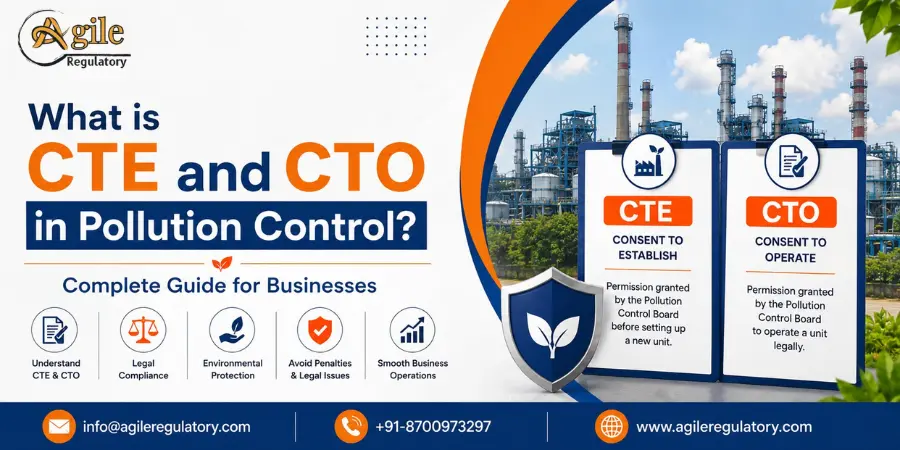
CTE (Consent to Establish) and CTO (Consent to Operate) are mandatory pollution control approvals required for industries before starting and operating a business. This guide explains their importance, process, and compliance requirements for businesses i
Nishi Chawla
03 Apr 2026
The State Pollution Control Board (SPCB) is a regulatory authority responsible for monitoring, controlling, and preventing environmental pollution at the state level in India. It ensures industries comply with environmental laws, grants necessary clearanc
Nishi Chawla
09 Mar 2026
Pollution NOC registration is required for businesses operating in Delhi NCR, including Noida and Gurugram, to ensure compliance with environmental regulations. The certificate is issued by the respective State Pollution Control Boards before starting ind
We simplify compliance through a proven 4-step process: Consultation, Documentation, Submission, and certification. From understanding requirements to getting final approvals, we deliver a smooth, timely, and fully compliant journey for your business.


What our customer says about us
Lavkush Sharma
KTPL Instruments
Agile Regulatory handled my BIS Certification registration smoothly. Their expert team ensured quick approvals, transparent pricing, and a completely stress-free compliance experience.
Nitin Mukesh
Justrack IOT
We are grateful to Agile Regulatory for their excellent support. Their team showed patience, expertise, and professionalism throughout, providing clear guidance and making the entire process smooth and hassle-free.
Pradeep Varma
Coaire Compressor
Being an excellent BIS Certification Consultant provider, they help customers with all requirements such as BIS Certification, CDSCO services, Agile Regulatory support, legal issues, and lab testing with quick results.

Bharat Bachwani
Easy Polymer
With the help of Agile Regulatory, we have made significant progress in our business. Their service is fast, genuine, and reliable. We look forward to continued success together in the future.

Atul Jain
Tarus International
Many thanks to Agile Regulatory for all the support, guidance, and expert advice. Their professional approach and consistent assistance have made a significant difference.

Paramjeet Singh
Anchor Weighing
Top-tier consulting! offered strategic solutions that revolutionized our approach. Their deep expertise and personalized guidance made a significant impact on our success. Highly recommend their services.

Anshul Rathi
AM Capacitor
Agile Regulatory exceeded expectations! Their tailored solutions, expertise, and proactive approach led to remarkable results. Highly recommend for businesses seeking impactful and strategic guidance.

Shekhar Maurya
Imaxx Pro Aquistic
Outstanding service! delivered targeted solutions with professionalism and expertise. Their insights elevated our business strategies, resulting in noticeable growth. Highly recommended for exceptional consultation.
Trusted by over 1,00,000 + Global Brands in the past 15+ years


.webp)


Leave a Reply
Your email address will not be published. Required fields are marked *