


Get Instant Solution By an Expert Advisor
(4.8)
Fast replies · No spam · Real experts
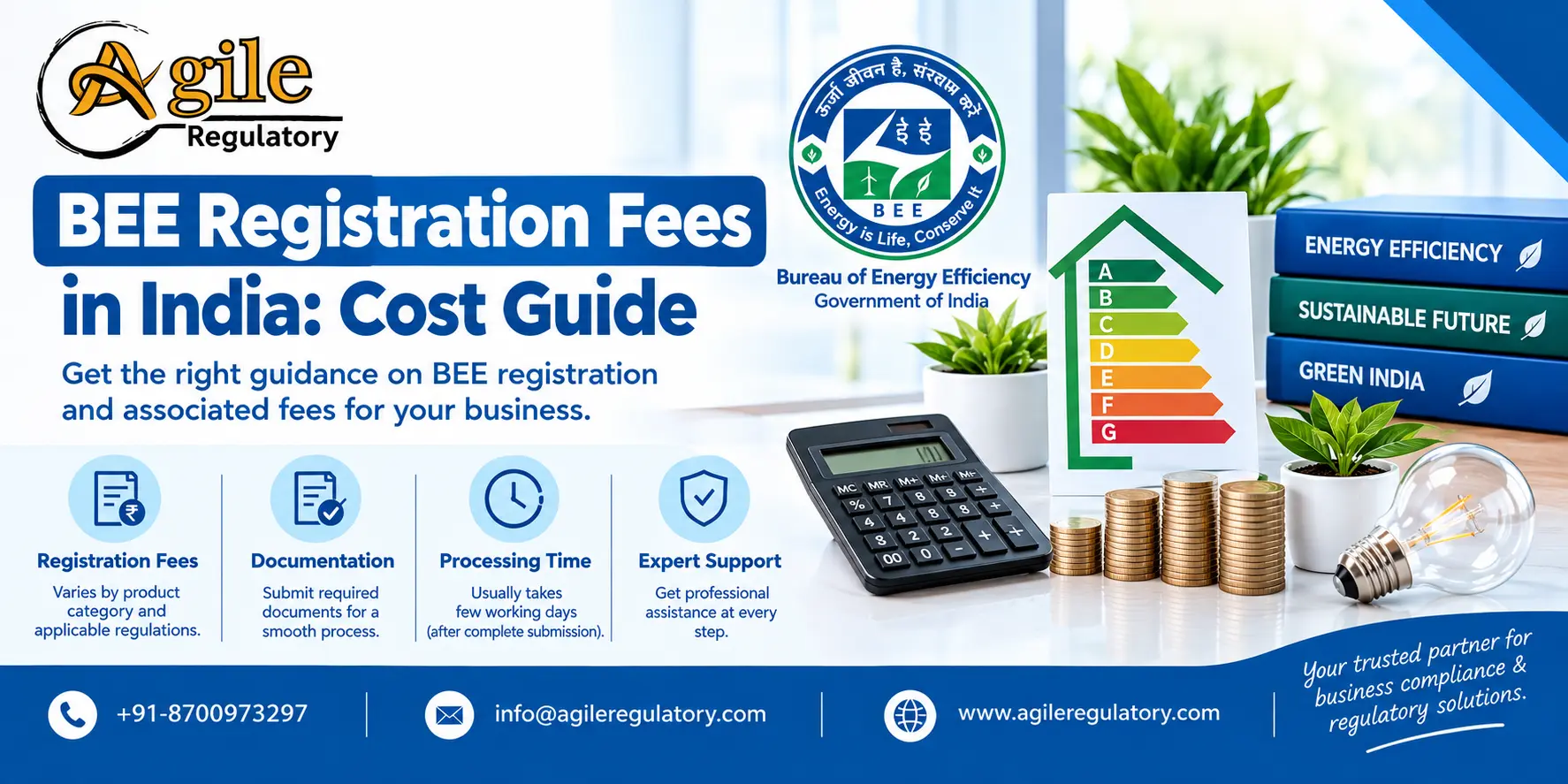
The Bureau of Energy Efficiency (BEE) works under the Ministry of Power. It was established by the Government of India under the Energy Conservation Act, 2001, to promote the manufacture and sale of energy-efficient appliances.
When a product gets BEE Registration, it receives a BEE star rating from 1 star to 5 stars. One star means the product is the least efficient, and five stars means it is the most efficient. So the BEE energy rating is basically a report card for how much electricity an appliance eats up.
For some products, like ACs, refrigerators, LED bulbs, TVs, and ceiling fans, this label is compulsory. For others, like microwave ovens or laptops, it’s voluntary, but many brands still get it because buyers trust the stars.
The costs for Bureau of Energy Efficiency registration are a recurring process that needs to be applied for for every item offered by a business each time it enters the market:
Security deposit (company registration): Before any product can be registered, the company or brand must sign up on the BEE portal. The commonly cited security deposit is around ₹1,00,000, reduced to roughly ₹25,000 for small-scale industries, which is refundable. For LED lamps, for example, a company can get its label security fee back once it stops making that product.
Model registration fee: Every single model needs its own approval. If a company makes three AC models of different sizes, each one is registered separately. Industry sources often quote around ₹2,000 per model as the government fee.
Label fee: This is a tiny charge for every star sticker stuck on a product. Under the LED lamp rules, companies pay five paise per label and settle the total once a year.
Renewal fee: A BEE license doesn’t last forever, so companies must renew it before it expires to keep selling legally.
The fee system has been going through big changes. In 2025, BEE proposed new BEE (Labelling Fees) Regulations.
The draft included:
A one-time ₹5,000 application fee for company registration,
A label security deposit of ₹5 lakh per appliance (₹1 lakh for small-scale industries),
A ₹5,000 label permission fee per application, and
A ₹1,000 renewal fee if the star rating stays the same.
It also proposed that label fees be paid every quarter, with penalties for late payment.
Later, BEE issued the Appliance Labeling and Compliance Regulations, 2026 on December 29, 2025, and it became effective on January 1, 2026. Because the rules have shifted recently, always check the latest fee schedule on the official BEE website (beeindia.gov.in) before budgeting.
Before getting a BEE rating certificate, every product must be tested in a lab accredited by NABL (an official lab-approval body). This is often the most expensive part. One consultancy estimates testing at ₹15,000 to ₹60,000 per model, depending on the product.
Testing an AC is much more complex than testing a bulb, so it costs more.
Many companies hire consultants like Agile Regulatory to handle the paperwork, coordinate with labs, design the label correctly, and follow up with BEE. Consultants charge a service fee on top of government charges. One firm’s 2025 estimate puts company registration at ₹25,000–₹40,000, model registration at ₹10,000–₹25,000 per model, and labelling at ₹2,000–₹10,000, though these figures mix government and service charges.
Paying extra to these consultants helps, as small mistakes can get applications rejected. Common reasons include outdated test reports, missing signatures, wrong label formats, and a mismatch between the product name and the lab report.
Smart tip: Always ask a consultant for an itemised quote that separates government fees from their professional fee. That way, you know exactly what you’re paying for.
The Bureau of Energy Efficiency star label isn’t just a sticker. It helps your family choose appliances that lower electricity bills and reduce pollution from power plants. BEE energy efficiency rules push companies to build better products, which is good for India’s energy future and for the planet.
Yes. Companies can usually get it back when they stop making the registered product, as long as they’ve followed the rules.
No. Companies can apply directly on the BEE portal. Consultants are optional but helpful for first-timers.
Yes. Importers and foreign brands selling in India must follow the same testing and registration process.


You might also be interested in these articles.
Nishi Chawla
04 May 2026
Many applicants face delays or rejections in BEE Star Labelling due to avoidable mistakes. Common errors include submitting incomplete or incorrect documentation, using outdated test reports, and selecting the wrong product category or model details.
Nishi Chawla
11 Mar 2026
BEE Registration for Variable Capacity Air Conditioners (Inverter ACs) is a certification process mandated by the Bureau of Energy Efficiency (BEE) in India to ensure that inverter ACs meet defined energy efficiency standards. The registration requires ma
Nishi Chawla
11 Mar 2026
BEE registration for LED Retrofit Lamps is mandatory for manufacturers and importers selling energy-efficient lighting products in India. The certification ensures compliance with Bureau of Energy Efficiency labeling and performance standards. Professio
Nishi Chawla
05 Mar 2026
BEE Registration for diesel generators is mandatory for manufacturers and importers to meet energy efficiency regulations in India. The certification issued by the Bureau of Energy Efficiency (BEE) ensures that generators follow approved performance and
Nishi Chawla
05 Mar 2026
BEE registration for solid-state inverters in 2026 ensures energy efficiency compliance, mandatory certification, and market approval for manufacturers in India.
Nishi Chawala
02 Mar 2026
The BEE Registration for Diesel Engine-Driven Monoset Pumps for Agricultural Purposes refers to the certification process mandated by the Bureau of Energy Efficiency (BEE) to ensure energy performance standards for diesel-operated monoset pumps used in ag
Nishi Chawla
02 Mar 2026
In 2026, ballast products in India are required to comply with energy efficiency standards set by the Bureau of Energy Efficiency (BEE).
Nishi Chawla
26 Feb 2026
Complete guide to BEE registration for laptops and notebooks in 2026, covering process, documentation, compliance requirements, and certification validity.
Nishi Chawla
26 Feb 2026
The Ecomark Rule Update 2024 introduces revised environmental criteria for product certification. Businesses must comply with updated standards to obtain Ecomark Registration in 2026. Expert assistance ensures smooth application and timely approval.
Nishi Chawla
25 Feb 2026
BEE Registration for Induction Motors in 2026 refers to the mandatory certification process set by the Bureau of Energy Efficiency (BEE) to ensure energy efficiency compliance in India.
Nishi Chawla
25 Feb 2026
BEE Registration for Agricultural Pump Sets is mandatory under the Bureau of Energy Efficiency energy efficiency norms. Ensure compliance with updated 2026 guidelines for seamless approval and labeling. Our experts handle end-to-end documentation, testi
We simplify compliance through a proven 4-step process: Consultation, Documentation, Submission, and certification. From understanding requirements to getting final approvals, we deliver a smooth, timely, and fully compliant journey for your business.


What our customer says about us

Lavkush Sharma
KTPL Instruments
Agile Regulatory handled my BIS Certification registration smoothly. Their expert team ensured quick approvals, transparent pricing, and a completely stress-free compliance experience.

Nitin Mukesh
Justrack IOT
We are grateful to Agile Regulatory for their excellent support. Their team showed patience, expertise, and professionalism throughout, providing clear guidance and making the entire process smooth and hassle-free.
Pradeep Varma
Coaire Compressor
Being an excellent BIS Certification Consultant provider, they help customers with all requirements such as BIS Certification, CDSCO services, Agile Regulatory support, legal issues, and lab testing with quick results.

Bharat Bachwani
Easy Polymer
With the help of Agile Regulatory, we have made significant progress in our business. Their service is fast, genuine, and reliable. We look forward to continued success together in the future.

Atul Jain
Tarus International
Many thanks to Agile Regulatory for all the support, guidance, and expert advice. Their professional approach and consistent assistance have made a significant difference.

Paramjeet Singh
Anchor Weighing
Top-tier consulting! offered strategic solutions that revolutionized our approach. Their deep expertise and personalized guidance made a significant impact on our success. Highly recommend their services.
Anshul Rathi
AM Capacitor
Agile Regulatory exceeded expectations! Their tailored solutions, expertise, and proactive approach led to remarkable results. Highly recommend for businesses seeking impactful and strategic guidance.

Shekhar Maurya
Imaxx Pro Aquistic
Outstanding service! delivered targeted solutions with professionalism and expertise. Their insights elevated our business strategies, resulting in noticeable growth. Highly recommended for exceptional consultation.
Trusted by over 1,00,000 + Global Brands in the past 15+ years


 The cost of BEE registration in India depends on the size of the company, the type of product, and the number of models. The cost of BEE registration in India is generally between ₹50,000 and ₹2 lakh in the first year. This covers the government’s refundable security deposit (lower for small-scale industries), a per-model registration fee, a small per-label fee, NABL lab testing (about ₹15,000–₹60,000 per model), and an optional consultant fee. Since BEE’s fee rules were updated in 2026, always confirm current charges on beeindia.gov.in.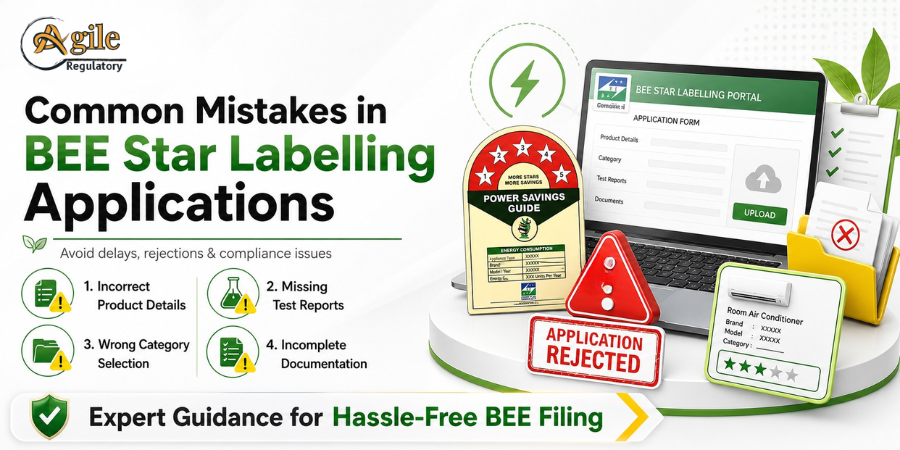




Leave a Reply
Your email address will not be published. Required fields are marked *