Not all products follow the same route. The scheme depends on what you make and where it is manufactured.
|
Scheme
|
Who it applies to
|
What it involves
|
|
ISI Mark Certification
|
Indian manufacturers
|
Testing + factory inspection
|
|
BIS CRS Registration
|
Electronics products
|
Lab testing + online filing
|
|
FMCS BIS Certification
|
Foreign manufacturers
|
Inspection + compliance
|
|
Hallmark Registration
|
Jewellery sellers
|
Purity verification
|
|
Ecomark Scheme
|
Eco-friendly products
|
Environmental standards
|
Selecting the wrong scheme is one of the most common mistakes and can increase your BIS certification fees unnecessarily.
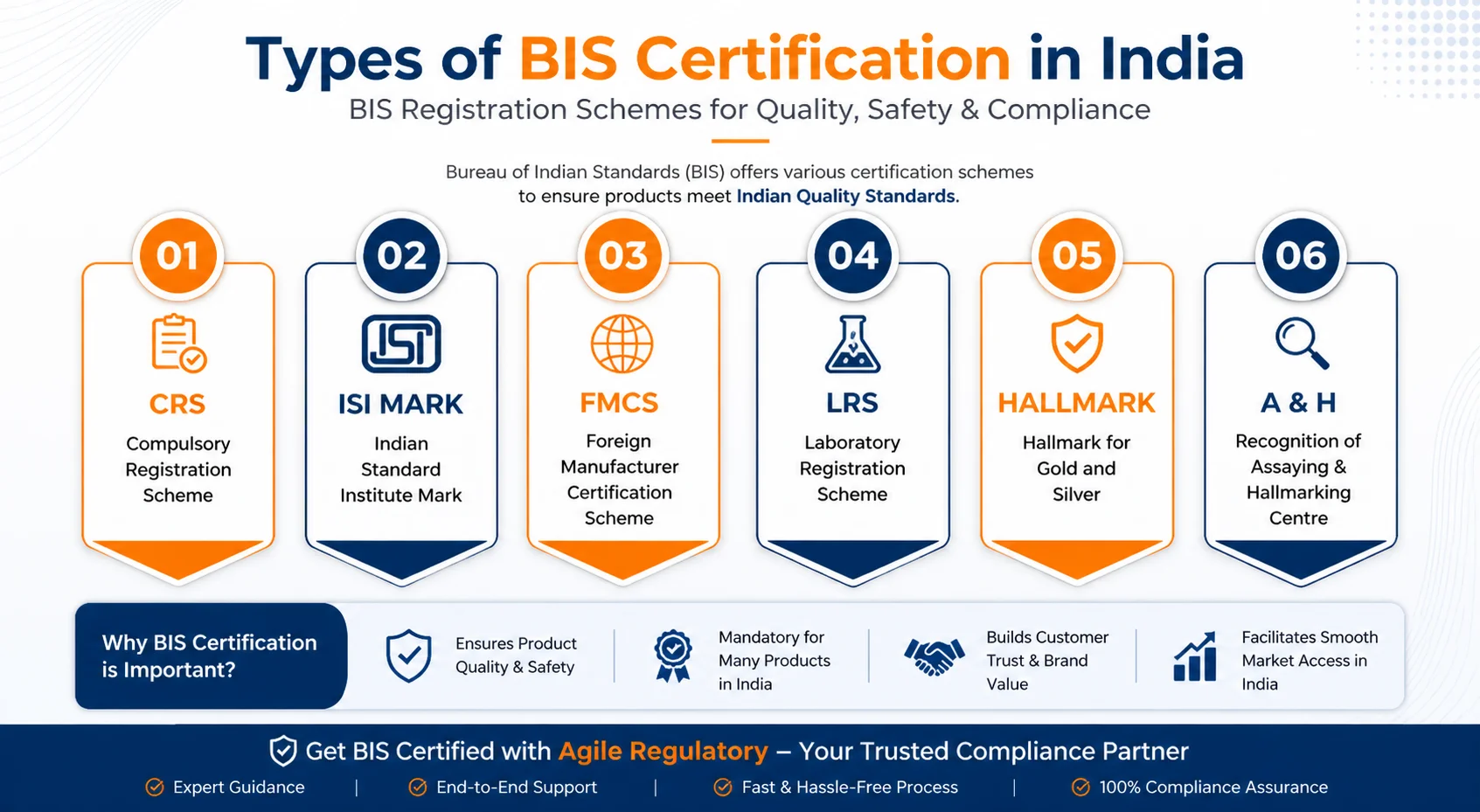
1. ISI Mark Certification (Scheme-I)
ISI Mark Certification is a product quality certification issued by Bureau of Indian Standards (BIS) of India. ISI mark ensures that the product is conforming to the relevant Indian Standard (IS) in respect of safety, quality, durability and performance. It is one of the oldest and most trusted certification marks in India and is mandatory for various products before they can be sold in the Indian market.
The main aim of ISI Certification is to secure the consumers from unsafe or inferior quality products and to see that the manufacturers follow standardised production procedures. Products with ISI mark are considered reliable as these are tested and verified as per the BIS regulations.
ISI Certification is a must for several products. They are as follows:
-
Electrical household goods
-
Cement & construction materials
-
Pressure-cookers
-
Steel and products of steel
-
Households goods
-
Machinery industry
-
Wires, cables
-
Gas appliances
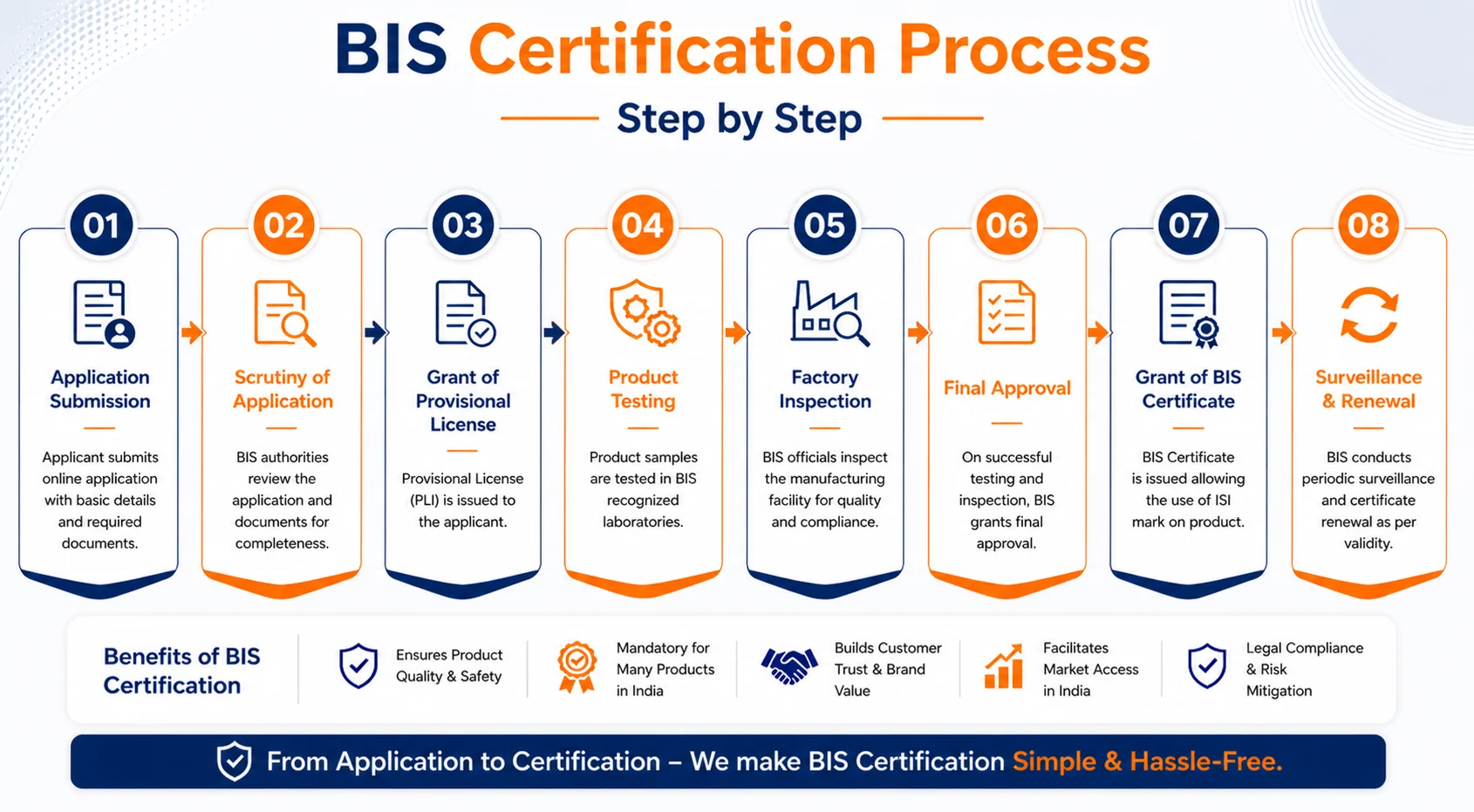
The manufacturers applying for ISI Certification shall conform to the applicable Indian Standard (IS Code) for their product category. The certification process includes testing of the product at BIS approved laboratories, submission of technical documents and inspection of the manufacturing facility by BIS officials.
At the time of factory inspection, BIS authorities check:
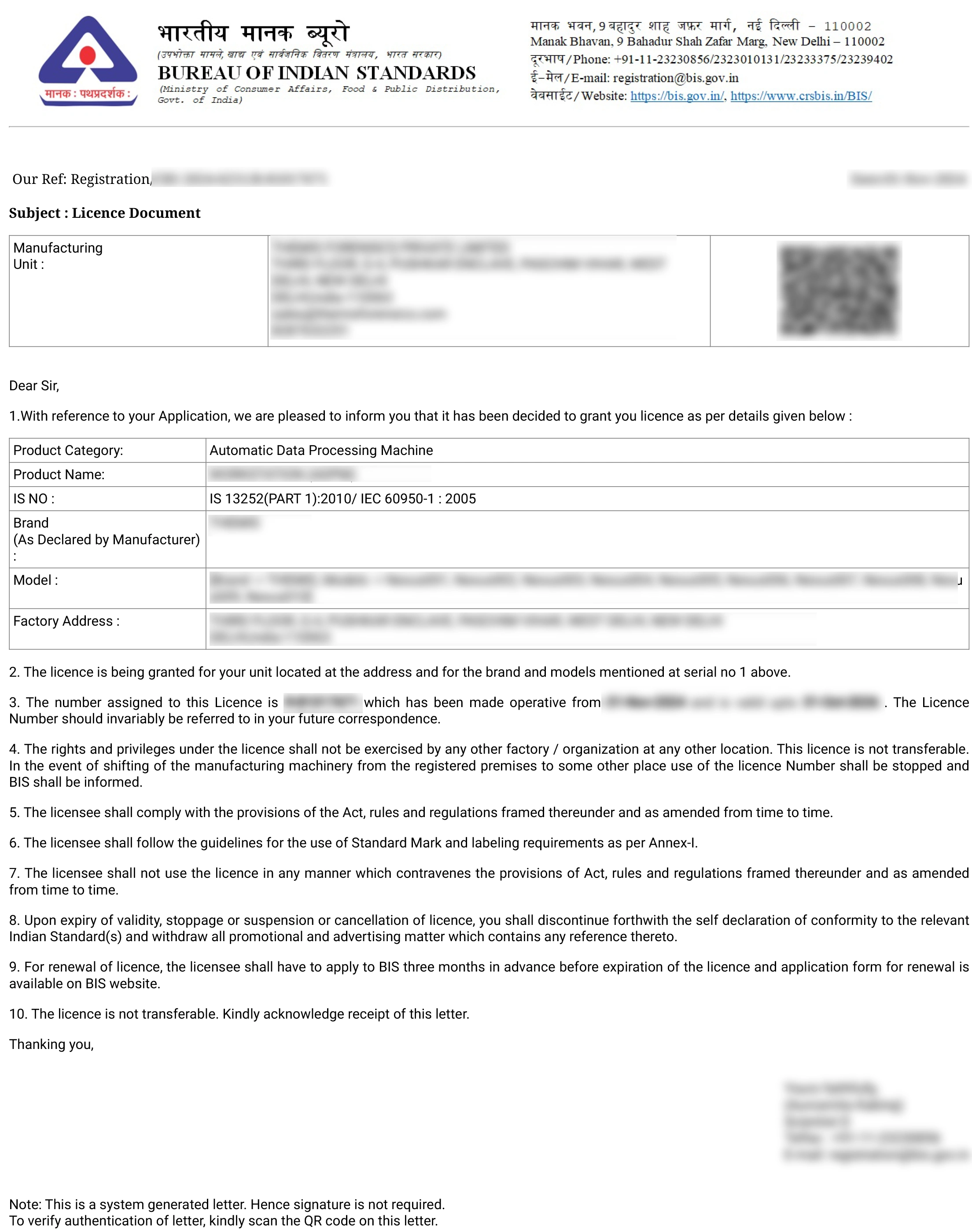
Once the verification is successful and the approval is given, BIS issues the ISI license to the manufacturer for using the ISI mark on the certified products.
Important aspects of ISI mark certification Mandatory for regulated products
Most of the products notified under Quality Control Orders (QCOs) need to be mandatorily covered under ISI certification before sale or distribution in India.
Product Testing Needed
Products undergo testing in BIS recognized laboratories to ensure conformity to Indian safety and quality standards.
Factory Inspection & Audit
BIS conducts factory inspections to check the manufacturing practices and quality control measures.
Annual watchfulness
Certified manufacturers are regularly subjected to surveillance inspections and testing to verify ongoing compliance.
Market Acceptance and Consumer Trust
The ISI mark boosts the confidence of consumers and enhances the credibility of the products in the market.
Legal Compliance
ISI certification assists businesses to comply with the regulatory requirements of India and helps them avoid penalties or restrictions.
2. CRS Registration: Compulsory Registration Scheme
BIS CRS Registration mainly applies to electronics such as LED lights, mobile chargers, laptops, and similar equipment. Under this scheme, products cannot be sold in the Indian market unless they have been tested and registered in advance. The focus here is on product safety. Manufacturers are required to get samples tested from BIS-recognized labs and complete registration before launch. It is commonly used for fast-moving electronic goods where large-scale distribution is involved.
- Mandatory CertificationCRS approval is compulsory for products such as LED lights, mobile phones, chargers, laptops, adapters, and other IT equipment. Without CRS registration, these products cannot be legally sold or imported in India.
- Product Safety FocusThe main objective is to ensure that electronic products are safe for consumers. All products must comply with relevant Indian Standards (IS), which define safety, performance, and quality requirements.
- Lab Testing RequirementManufacturers must send product samples to BIS-recognized testing laboratories. These labs check electrical safety, performance, and durability as per Indian standards before approval.
- Online Registration SystemThe entire application process is handled through the BIS online portal, making it transparent, faster, and paperless.
- No Initial Factory InspectionUnlike other BIS certification schemes, CRS does not require a factory inspection at the initial stage, which reduces time and cost.
- Approval Based on Test ReportsCertification is granted after careful review of test reports and submitted documents. If the product meets all standards, approval is issued.
- Unique Registration NumberOnce approved, manufacturers receive a BIS CRS registration number. This number must be printed on the product or packaging for legal sale in India.
- Importance of Accurate DocumentationProper and accurate documentation is crucial. Any mistake in test reports or application details can lead to delays or rejection of the application.
3. FMCS: Foreign Manufacturer Certification Scheme
If your products are manufactured outside India, FMCS BIS certification becomes necessary. This route is meant for foreign companies looking to enter the Indian market. Unlike CRS, it does not stop at lab testing. BIS officials physically inspect the manufacturing unit to verify that production processes meet Indian standards on a consistent basis. Because the manufacturing happens overseas, the checks are more detailed and involve direct coordination with Indian authorities.
-
Required for BIS Certification for Import
-
Includes factory inspection by BIS
-
Needs an Authorized Indian Representative Without this, imported goods won’t clear entry into India.
4. Hallmark Registration for Gold & Silver
Jewelry businesses must follow hallmarking rules. This requirement is in place to make sure that gold and silver items sold in the market match the purity levels being claimed. Sellers, whether manufacturers or retailers, cannot offer hallmarked jewelry unless they are registered. It brings a level of standardization that protects buyers from getting lower-purity metal than what they paid for.
5. Assaying and Hallmarking Centre
These centers test the purity of precious metals before hallmarking. They function as independent testing units approved by BIS, where jewelry is checked for its actual metal content. Only after passing this stage can a product receive a hallmark stamp. This step ensures that purity claims are not based on assumption but on verified testing.
6. Ecomark Scheme
This applies to products that meet environmental standards. It is meant for goods that are produced with lower environmental impact compared to regular alternatives. The scheme looks at factors like how raw materials are sourced, how energy is used during production, and how waste is handled. Products that meet these conditions can carry the Ecomark alongside standard BIS certification
7. Laboratory Recognition Scheme
Only BIS-approved labs can test products. This ensures that the testing process follows a fixed standard and that the results submitted for certification are reliable. If a product is tested at a lab that is not recognized by BIS, the report will not be accepted regardless of the outcome. This rule exists to avoid inconsistencies in testing quality
8. Management System Certification Scheme
This scheme focuses on systems rather than products. It is used by organizations that want to show that their internal processes, especially around quality and operations, follow a structured approach. Instead of testing individual products, the emphasis is on how consistently the organization manages its work, from production to delivery.