


Get Instant Solution By an Expert Advisor
(4.8)
Fast replies · No spam · Real experts

The demand for medical oxygen has always existed. But the pandemic showed us how urgent and widespread that need can become. Hospitals across India struggled. Patients waited. Families watched helplessly. In those moments, the value of a steady oxygen supply became clearer than ever before.
That crisis shifted how people see the medical oxygen industry. What was once a backend process, run quietly by a few manufacturers, is now a critical part of public health. Many entrepreneurs have started looking at this sector—not just as a business—but as a service to life itself.
This guide will help you understand how to set up a medical oxygen manufacturing plant in India. It covers permissions, compliance, equipment, manpower, costs, and the steps you need to follow
India’s healthcare sector keeps growing. Hospitals and clinics keep expanding, even in small cities. Medical oxygen is needed everywhere—from ambulances to ICUs.
During COVID-19, India’s daily oxygen demand jumped from 700 MT to over 9000 MT. While that level may not stay constant, it showed us what could happen. Today, the goal is to stay ready before another crisis hits.
Not all plants are the same. Before you apply for any license, you must decide what kind of oxygen plant you want to build. In India, medical oxygen plants are usually of three types:
This type produces oxygen by liquefying air and separating gases through distillation. It is expensive to set up but produces high-purity oxygen. These plants are suitable for large-scale production.
PSA plants use a molecular sieve to extract oxygen from air. These are quicker to install, cheaper to run, and ideal for small to mid-size hospitals.
These plants don’t produce oxygen but store and fill it in cylinders for delivery. These are good if you can source bulk oxygen from somewhere else.
The land must meet legal, technical, and safety conditions. Pick a site that is:
The built-up area depends on the plant size, but typically, for a PSA unit, at least 2,000 to 5,000 sq. ft. is needed. Cryogenic plants may need more—up to 20,000 sq. ft.
Running a medical oxygen plant in India requires clearances from several departments. Here’s what you’ll need:
You must first register your business with the Ministry of Corporate Affairs. You can choose from:
Choose a structure that helps you get funding and scale operations.
Under the Factories Act, 1948, you must get a factory license from the state labor department. This ensures your plant meets safety and operational standards.
Apply for Consent to Establish (CTE) and Consent to Operate (CTO) from the State Pollution Control Board. Oxygen plants use electricity and release no harmful waste, but approval is still mandatory.
As medical oxygen is classified as a drug under the Drugs and Cosmetics Act, 1940, you must get a drug manufacturing license (Form 28) from your State Drug Control Department.
Requirements include:
If your plant stores large amounts of compressed gas or uses high-pressure cylinders, you may also need clearance from the Petroleum and Explosives Safety Organization (PESO).
For an oxygen plant to run well, you must invest in reliable, tested equipment. This includes:
Buy from certified vendors. Ensure all machinery follows BIS (Bureau of Indian Standards) norms.
Don't forget to plan backup power (generators or UPS) to prevent downtime during blackouts.
A plant is only as good as the people who run it. For daily operations, you’ll need:
Train them in safety protocols. Mistakes in oxygen handling can be fatal.
Setting up a medical oxygen plant in India is both a challenge and an opportunity. It takes technical skill, legal knowledge, and a clear vision. But most of all, it takes commitment—because lives may depend on what you build.
If you want to enter a high-impact industry, this is one of the few that blends business with service. The margins are steady. The demand is reliable. And the impact is real.
Need help getting started? Contact us today to learn how we can assist you with oxygen plant setup, compliance, and licensing support. Our team at Agile Regulatory has helped businesses across India build safe and successful medical oxygen plants. Let us help you next.


You might also be interested in these articles.
Divya Saxena
20 Aug 2026
CDSCO registration for disposable medical devices in India is an important regulatory requirement for eligible manufacturers and importers. Learn about the CDSCO registration process, documents, fees, medical device classification, applicable forms, and c
Nishi Chawla
06 Jun 2026
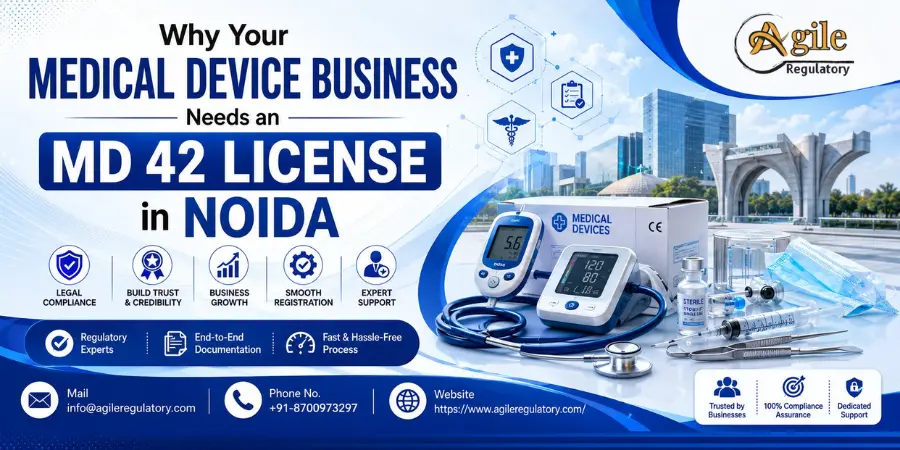
MD 42 License in Noida is essential for medical device manufacturers and importers to ensure legal compliance, build market credibility, avoid penalties, and expand business opportunities.
Nishi Chawla
05 Jun 2026
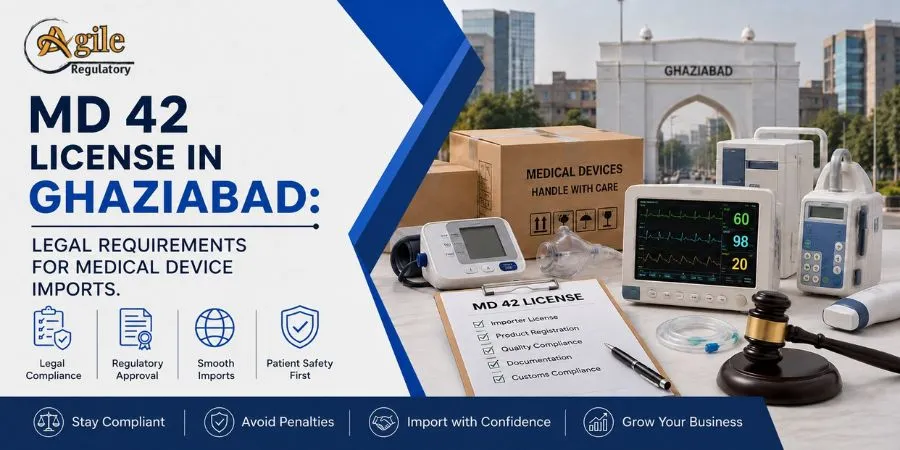
MD 42 License is a mandatory authorization for importing medical devices into India. Businesses in Ghaziabad involved in medical device imports must comply with CDSCO regulations and obtain the necessary approvals before importing products.
Nishi Chawla
06 Mar 2026
In 2026, medical devices in India must be registered and licensed under the Medical Devices Rules, 2017 regulated by the Central Drugs Standard Control Organization (CDSCO).
Divya Saxena
02 Mar 2026
The 2026 update on CDSCO classification of medical devices clarifies risk-based categories, expands software and AI regulation, and strengthens compliance requirements.
We simplify compliance through a proven 4-step process: Consultation, Documentation, Submission, and certification. From understanding requirements to getting final approvals, we deliver a smooth, timely, and fully compliant journey for your business.


What our customer says about us
Lavkush Sharma
KTPL Instruments
Agile Regulatory handled my BIS Certification registration smoothly. Their expert team ensured quick approvals, transparent pricing, and a completely stress-free compliance experience.

Nitin Mukesh
Justrack IOT
We are grateful to Agile Regulatory for their excellent support. Their team showed patience, expertise, and professionalism throughout, providing clear guidance and making the entire process smooth and hassle-free.
Pradeep Varma
Coaire Compressor
Being an excellent BIS Certification Consultant provider, they help customers with all requirements such as BIS Certification, CDSCO services, Agile Regulatory support, legal issues, and lab testing with quick results.
Bharat Bachwani
Easy Polymer
With the help of Agile Regulatory, we have made significant progress in our business. Their service is fast, genuine, and reliable. We look forward to continued success together in the future.
Atul Jain
Tarus International
Many thanks to Agile Regulatory for all the support, guidance, and expert advice. Their professional approach and consistent assistance have made a significant difference.

Paramjeet Singh
Anchor Weighing
Top-tier consulting! offered strategic solutions that revolutionized our approach. Their deep expertise and personalized guidance made a significant impact on our success. Highly recommend their services.
Anshul Rathi
AM Capacitor
Agile Regulatory exceeded expectations! Their tailored solutions, expertise, and proactive approach led to remarkable results. Highly recommend for businesses seeking impactful and strategic guidance.

Shekhar Maurya
Imaxx Pro Aquistic
Outstanding service! delivered targeted solutions with professionalism and expertise. Their insights elevated our business strategies, resulting in noticeable growth. Highly recommended for exceptional consultation.
Trusted by over 1,00,000 + Global Brands in the past 15+ years



.webp)


Leave a Reply
Your email address will not be published. Required fields are marked *