

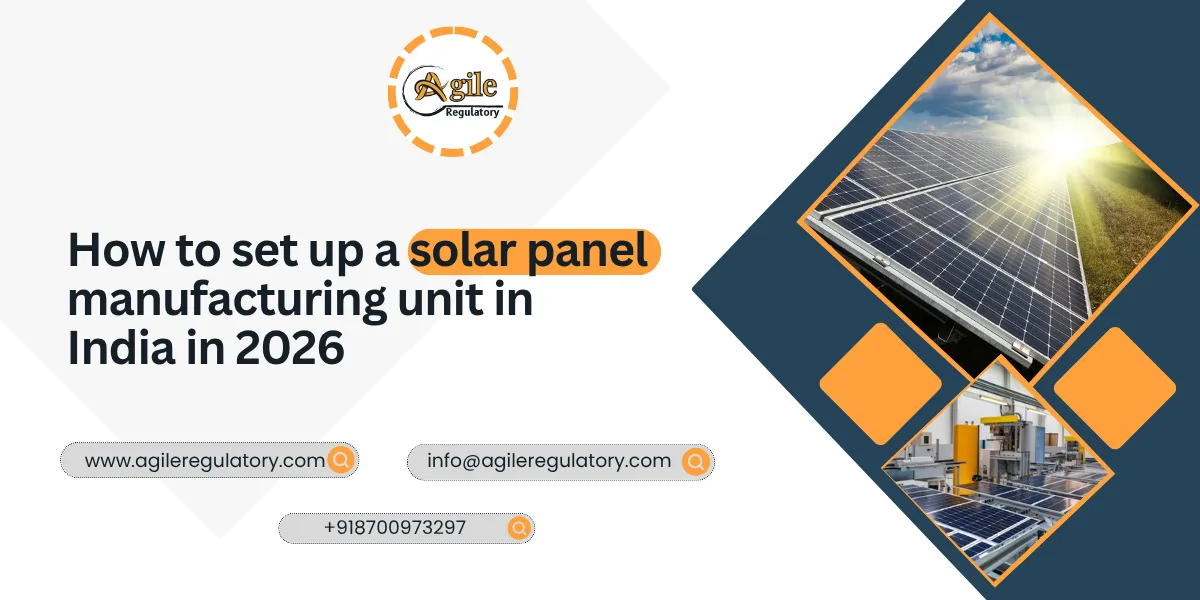
India has set ambitious renewable energy targets, aiming for hundreds of gigawatts of solar capacity in the coming years. This has created a massive demand for domestically manufactured solar panels. Government initiatives like “Make in India” and production-linked incentives are encouraging entrepreneurs to invest in this sector.
A solar panel, or photovoltaic (PV) module, converts sunlight into electricity. The manufacturing process involves several stages, starting from raw materials like silicon and ending with a finished panel. The value chain includes polysilicon production, wafer manufacturing, solar cell fabrication, and module assembly.
For beginners, starting with a solar module assembly unit is more feasible, as it requires lower investment and simpler technology compared to full-scale cell manufacturing.
There are multiple ways to enter the solar manufacturing industry:
India’s solar market is expanding due to increasing adoption in residential, commercial, and utility-scale sectors. While domestic production is growing, there is still dependence on imports, especially for solar cells and wafers. This gap creates an opportunity for local manufacturers.
Prices of solar panels in 2026 typically range between ₹22 and ₹45 per watt depending on quality and technology, leaving room for competitive pricing and profit margins.
To start a solar panel manufacturing unit in India, you must complete several registrations:
The Indian government provides strong support through:
A small-scale solar module manufacturing unit typically requires 10,000 to 50,000 square feet of space. The facility must include a clean production environment, reliable electricity supply, and proper logistics access.
Choosing a location in an industrial zone or solar manufacturing cluster can reduce costs and improve supply chain efficiency.
The core machinery required for a module assembly unit includes:
Automation levels can vary from semi-automatic to fully automated systems. Higher automation improves efficiency but increases initial investment.
Key raw materials include the following:
The investment depends on the scale of the project:
Costs include machinery, land, labor, raw materials, and utilities. Profit margins typically range from 8% to 15%, depending on efficiency and market conditions. Break-even can be achieved within 3–5 years.
The manufacturing process involves:
A typical unit requires the following:
To succeed in the market, focus on:
Key challenges include the following:
Careful planning and continuous innovation are essential to overcome these risks.
The future of solar manufacturing in India looks promising. Emerging technologies like TOPCon and bifacial panels are improving efficiency. With increasing domestic demand and export opportunities, India is on track to become a global solar manufacturing hub.
Setting up a solar panel manufacturing unit in India in 2026 is a lucrative opportunity driven by strong demand and government support. While it requires significant investment and planning, the long-term benefits can be substantial. Entrepreneurs who focus on quality, efficiency, and compliance can build a successful and sustainable business in this rapidly growing industry.


We simplify compliance through a proven 4-step process: Consultation, Documentation, Submission, and certification. From understanding requirements to getting final approvals, we deliver a smooth, timely, and fully compliant journey for your business.


What our customer says about us
Lavkush Sharma
KTPL Instruments
Agile Regulatory handled my BIS Certification registration smoothly. Their expert team ensured quick approvals, transparent pricing, and a completely stress-free compliance experience.

Nitin Mukesh
Justrack IOT
We are grateful to Agile Regulatory for their excellent support. Their team showed patience, expertise, and professionalism throughout, providing clear guidance and making the entire process smooth and hassle-free.
Pradeep Varma
Coaire Compressor
Being an excellent BIS Certification Consultant provider, they help customers with all requirements such as BIS Certification, CDSCO services, Agile Regulatory support, legal issues, and lab testing with quick results.

Bharat Bachwani
Easy Polymer
With the help of Agile Regulatory, we have made significant progress in our business. Their service is fast, genuine, and reliable. We look forward to continued success together in the future.

Atul Jain
Tarus International
Many thanks to Agile Regulatory for all the support, guidance, and expert advice. Their professional approach and consistent assistance have made a significant difference.

Paramjeet Singh
Anchor Weighing
Top-tier consulting! offered strategic solutions that revolutionized our approach. Their deep expertise and personalized guidance made a significant impact on our success. Highly recommend their services.
Anshul Rathi
AM Capacitor
Agile Regulatory exceeded expectations! Their tailored solutions, expertise, and proactive approach led to remarkable results. Highly recommend for businesses seeking impactful and strategic guidance.

Shekhar Maurya
Imaxx Pro Aquistic
Outstanding service! delivered targeted solutions with professionalism and expertise. Their insights elevated our business strategies, resulting in noticeable growth. Highly recommended for exceptional consultation.
Trusted by over 1,00,000 + Global Brands in the past 15+ years






Leave a Reply
Your email address will not be published. Required fields are marked *