


Get Instant Solution By an Expert Advisor
(4.8)
Fast replies · No spam · Real experts
.webp)
If you’re importing goods into India electronics, cosmetics, packaged food, even basic consumer products there’s one problem that doesn’t show up until it’s too late. Your shipment reaches India. Customs holds it. And suddenly someone asks for an LMPC certificate.
If you haven’t already sorted it, you’re not just delayed you’re stuck.
This is one of those compliances that people ignore in the beginning because nothing goes wrong initially. But the moment enforcement kicks in, everything stops.
So instead of figuring it out at the port it’s better to understand what this certificate actually is and how you’re supposed to get it
LMPC stands for Legal Metrology Packaged Commodities. It comes under the Legal Metrology Act, 2009.
The idea is simple: if you’re selling packaged goods in India, the consumer should know exactly what they’re getting.
So the law requires certain declarations on packaging:
If you’re importing pre-packaged goods, you fall under this.
And that’s where the LMPC certificate comes in.
The certificate is not for the product.
It’s for you as the importer.
You’re basically registering yourself as someone who brings packaged goods into India and ensures they meet labeling rules.
So even if your supplier abroad has done everything correctly, you’re still responsible once the goods enter India.
If your imported goods are:
then LMPC applies.
This includes:
If your product is unpacked or industrial-use-only, things may differ. But most consumer goods fall under LMPC requirements.
LMPC Legal Metrology Registration Process in Punjab
Customs authorities check whether your goods comply with labeling rules.
If you don’t have LMPC registration:
And delays at ports are expensive. Storage, demurrage, everything adds up.
There’s no point making this sound complicated. It’s not. But it does need attention.
You need to be a registered business entity.
That could be:
You’ll also need:
Without these, you don’t even reach the LMPC stage.
You apply to the Controller of Legal Metrology in your state.
This is not handled centrally it’s state-level.
So if you’re based in Delhi, Maharashtra, Gujarat, wherever you apply to that state’s authority.
The application is usually filed online or through the state portal
You’ll need:
The label part matters more than people expect.
If your labels don’t meet requirements, you’ll be asked to fix them before approval.
Once submitted, the department reviews your application.
They check:
If something doesn’t match, you’ll get queries.
And this is where timelines stretch.
If everything is in order, you receive your LMPC certificate.
This allows you to import and sell packaged goods legally in India.
Your packaging must include:
If any of this is missing, your goods may not be cleared smoothly. (consumeraffairs.nic.in)
Typically:
Delays happen when:
So again, the issue is not the process it’s preparation.
LMPC is not a one-time checkbox.
You need to:
If authorities find non-compliance later, penalties can apply.
You don’t get flexibility here.
Possible outcomes:
Once your shipment is stuck, fixing things becomes slower and more expensive.
Enforcement has become stricter.
Earlier, some shipments passed without detailed checks. That’s no longer reliable.
Now:
So assuming “it will pass” is a bad strategy.
LMPC certification is one of those things that feels minor until it blocks your shipment.
If you’re importing packaged goods, you need to handle this before your goods arrive not after.
The process itself is straightforward. What causes trouble is incomplete documentation, incorrect labeling, or applying too late.
If you want to avoid shipment delays and repeated corrections, working with a team like Agile Regulatory can help you get your LMPC registration and labeling right from the beginning.


You might also be interested in these articles.
Nishi Chawla
09 Jun 2026
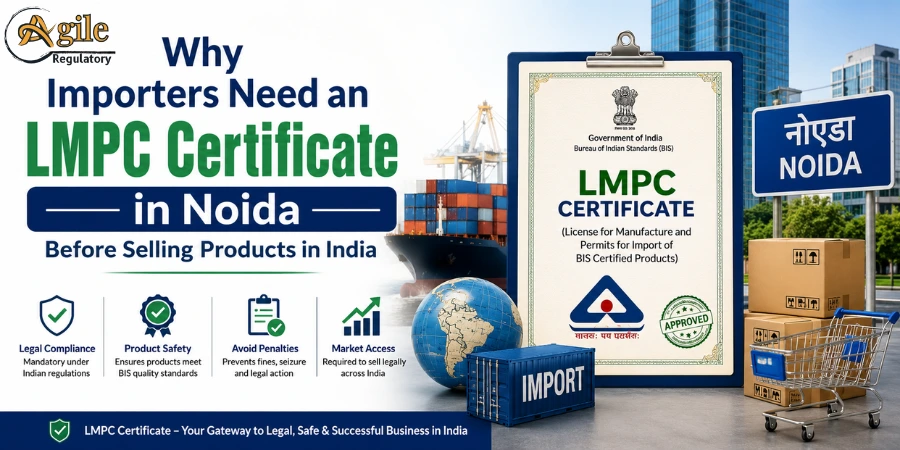
Planning to import and sell packaged products in India? An LMPC Certificate in Noida is essential for legal compliance under Legal Metrology regulations. It helps importers avoid penalties, ensures accurate product labeling, and enables smooth market entr
Nishi Chawla
09 Jun 2026
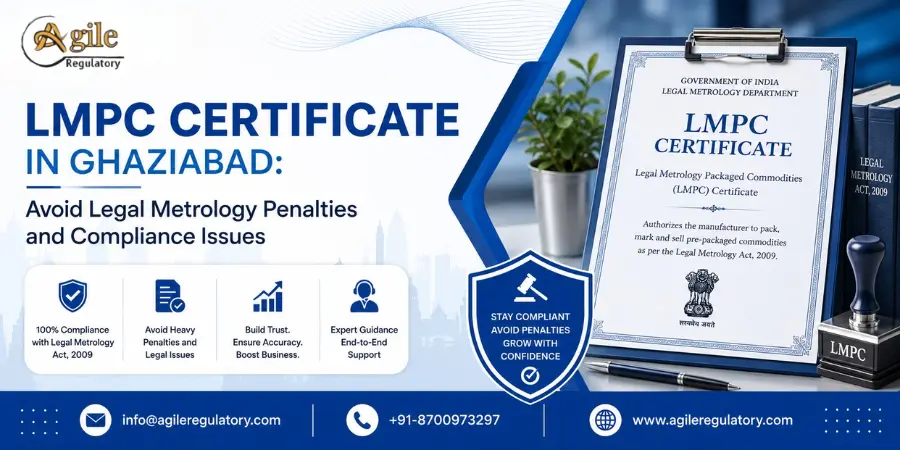
Obtaining an LMPC Certificate in Ghaziabad is essential for importers, manufacturers, and packers dealing with pre-packaged commodities. The certificate ensures compliance with Legal Metrology regulations, prevents penalties, and avoids business disruptio
Nishi Chawla
17 Apr 2026
The LMPC Certificate in India is mandatory for importers and manufacturers dealing with pre-packaged commodities under Legal Metrology laws. This guide explains the LMPC registration process, required documents, eligibility criteria, and compliance requir
We simplify compliance through a proven 4-step process: Consultation, Documentation, Submission, and certification. From understanding requirements to getting final approvals, we deliver a smooth, timely, and fully compliant journey for your business.


What our customer says about us

Lavkush Sharma
KTPL Instruments
Agile Regulatory handled my BIS Certification registration smoothly. Their expert team ensured quick approvals, transparent pricing, and a completely stress-free compliance experience.

Nitin Mukesh
Justrack IOT
We are grateful to Agile Regulatory for their excellent support. Their team showed patience, expertise, and professionalism throughout, providing clear guidance and making the entire process smooth and hassle-free.
Pradeep Varma
Coaire Compressor
Being an excellent BIS Certification Consultant provider, they help customers with all requirements such as BIS Certification, CDSCO services, Agile Regulatory support, legal issues, and lab testing with quick results.

Bharat Bachwani
Easy Polymer
With the help of Agile Regulatory, we have made significant progress in our business. Their service is fast, genuine, and reliable. We look forward to continued success together in the future.

Atul Jain
Tarus International
Many thanks to Agile Regulatory for all the support, guidance, and expert advice. Their professional approach and consistent assistance have made a significant difference.

Paramjeet Singh
Anchor Weighing
Top-tier consulting! offered strategic solutions that revolutionized our approach. Their deep expertise and personalized guidance made a significant impact on our success. Highly recommend their services.

Anshul Rathi
AM Capacitor
Agile Regulatory exceeded expectations! Their tailored solutions, expertise, and proactive approach led to remarkable results. Highly recommend for businesses seeking impactful and strategic guidance.

Shekhar Maurya
Imaxx Pro Aquistic
Outstanding service! delivered targeted solutions with professionalism and expertise. Their insights elevated our business strategies, resulting in noticeable growth. Highly recommended for exceptional consultation.
Trusted by over 1,00,000 + Global Brands in the past 15+ years


.webp)

.webp)

Leave a Reply
Your email address will not be published. Required fields are marked *