

Get Instant Solution By an Expert Advisor
(4.8)

In India, Extended Producer Responsibility (EPR) for import, particularly for electronic garbage (E-waste), is a crucial waste management strategy. EPR permission is issued by the Ministry of Environment, Forests, and Climate Change's Central Pollution Control Board (CPCB).
Electronic manufacturers receive an Indian EPR Certificate or Authorization, often referred to as an E-Waste Management license, which is a legal obligation to manage electronic waste in an environmentally responsible way. It guarantees that producers and importers assume responsibility for the whole life cycle of their products, including appropriate disposal and recycling, and is issued by the Central Pollution Control Board (CPCB).
A legislative framework known as Extended Producer Responsibility, or EPR, transfers financial accountability for waste disposal from municipal governments to the producers of plastic packaging. In addition to providing recycling with much-needed funds and efficiency, implementing a national EPR system in India can encourage package designers to produce reusable or recyclable goods. This strategy promotes ways to lessen the impact of items on the environment. EPR guarantees customer access to recycling and equity in doing so, while also streamlining recycling processes.
With an EPR certificate, importers are able to:
Importers must submit a number of documentation in order to receive an EPR Certificate in India, including:
 Name of Company and Details
Information of the Appointed Representative
GST Certificate together with PAN Card
Corporate Identification Number (CIN)
Certificate of Importer Exporter Code (IEC)
Details of Aadhar Card
PAN Card Details
Scannable Signatures of Licensed Staff
Cover Letter
Additional supporting documents
The following steps are included in the EPR certification process for acquiring an EPR Certificate in India:
Step 1: Compile all the paperwork needed for the EPR certification procedure.
Step 2: In accordance with the regulatory authority's rules and specifications, submit the necessary documents to the authorities.
Step 3: To confirm compliance with EPR requirements, an evaluation will be carried out by the regulatory body.
Step 4: The documents presented will be examined by the regulatory body.
Step 5: The importer will get the EPR Registration Certificate from CPCB following a successful review and approval process.
EPR certificate is required for importer in order to create a sustainable environment. A reliable company like Agile Regulatory can offer advice and guidance, which makes the process of getting an EPR Certification much easier and more effective.
Post Views: 885


.webp)
Nishi Chawla
29 Apr, 2026
Nishi Chawla
28 Apr, 2026
Nishi Chawla
28 Apr, 2026
Nishi Chawla
27 Apr, 2026
Nishi Chawla
27 Apr, 2026
Get Instant Solution By an Expert Advisor
(4.8)
You might also be interested in these articles.
Nishi Chawla
15 Apr 2026
EPR applications in India often get rejected due to incomplete documentation, incorrect details, or non-compliance with guidelines set by the Central Pollution Control Board. This 2026 guide explains the common reasons for rejection and provides practical
Divya Saxena
24 Mar 2026
EPR credits are earned via certified recyclers processing e-waste, enabling producers to meet targets, maintain compliance, and support sustainable waste management.
Vanshika Mathur
24 Mar 2026
Businesses can obtain EPR (Extended Producer Responsibility) credits by purchasing them from CPCB-authorized Plastic Waste Processors (PWPs). These processors recycle plastic waste and generate credits on the Central Pollution Control Board portal. Compan
Vanshika Mathur
13 Mar 2026
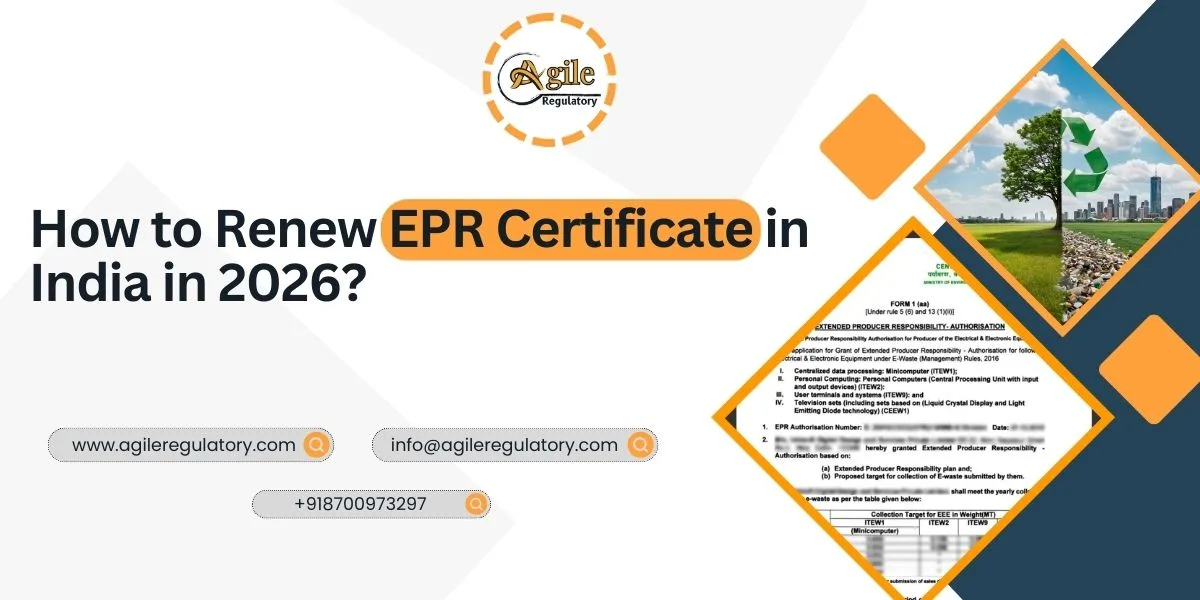
Renewing an EPR certificate is essential for businesses dealing with e-waste, plastic, batteries, or tyres in India. This guide explains the EPR renewal process, documents required, and timelines for 2026. Learn how to stay compliant with CPCB regulatio
Nishi Chawla
02 Feb 2026
Find the best EPR consultant in Gurugram and Haryana in 2026 to help your business comply with Extended Producer Responsibility regulations efficiently and effectively.
Nishi Chawla
02 Feb 2026
Looking for the best EPR consultant in Noida and UP in 2026? Agile Regulatory offers expert guidance, compliance support, and hassle-free Extended Producer Responsibility solutions for businesses across the region.
We simplify compliance through a proven 4-step process: Consultation, Documentation, Submission, and certification. From understanding requirements to getting final approvals, we deliver a smooth, timely, and fully compliant journey for your business.


What our customer says about us
Lavkush Sharma
KTPL Instruments
Agile Regulatory handled my BIS Certification registration smoothly. Their expert team ensured quick approvals, transparent pricing, and a completely stress-free compliance experience.

Nitin Mukesh
Justrack IOT
Agile Regualtory delivers exceptional solutions. Their insightful guidance streamlined our processes and boosted profitability. Highly recommended for businesses seeking expert consulting services to thrive.
Pradeep Varma
Coaire Compressor
Impressed by Agile Regulatory's expertise. Their strategic insights and practical solutions have elevated our business operations. A reliable partner for effective consulting services. Highly recommended for growth-focused businesses.

Bharat Bachwani
Easy Polymer
Extraordinary consulting services. Their insightful solutions and dedicated team reshaped our business, driving remarkable improvements. Highly recommend it for transformative results.

Atul Jain
Tarus International
Incredible experience with Agile Regulatory. Their innovative strategies and expert advice revitalized our business model, resulting in impressive growth. Highly recommend their exceptional consulting services.

Paramjeet Singh
Anchor Weighing
Top-tier consulting! offered strategic solutions that revolutionized our approach. Their deep expertise and personalized guidance made a significant impact on our success. Highly recommend their services.
Anshul Rathi
AM Capacitor
Agile Regulatory exceeded expectations! Their tailored solutions, expertise, and proactive approach led to remarkable results. Highly recommend for businesses seeking impactful and strategic guidance.

Shekhar Maurya
Imaxx Pro Aquistic
Outstanding service! delivered targeted solutions with professionalism and expertise. Their insights elevated our business strategies, resulting in noticeable growth. Highly recommended for exceptional consultation.
Trusted by over 1,00,000 + Global Brands in the past 15+ years


.webp)



Leave a Reply
Your email address will not be published. Required fields are marked *