


Get Instant Solution By an Expert Advisor
(4.8)
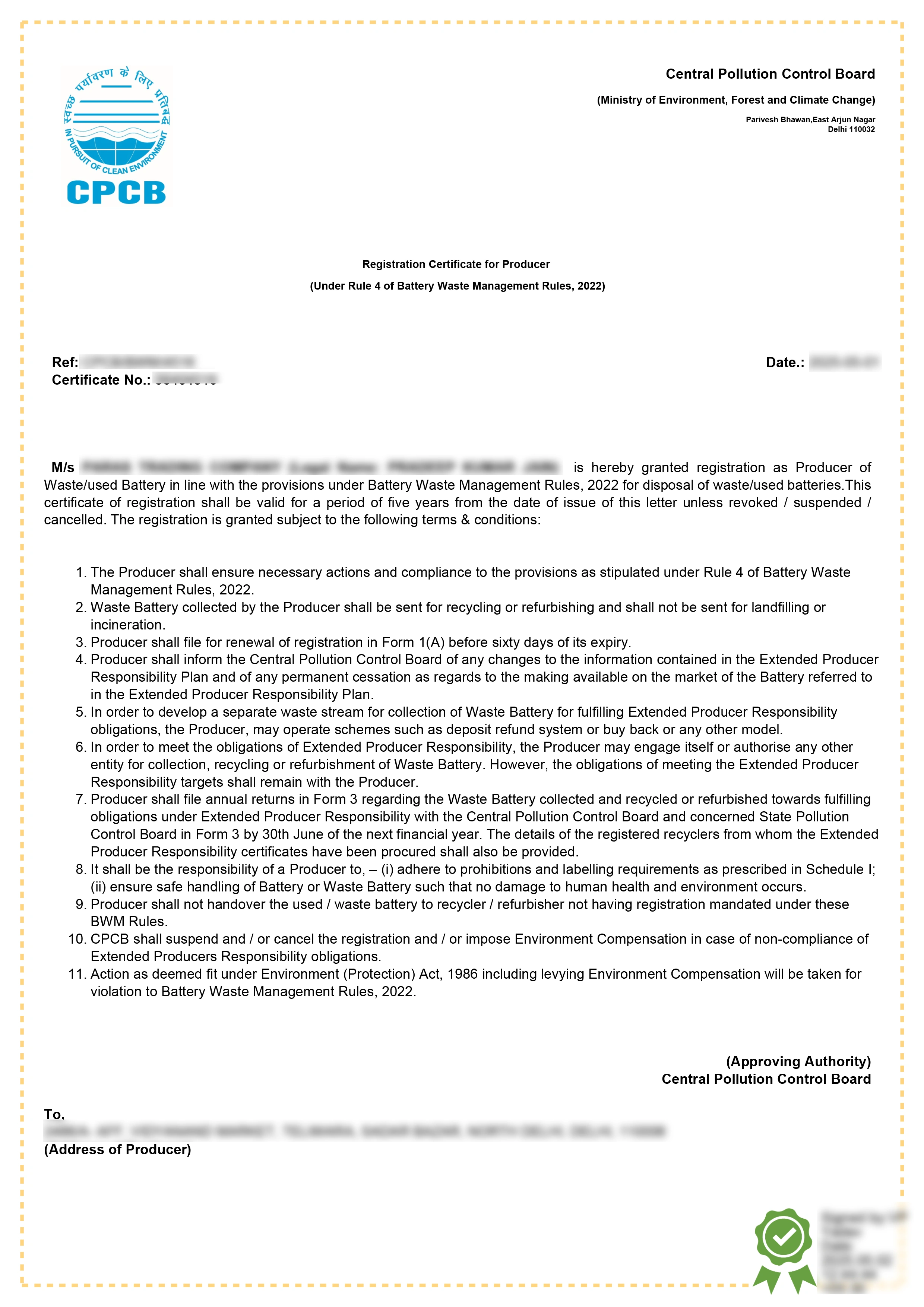
When you are growing a business in regulated sectors product approvals and import licences are just the beginning. Under India's Extended Producer Responsibility (EPR) framework, Indian companies dealing in electrical and electronic equipment are also subject to environmental compliance requirements. EPR certificate India is a law that holds producers, importers and brand owners responsible for e-waste management and recycling. EPR ensures compliance with environmental laws.





Get personalized guidance in minutes - no waiting, no bots.


10000 +
Projects Completed for Our Respected Clients.

15 +
Years Experienced Advisors in Indian Compliance.

98.9%
Project Delivery Ratio for Our Valuable Clients.

99.9%
Satisfied Customers All Over India.
How to apply for EPR Certificate online EPR Certificate Application Guide – How to obtain EPR Certificate for Import E Waste Certificate Apply online Below are some of the search terms used by businesses looking to understand the registration process and the documentation required. The other question asked often is the EPR certificate cost in India which varies as per different business categories, products and compliance requirements. Agile Regulatory helps manufacturers, importers and brand owners in the complete EPR registration process from the preparation of documents, submission of applications to CPCB till getting certificates, so that they can achieve compliance with EPR regulations efficiently and on time.
An EPR Certification is an official registration issued by the Central Pollution Control Board (CPCB) under the Extended Producer Responsibility framework of India. It allows producers, importers and brand owners to produce, import or sell regulated products while meeting their environmental obligations. Registered entities have to follow the prescribed recycling targets and use services of authorised recyclers, maintain digital records and submit periodic compliance reports through CPCB portal. Without a valid EPR certificate, businesses face penalties, import restrictions, product delisting, and regulatory action. Agile Regulatory handles the documentation, application filing and end to end compliance support to enable companies to get EPR certificate.
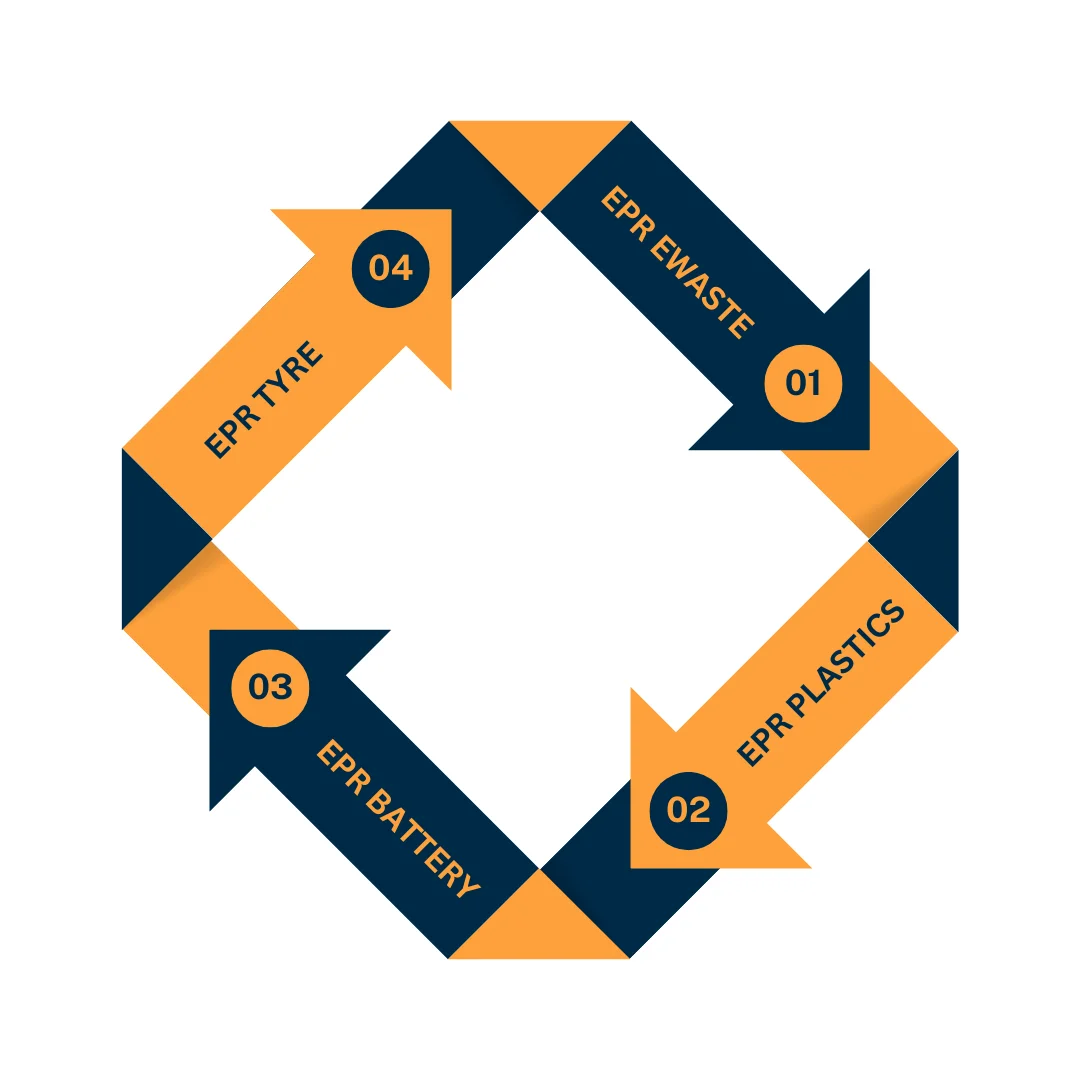
There are now several kinds of waste with unique components that demand different techniques for treating the waste. Due to this, there are differences in the Extended Producer Responsibility laws and regulations pertaining to the types of waste, particularly with regard to e-waste, plastic waste, battery waste, and tire waste.
India’s Extended Producer Responsibility (EPR) framework puts the onus on businesses that manufacture, import or sell regulated products to take responsibility for their waste throughout its lifecycle. Eligible entities are required to obtain an EPR registration certificate from the Central Pollution Control Board (CPCB) and ensure environmentally responsible waste management through authorised recycling and reporting systems.
Mandatory Compliance for Businesses: Businesses importing, manufacturing or owning a brand of plastic packaging, electronic products, batteries or tyres are required to obtain an EPR certificate before placing regulated products into the Indian market. Failure to comply could result in regulatory action, fines or restrictions on how you conduct business.
Digital Registration & CPCB Approval : The EPR certificate apply online process can be completed by submitting the details of waste management plan and other documents on CPCB portal. For plastic packaging, Plastic Waste Registration of CPCB is required for fulfilling the obligations under the Plastic Waste Management Rules.
Cost of Compliance and Long term Benefits The cost of the EPR certificate is decided upon the type of waste category, business model, annual quantity put into the market and professional compliance support. Beyond legal compliance, EPR also contributes to sustainability, recovery of resources, and India’s move towards a circular economy.
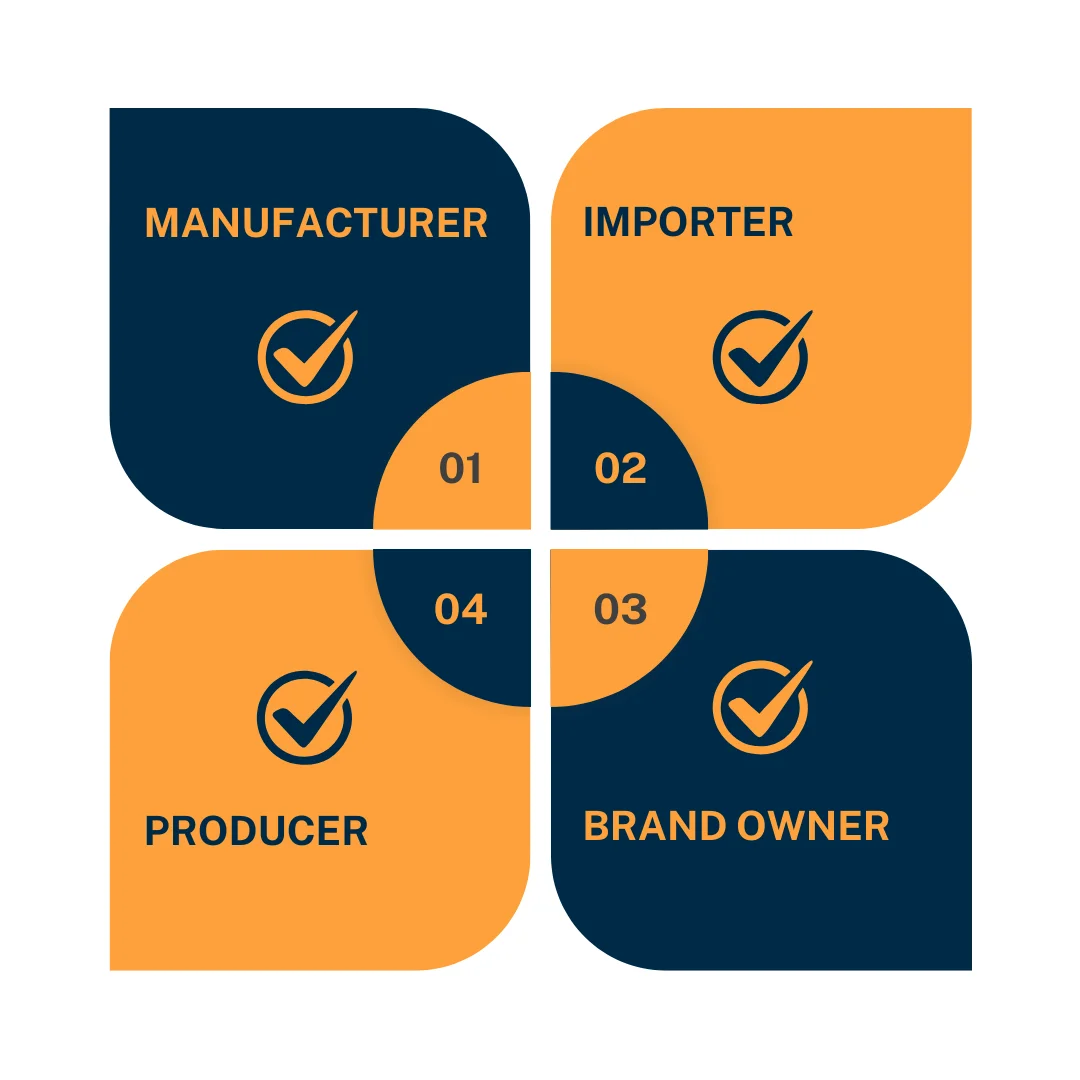
ERP certification is required by manufacturers or producers, importers, brand owners, and distributors of plastic packaging, batteries, electronic items, and tyres. All such people require an extended producer responsibility certificate from CPCB. Unless they receive an EPR Certificate for plastic waste management from CPCB, PIBOs, and PWPs are not permitted to conduct business.
On November 2, 2022, the Ministry of Environment, Forests, and Climate Change released the E-Waste (Management) Rules 2022, which came into effect on April 1, 2023. This rule requires all producers, manufacturers, refurbishers, and recyclers to register on the portal for an EPR certification, gather any e-waste produced during the production, refurbishment, or disposal of any electrical or electronic equipment, and make sure that the trash is recycled or disposed of.
A manufacturer, producer, refurbisher, or recycler are the categories available on the portal of EPR authorization. An entity must register under each category independently if it fits into more than one category. It is prohibited for any organization to conduct business without registration. Depending on the amount of e-waste generated, recycled, or handled by the organization, the Central Pollution Control Board is allowed to impose a fee for annual maintenance along with the registration fees. This is decided by the steering committee and approved by the Central Pollution Control Board.
The Central Pollution Control Board (CPCB), a body of the MoEFCC, Government of India, grants EPR authorization. Entities taking the certificate will have to pay the registration and yearly maintenance costs set by the Central Pollution Control Board in accordance with their ability to handle e-waste, as approved by the steering committee.
As per the latest guidelines, the CPCB issues EPR certificates for producers, importers, and brand owners of electrical and electronic items, plastic packaging, batteries, tyres and oil.
In India, any manufacturer, producer, or importer of electronic and electrical products must obtain an EPR certificate to legally sell their items. This certificate is a key requirement for those involved in e-waste production. The e-waste management regulations were introduced in India in 2011 and updated in 2016 and 2022. The EPR guidelines hold producers, importers, and brand owners (PIBOs) accountable for the full lifecycle of their products, with a primary focus on proper end-of-life disposal. To comply with these rules, producers must partner with certified e-waste recyclers to establish a system for the collection, recycling, and safe disposal of e-waste. The EPR certificate serves as proof that producers meet the legal standards for responsible e-waste management.
All the manufacturers, brand owners, and importers involved in the sale, distribution, or manufacturing of plastic packaging will be required to take the EPR Certification for plastic. The EPR Certificate for plastic waste management is a mandatory certification for producers, importers, and brand owners of plastic items or packaging. This rule was implemented by the government to manage the lifecycle of the plastic products sold in the Indian market. The rule includes responsibility for the collection, recycling, and proper disposal of plastic waste after the end of its lifecycle.
Battery producers, importers, and manufacturers must register their EPRs for battery waste. Batteries require an Extended Producer Responsibility Certificate from both the company manufacturing the batteries and the entity importing batteries or equipment incorporating batteries. All battery types must register for an EPR, regardless of their size, kind, composition, or intended usage.
Any entity that manufactures, sells, or imports tyres is required to register for EPR certification. Certificates have become a vital strategy for managing discarded tyres and mitigating the environmental effects of tyre waste.
|
Industry |
Key Compliance Requirements |
|
Electronics |
• Governed by E-Waste Rules 2022 across 106 categories including Solar PV • Recycling targets replace collection targets • Producers must purchase E-waste credits from authorised recyclers |
|
Plastic Packaging |
• Covered under Plastic Waste Rules 2016 (4 categories: rigid, flexible, multi-layered, compostable) • Minimum recycled content mandate (30% for some categories by 2025) • QR codes and EPR registration numbers required |
|
Batteries |
• Applies to lithium-ion, lead-acid, and other battery types • Recovery targets include 90% lithium and cobalt by 2026-27 • Recycling and refurbishment credits allowed |
|
Tyres |
• Liability based on tyres sold two years earlier (Y-2 formula) • Includes recycling, pyrolysis, and retreading systems • Output converted to crumb rubber or recovered materials |
It is important to reduce the waste produced in our environment, and therefore, let’s understand the benefits of an EPR Certificate:
✅Making Renewable Products: EPR rules promote treating waste and recycling it. Therefore, this improves products using renewable resources and reduces waste in the environment.
✅Efficient Waste Management: A simplified waste management procedure is guaranteed by an EPR Certificate. It is the responsibility of producers to establish collection methods, work with recycling facilities, and support recycling programs. As a result, there is less garbage going to landfills, better waste segregation, and increased recycling rates.
✅Reduce Waste: The use of the EPR Certificate is one strategy to reduce waste in India.
✅Cost Reduction: Businesses may save money by using EPR certificates. Businesses may reduce trash disposal costs, look into the potential to generate income through recycling, and increase overall operational efficiency by improving waste management processes.
✅Positive Brand Image: Nowadays, customers love environmentally and socially conscious companies. A company's dedication to sustainable business operations and environmental management is demonstrated by its certificate of extended producer responsibility. Businesses may improve their public perception and gain the trust of environmentally concerned customers by registering their products with Extended Producer Responsibility, which will boost their brand loyalty and competitiveness in the market.
The EPR certificate cost isn't a flat number CPCB structures it by application fee, annual processing fee, and renewal fee, and the exact tier depends on your product category and volume.
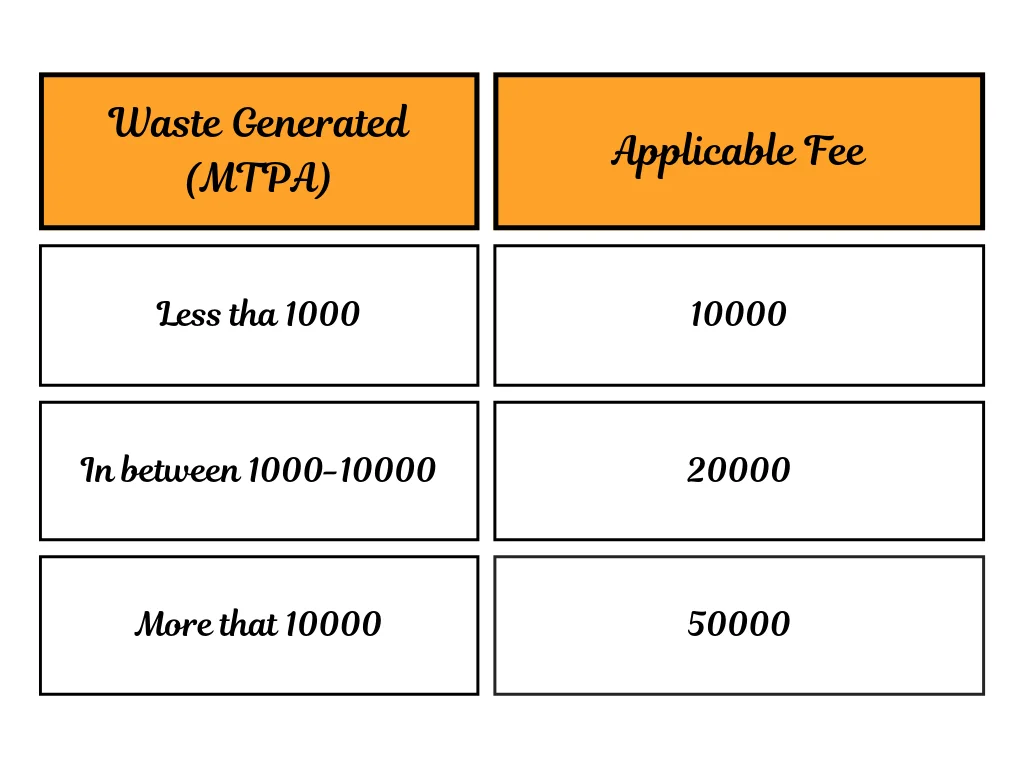
For CPCB plastic waste registration, the government's guidance sets application fees on a sliding scale tied to annual plastic quantity smaller producers handling under 1,000 tonnes per annum sit at the lower end, larger volumes scale up accordingly. On top of the application fee, CPCB charges an annual processing fee set at 25% of that application fee, and the renewal fee matches your original registration fee. If you're unsure which tier applies to your business, an EPR certificate consultant will help you before you file, since getting the category wrong means refiling.
For e-waste, battery, and tyre EPR, fee structures are set separately under their respective Rules and vary by category of producer and volume handled we'll confirm your exact applicable fee.
For manufacturers, producers, and brand owners: registration happens directly on the CPCB's centralized EPR certificate online portal for your waste category plastic, e-waste, battery, or tyre each have their own module. You'll submit company details, product and packaging data, and your waste management plan, then wait for CPCB or the relevant SPCB to review and issue your certificate.
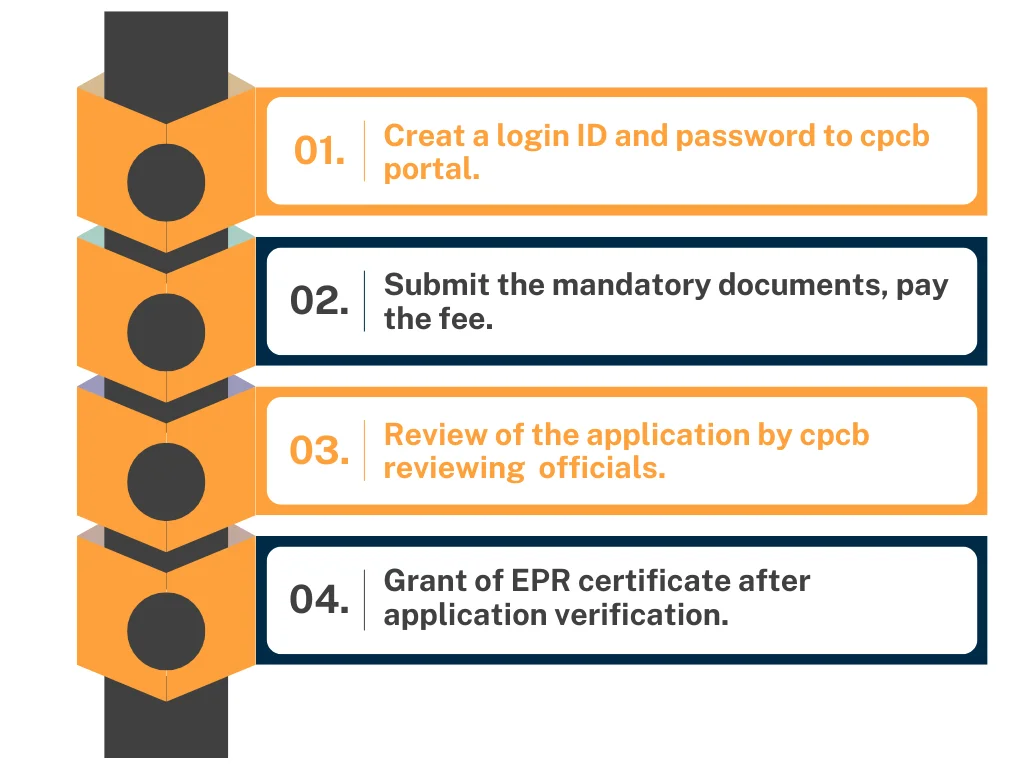
For importers: the process runs through the same portal, but you'll additionally need your Import Export Code and details of the products or packaging you're bringing into India, since your obligation is calculated on import volume rather than production volume.
Whichever category you fall under, applications are reviewed for completeness before approval incomplete or inconsistent data is the most common reason for delay, not the review itself.
This is where a lot of guidance online gets it wrong, including outdated versions of this page treating "the EPR certificate" as one certificate with one validity period. It isn't. Validity differs by waste stream, and conflating them is how businesses miss renewal deadlines.
Plastic waste EPR registration: CPCB's official Standard Operating Procedure for PIBO registration states the registration is valid for a period of three years. Some older guidance documents describe a shorter one-year term for a first-time registration before it steps up to three years on renewal if that distinction applies to your registration, we'll confirm it against your specific approval date rather than assume either figure.
E-waste EPR registration: The Producer Registration Certificate is valid for five years. Renewal applications should go in at least 120 days before expiry leaving it later risks a compliance gap between certificates.
Battery and tyre waste EPR: Validity periods are set separately under the Battery Waste Management Rules and the relevant tyre waste framework. We'll verify the applicable period against your specific registration category rather than state a number that might not hold across both.
Whichever stream applies to you, renewal isn't automatic you'll need to refile with updated production, import, or waste-handling data before the current certificate lapses. Missing that window means operating without a valid EPR registration certificate, which is treated as non-compliance, not a grace period.
Getting the certificate is the starting point, not the finish line. Once registered, CPCB assigns annual EPR targets a required volume of waste you must ensure gets collected, recycled, or safely disposed of, based on what you've introduced into the market that year.
You can meet these targets directly, through your own collection and recycling arrangements, or by purchasing EPR certificates from CPCB-registered Plastic Waste Processors or recyclers who've already processed the equivalent volume. Either way, the responsibility for hitting the target and the paperwork proving it stays with you, even if a recycling partner does the physical work.
Falling short of your target in a given year doesn't just mean a compliance note; CPCB tracks shortfalls year over year, and consistent underperformance affects your standing when it's time to renew.
Operating without valid EPR registration, or falling short of your assigned targets, exposes you to environmental compensation charges under the Environment (Protection) Act, 1986 separate from any registration cancellation CPCB might impose. In more serious or repeated cases, penalties can extend to fines and, under continued violation, imprisonment.
This is a factual consequence, not a scare tactic: CPCB has been actively enforcing these targets in recent years, and the compensation amounts are calculated based on the shortfall volume, not a flat fee. If your business is behind on a target, catching it up before your next annual filing is generally far cheaper than the compensation charge for reporting it as a miss.
Agile Regulatory makes it quick and easy for companies to obtain their EPR Registration Certificate. We are here to assist you with documents, CPCB Plastic Waste Registration, online application and full compliance. EPR certificate for import, manufacturing or brand ownership we will guide you through each step of the way. We make the process easy, save you from delays and get your application CPCB compliant. Our experts ensure that you sail through your EPR registration and leave you free to run your business with peace of mind.
Get Instant Solution By an Expert Advisor
(4.8)
Yes, EPR registration is mandatory in India for the eligible producers, importers, manufacturers and brand owners dealing with regulated waste categories such as e-waste, plastic packaging, batteries and tyres.
The EPR certificate is issued by the Central Pollution Control Board (CPCB) through its online portal under the relevant Waste Management Rules.
EPR regulations apply to manufacturers, importers or branders of electronic equipment, plastic packaging, end-of-life vehicles (ELVs), batteries and tyres in India, which are regulated waste management frameworks announced by environmental authorities.
The validity of an EPR certificate is subject to the terms of regulatory approval and the performance of the compliance. The pollution control authority will set renewal dates and you’ll have to keep up with your annual recycling requirements.
Yes, EPR is applicable to the importers & brand owners in India. The market introduction of regulated products triggers responsibility under Extended Producer Responsibility regulations, irrespective of where the products are made.
It depends on the waste stream. Plastic waste EPR registration is valid for three years per CPCB's current SOP. E-waste registration is valid for five years. Battery and tyre waste validity periods are set separately under their own Rules confirm the applicable period for your specific category before assuming either figure.
CPCB tracks target shortfalls and can impose environmental compensation charges based on the volume you fell short by. Repeated shortfalls also affect renewal.
EPR Certificate full form is Extended Producer Responsibility. It is a system where producers, importers, and brand owners are responsible for the collection, recycling, and disposal of their products at the end of life.
Brand owners falling under the MSME micro and small category are exempt from EPR compliance. Producers and importers, regardless of size, are not exempt under the plastic waste rules.
Yes. You can purchase EPR certificates from CPCB-registered Plastic Waste Processors or recyclers who've already processed the equivalent volume, though the compliance responsibility remains yours.
Yes. Registration for all four waste streams plastic, e-waste, battery, and tyre is filed through CPCB's centralized EPR portal, not through a physical application.
Proven 4-step Process: Consultation, Documentation, Submission, and Certification.


Startups to large enterprises, we deliver end-to-end solutions business compliance needs.
 One-Stop Compliance Solution:
From BIS, CDSCO, Drug License, EPR, BEE, WPC, LMPC, PSARA, Startup Compliance, Pollution Certificates, Factory License, Fire NOC, Export Licenses and more.
End-to-End Support:
we manage the complete process which includes a proper Consultation & Requirement Analysis, Complete Documentation & Application Filing, Face to Face Coordination with Department Authorities, Certification, Renewal & Post-approval Support.
Clear and set prices:
There are no extra fees or last-minute surprises, because our prices are straightforward, competitive, and set in stone.
Focus on the client:
Each client has a dedicated project manager who keeps them up to date and makes sure communication goes smoothly.
Support for Indian and Foreign Companies:
We offer customized compliance plans and authorized representative services to both Indian businesses that are growing in India and foreign manufacturers that want to enter the Indian market.
One-Stop Compliance Solution:
From BIS, CDSCO, Drug License, EPR, BEE, WPC, LMPC, PSARA, Startup Compliance, Pollution Certificates, Factory License, Fire NOC, Export Licenses and more.
End-to-End Support:
we manage the complete process which includes a proper Consultation & Requirement Analysis, Complete Documentation & Application Filing, Face to Face Coordination with Department Authorities, Certification, Renewal & Post-approval Support.
Clear and set prices:
There are no extra fees or last-minute surprises, because our prices are straightforward, competitive, and set in stone.
Focus on the client:
Each client has a dedicated project manager who keeps them up to date and makes sure communication goes smoothly.
Support for Indian and Foreign Companies:
We offer customized compliance plans and authorized representative services to both Indian businesses that are growing in India and foreign manufacturers that want to enter the Indian market.


What our customer says about us

Lavkush Sharma
KTPL Instruments
Agile Regulatory handled my BIS Certification registration smoothly. Their expert team ensured quick approvals, transparent pricing, and a completely stress-free compliance experience.

Nitin Mukesh
Justrack IOT
We are grateful to Agile Regulatory for their excellent support. Their team showed patience, expertise, and professionalism throughout, providing clear guidance and making the entire process smooth and hassle-free.
Pradeep Varma
Coaire Compressor
Being an excellent BIS Certification Consultant provider, they help customers with all requirements such as BIS Certification, CDSCO services, Agile Regulatory support, legal issues, and lab testing with quick results.

Bharat Bachwani
Easy Polymer
With the help of Agile Regulatory, we have made significant progress in our business. Their service is fast, genuine, and reliable. We look forward to continued success together in the future.

Atul Jain
Tarus International
Many thanks to Agile Regulatory for all the support, guidance, and expert advice. Their professional approach and consistent assistance have made a significant difference.

Paramjeet Singh
Anchor Weighing
Top-tier consulting! offered strategic solutions that revolutionized our approach. Their deep expertise and personalized guidance made a significant impact on our success. Highly recommend their services.
Anshul Rathi
AM Capacitor
Agile Regulatory exceeded expectations! Their tailored solutions, expertise, and proactive approach led to remarkable results. Highly recommend for businesses seeking impactful and strategic guidance.

Shekhar Maurya
Imaxx Pro Aquistic
Outstanding service! delivered targeted solutions with professionalism and expertise. Their insights elevated our business strategies, resulting in noticeable growth. Highly recommended for exceptional consultation.

