


Get Instant Solution By an Expert Advisor
(4.8)
Fast replies · No spam · Real experts
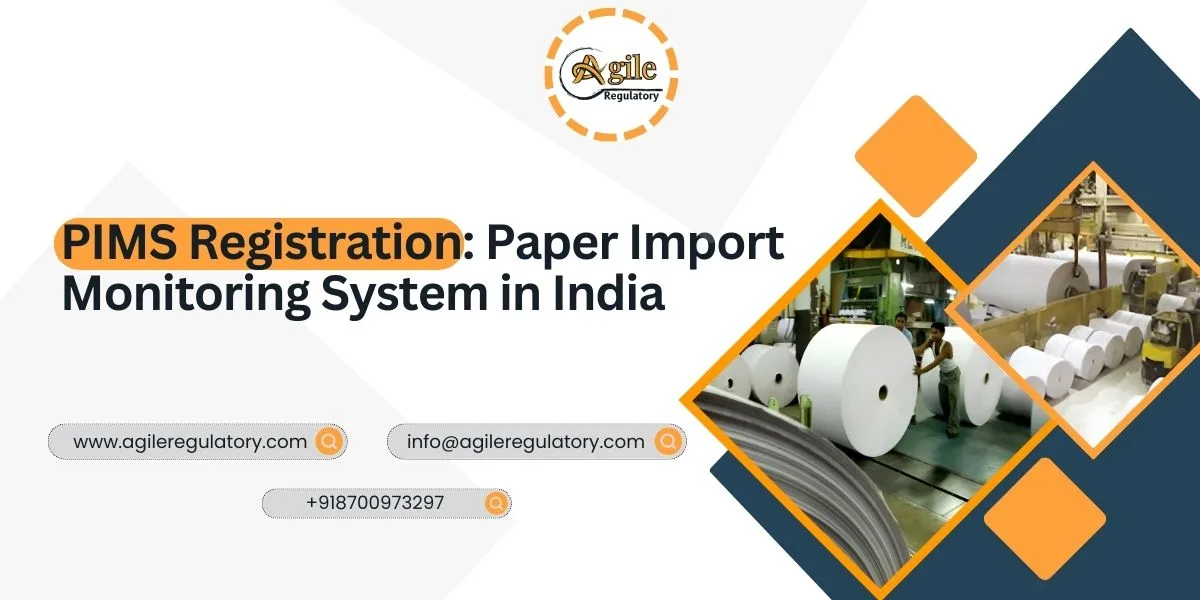
If you're an importer dealing with paper and paper products in India, then PIMS — the Paper Import Monitoring System — has become an essential part of your compliance checklist. Simply put, PIMS is an online regulatory system introduced by India’s Directorate General of Foreign Trade (DGFT) that tracks and monitors imports of specific categories of paper and paperboard items.
The aim? To ensure transparency, curb unfair trade practices like dumping and under-invoicing, prevent prohibited goods from entering the Indian market, and support the domestic paper industry. Its implementation marks a big step in how paper imports are monitored in India.
Before PIMS came into effect, paper import was largely on a “Free” import policy basis — meaning no special registration or monitoring was required. But the domestic industry raised concerns about:
To address these challenges, the Government amended the import policy for paper products, shifting many tariff lines from “Free” to “Free, subject to compulsory registration under PIMS.”
PIMS applies to a wide array of paper and paperboard products — including but not limited to:
In total, the coverage includes over 200 tariff lines under Chapter 48 (HS Code) of the Indian Import Tariff.
When you’re importing covered paper products into India, here’s a simple walkthrough of how PIMS works:
Get all your key documents ready — including:
You’ll also need to know the HS code and details of your products.
The application is filled and submitted on the PIMS portal (DGFT’s authorised interface). When filling the form:
Once submitted, the portal generates a Unique Registration Number (URN) automatically.
You must apply no earlier than 75 days and no later than 5 days before the expected arrival date of your shipment. Missing this window can lead to compliance issues or delays in customs clearance.
A small government fee of ₹500 applies to each registration. Once granted, the URN is valid for 75 days from the issue date — giving you enough time to bring in the cargo and complete the Bill of Entry procedures.
Yes — you can use the same registration number to cover multiple Bills of Entry as long as they fall within validity and quantity parameters.
The URN and its expiry date must be clearly mentioned on the Bill of Entry — without this, customs will not process the consignment. It’s mandatory, and no exceptions are allowed (except for small sample shipments under specific exemptions).
Eligibility and Applicability
PIMS Registration is mandatory for all importers of specified paper products regardless of:
However, consignments of samples with a Free on Board (FOB) value of ₹10,000 or less are exempt from PIMS registration
While compliance can feel like extra paperwork at first, PIMS brings several important benefits:
✔️ Market transparency and trade data accuracy
✔️ Fairer competition for domestic producers
✔️ Reduces under-invoicing and fraudulent mis-declarations
✔️ Aids better policy formulation with real trade data
All these contribute to a healthier market ecosystem and stronger manufacturing base in India
While PIMS offers greater transparency, some importers find the online process challenging without technical support. Registration timing, documentation accuracy, and HS code classification demand careful management.
The Paper Import Monitoring System (PIMS) represents a significant evolution in trade regulation for paper products in India. By mandating advance online registration, it strengthens compliance, enhances transparency, and serves as an effective tool against unfair trade practices — aligning with broader trade policy goals. Importers, therefore, must understand its requirements, plan their timelines, and ensure compliance to avoid customs delays or penalties. As India increasingly embraces digital regulatory frameworks, systems like PIMS help balance national interests with international trade facilitation — ensuring fair play for domestic stakeholders and foreign participants alike.
From an AgileRegulatory perspective, PIMS stands as a model of proactive trade regulation — agile, data-driven, and oriented towards protecting industry interests without compromising on efficiency. It reflects how regulatory systems can be both robust and flexible, supporting trade while safeguarding local markets.


We simplify compliance through a proven 4-step process: Consultation, Documentation, Submission, and certification. From understanding requirements to getting final approvals, we deliver a smooth, timely, and fully compliant journey for your business.


What our customer says about us

Lavkush Sharma
KTPL Instruments
Agile Regulatory handled my BIS Certification registration smoothly. Their expert team ensured quick approvals, transparent pricing, and a completely stress-free compliance experience.

Nitin Mukesh
Justrack IOT
We are grateful to Agile Regulatory for their excellent support. Their team showed patience, expertise, and professionalism throughout, providing clear guidance and making the entire process smooth and hassle-free.

Pradeep Varma
Coaire Compressor
Being an excellent BIS Certification Consultant provider, they help customers with all requirements such as BIS Certification, CDSCO services, Agile Regulatory support, legal issues, and lab testing with quick results.

Bharat Bachwani
Easy Polymer
With the help of Agile Regulatory, we have made significant progress in our business. Their service is fast, genuine, and reliable. We look forward to continued success together in the future.

Atul Jain
Tarus International
Many thanks to Agile Regulatory for all the support, guidance, and expert advice. Their professional approach and consistent assistance have made a significant difference.

Paramjeet Singh
Anchor Weighing
Top-tier consulting! offered strategic solutions that revolutionized our approach. Their deep expertise and personalized guidance made a significant impact on our success. Highly recommend their services.

Anshul Rathi
AM Capacitor
Agile Regulatory exceeded expectations! Their tailored solutions, expertise, and proactive approach led to remarkable results. Highly recommend for businesses seeking impactful and strategic guidance.

Shekhar Maurya
Imaxx Pro Aquistic
Outstanding service! delivered targeted solutions with professionalism and expertise. Their insights elevated our business strategies, resulting in noticeable growth. Highly recommended for exceptional consultation.
Trusted by over 1,00,000 + Global Brands in the past 15+ years





Leave a Reply
Your email address will not be published. Required fields are marked *